VoiceTech Global and the Development of Third Space
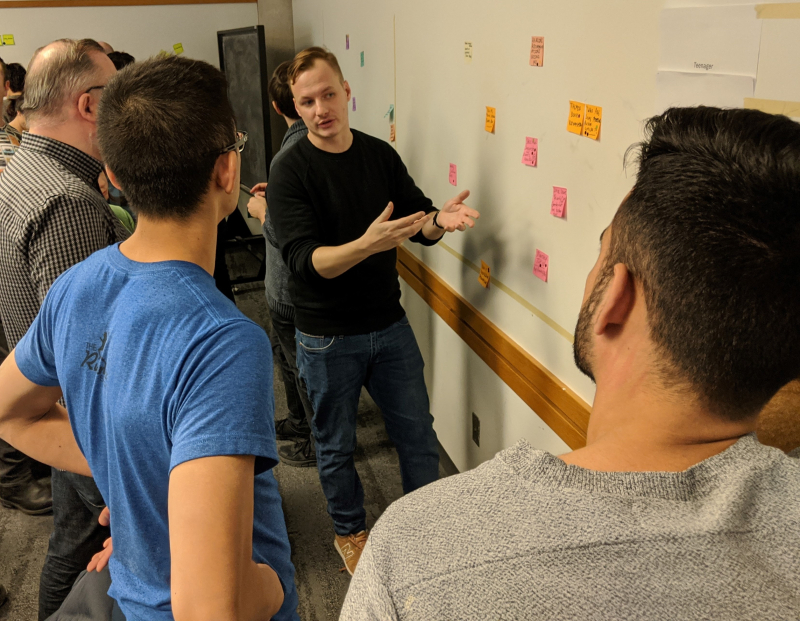
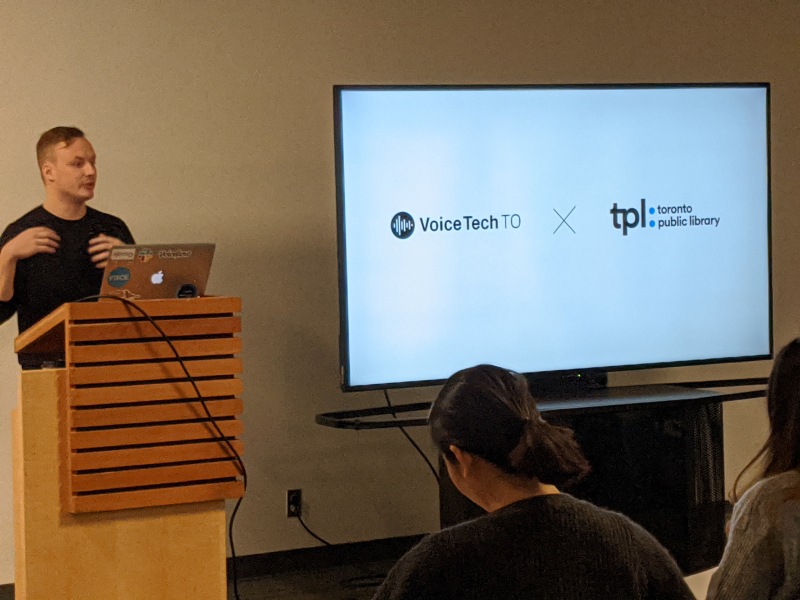
Over the past year, TPL has been working with VoiceTech Global on their voice-enabled Google Library Assistant “Action” project (Google’s name for voice apps). It is used with various devices like Google Home speakers, Android phones or an iPhone with the Google Assistant app.
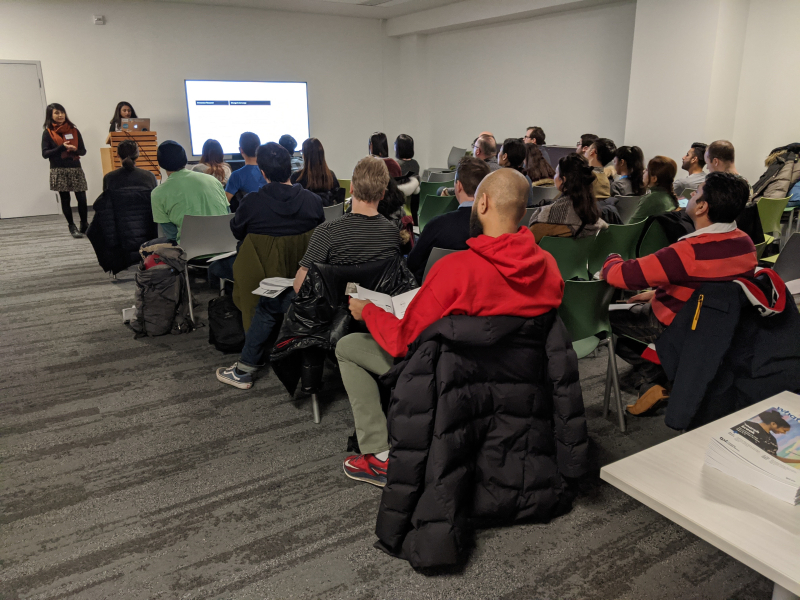
TPL has been providing the VoiceTech team with feedback on their community project. This included co-organizing and hosting their Idea Jam at North York Central Library in January 2020.
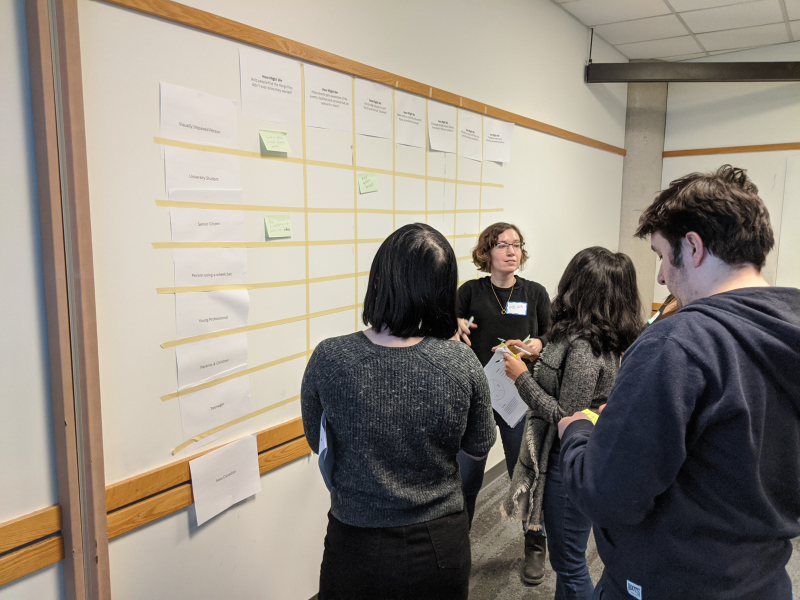
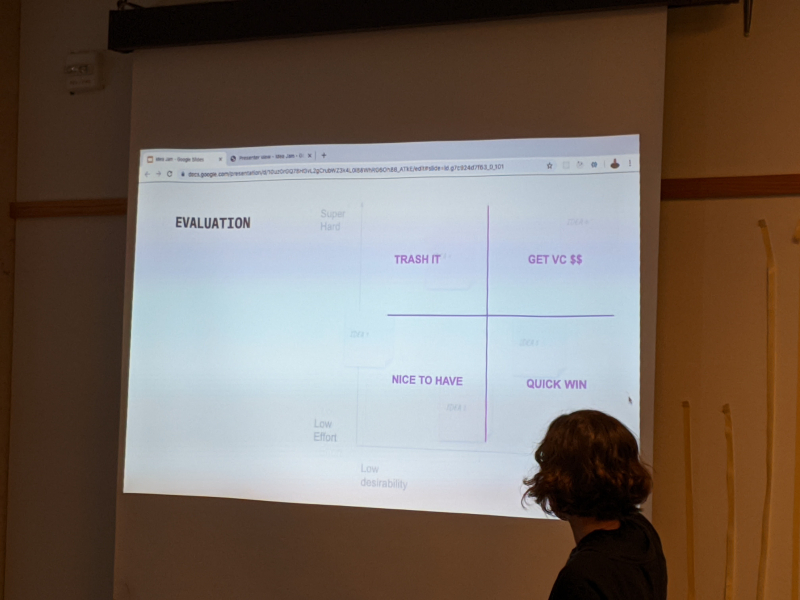
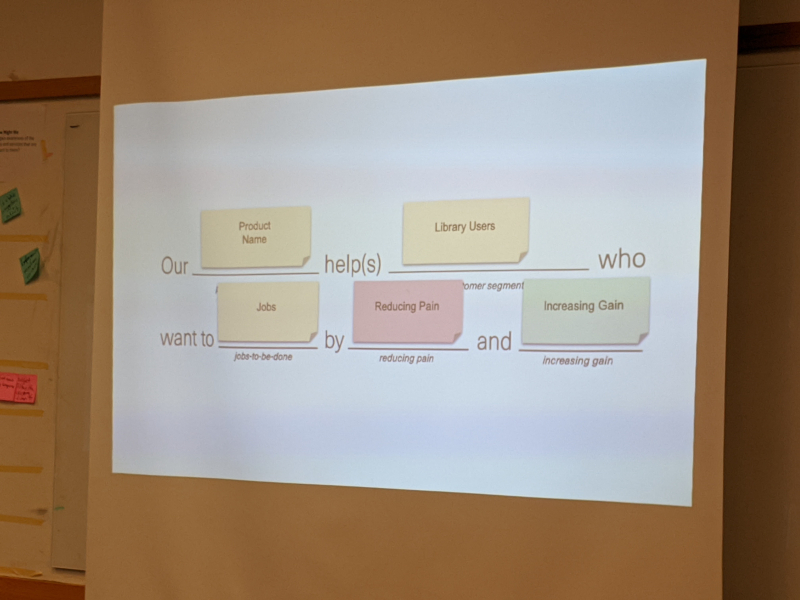
There were hundreds of ideas generated by library users and developers who attended the Idea Jam. Participants learned about and utilized the Design Thinking process to refine their ideas and create pitches for potential voice-enabled library assistant Actions.
The VoiceTech team took all the ideas generated in the Idea Jam and began weekly research and development work on prototypes that could potentially be most useful to TPL customers.
However, when the COVID-19 pandemic happened, the VoiceTech Global team found themselves without the space at the Toronto Reference Library to work on their project.
Isolating at home was a moment of inspiration for the team, who missed their weekly work meetings at the library. They began working on one of the ideas that emerged from the Idea Jam – to create an ambient library soundscape.
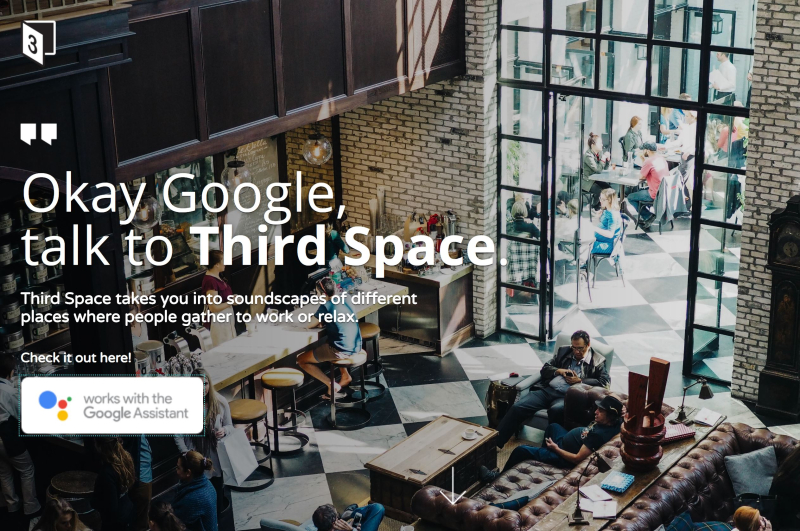
This resulted in creating a new Google Action called "Third Space," which provides users with the option to simulate working in a library space by providing the familiar sounds of the environment.
We spoke with Tim Bettridge, the Founder and Development team leader at VoiceTech Global to discuss Third Space and its connection with the library.
What does "Third Space" mean?
It is actually a riff on the term "third place". "Third Place" is often referred to in community building and originally coined by sociologist Ray Oldenburg in his 1989 book The Great Good Place. He described the benefits of community spaces, like cafes and libraries, and how they are critical domains where social connections, inclusion and democracy take place.
In our early research with library users, we learned that many people see these busy social spaces as the perfect place to sit down and get some work done. Even if you’re feeling alone, you can go to one of these spaces and connect with someone, or work alongside them.
For many, these are spaces that are sorely missed during our strange new reality: where we are unable to sit in our favourite coffee shop or settle into a study room at our local library branch.
What is the appeal of working in the library for you and your team? And what did you hear from people who mentioned they enjoyed working in the library during your research?
We heard in our user interviews that for some, it’s just being in a different place that helps them focus. That switch in context is enough to kick them into gear.
We also learned that this context switch and work environment is something that is being missed by many after months of working from home. The deafening silence and monotony of day-in and day-out being in our homes can affect our mood and our ability to find focus and motivation.
Not only is the library a visual change in my surroundings, but it’s also a shift in the context of my acoustic environment or "soundscape".
Lastly, for many, it’s a social space that they thrive in. They’re seeking community and connection, even if it’s through hushed whispers and the simple comfort of knowing you’re not alone.
What features make Third Space unique compared to other Google Actions?
First off, I’ll explain what a "Google Action" is.
Actions are essentially the voice version of a smartphone app. It is a piece of software that you interact with via voice or text-based chat. They are accessible on a wide range of devices, from smartphones to smartwatches, smart cars and smart speakers like Google Home and Google Home Mini.
Today, there are over a billion devices that have Google Assistant installed on them. And this means they’ll have access to Actions. If you have an Android phone, you can access Actions through your Google Assistant and, if you have an iPhone, you can also access them via the Google Assistant iOS app. To access them you just ask for them by name, no need to download and install anything.
You can'try Third Space by merely saying "Ok Google, talk to Third Space". The Google Assistant will hand off the conversation to the Third Space agent "George" (voiced by our teams very talented George Wu). You can find the directory for Actions within the Google Assistant apps on both Android and iOS devices, and if you browse through it, you’ll see thousands of Google Actions across a wide range of categories.

When we began to develop the concept for Third Space, we started with a competitive landscape analysis. We wanted to make sure we would be developing a product that met unmet needs.
In order to achieve this, we checked to see if there were similar Actions available. What we discovered was that while there were many soundscape Actions, they were all focused on natural soundscapes. These natural soundscapes are often used for meditation, sleep and relaxation. None centered on soundscapes that would help emulate social co-working spaces like libraries.
One unique feature that I’ll mention is our visitor counter. We wanted to remind people who may be feeling stuck at home and a bit lonely that they aren’t alone, and that others are going through the same ordeal.
In our application, we count how many times the Action is used during the day, and our agent will "check how many people are visiting today" and let the user know. We were concerned this might be awkward or creepy in practice, but it was well-received.
This mix and hand-off between our pre-recorded voice actor and robotic speech synthesis was a challenge to design. But I think it strikes the right balance of being subtle and effective in its purpose.
Library staff and customers can attest that not all library environments are the same. Some are full of the noises of life, and others are quieter. How did you create, test and settle on the quintessential/archetypal library soundscape that users would identify as the best library environment in which to work?
We learned in our user research and interviews that people had a diversity of opinions when it came to what environment was best for work and focus. There wouldn’t be a one-size-fits-all solution.
We decided to offer three different settings that would satisfy this range of personal preferences by including the "library," "office" and the "coffee shop."
As for the soundscapes themselves, they are the result of a mix of Creative Commons and licensed audio as well as our team’s sound production. Our team crafted and shaped acoustic environments that we felt would meet the expectations of our listeners and provide a convincing experience.
There was additional attention paid to volume levels and sound effects. We had to make sure that our soundscapes were long enough that they wouldn’t have noticeable loops or seams. These are repeating elements that are often picked up on by a listener.
What were the unique challenges and lessons learned from working on this project?
In our design process, we also knew that we wanted the personality of our voice agent to feel welcoming and social. We all make assumptions about personality whenever we have a conversation with anyone, whether they are a human or a bot. That’s why it is essential to define and shape this actively.
For conversational interface designers, personality is shaped through the use of dialog, tone and vocal dynamics. For instance, we designed our agent to be personable and welcoming by having variable responses that would change randomly to greet returning users in new ways.
Another style decision we made was using pre-recorded voice acting instead of the often used voice synthesis.
We’re happy with the natural and human-sounding voice that this gives our Action. We feel it presents a much more welcoming appeal. It was a design decision we made towards the end of Third Space’s development process, and only after some testing revealed that voice synthesis was making our agent feel a bit too cold and robotic.
What features would you like to eventually include in future updates of Third Space?
We’ve thought of a number of them!
- Customize your space by choosing specific parameters like how busy a space is.
- Guest musicians in the coffee shop playing quietly in the background.
- Esoteric events that infrequently happen as "easter eggs".
- Random soundscapes from real places, recorded and shared with us by a large community. This allows you to "travel" when travel might not be safe for a while yet.
I want to give a big shout out to the passionate and committed members of Civic Lab at Voice Tech Global. You can check out Third Space for yourself just by asking Google Assistant to “Talk to Third Space,” and you can learn more about the project on our website.
Learn More Online
If you are interested in "Third Space", this Medium article provides more detail about its development.
Check out the library's print and online resources to learn more about voice assistant technology, design thinking and related subjects. To access some of these recommended resources, you will be asked to log in with your library card:
- Books and ebooks about intelligent personal assistants and how to program them using speech processing systems.
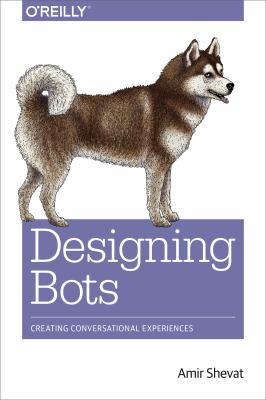
- Books, ebooks and online content about voice technology.
- Books about smartphone app development.
- Learn about computational linguistics at Google with this video interview with designer Meg Foley.
- Learn how to build a Google Action from this Lynda online tutorial.
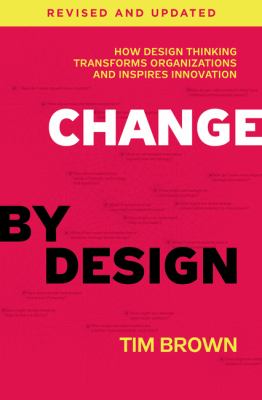
- Ebooks and videos about competitive landscape analysis, how to conduct user research, conversational interface design, agile project management, and design thinking.
The VoiceTech team continues to work on their voice-enabled TPL library assistant project. We will share updates in the future about their project.
With thanks to Tim Bettridge.
Comments