Written Revolution
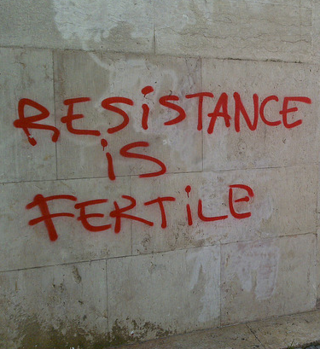 Graffiti is all about art and expression, at its heart. But sometimes, it serves other purposes as well. In this morning's post, we looked at graffiti that was more about the art and the fame, arguably less about the political message. This is not to say that the two can't co-exist, because Banksy's massive worldwide fame, gallery presence, and punchy, thought-provoking stencilled images combine them like nobody's business. But while he might be the best-known graffiti provocateur, he's not the only one with something to say.
Graffiti has also long been a tool of dissent, from simple scrawls of "Down With _____!" to full-scale murals depicting injustices, silenced voices, and oppressive regimes. The idea is to let people know not everyone supports what's happening, to inspire hope for change, to get people thinking about what they want to see happen and questioning the current order of things.
 This is exactly what the main character in my book list pick Graffiti Knight is doing – putting himself in the path of real harm to make a point and undermine the occupiers of his city, Liepzig. He thinks he isn't harming anyone with his own form of opposing the Soviets, and increases his campaign of embarrassment against them until finally he grows so bold that in the end, he puts several people that he loves in danger, and they have to make a mad dash for the border.
The Berlin Wall, which cute the city apart for decades, was fertile ground for expressions of discontent, and when it was dismantled, graffiti pieces were reduced to crumbled chunks of coloured concrete that were retained for museums or sold worldwide. We've got a book detailing the art that was there.
 More recently, anti-war sentiment and resistance to America's "War On Terror" were detailed in 2007's Street Art and the War on Terror, a book that showcases art as opposition and includes commentary from the creators from around the world.
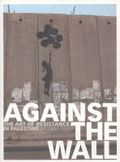 Like Berlin's wall, the barrier in Palestine has become a canvas for expression and resistance even as it divides people. A 2011 compilation of art from the wall, Against The Wall, includes graffiti in a range of styles and with a host of commentaries on the situation that are especially timely, though the book's focus does mean that only art from the Palestinian side of the barrier is represented here. The cover image by Banksy is a famously poignant one.
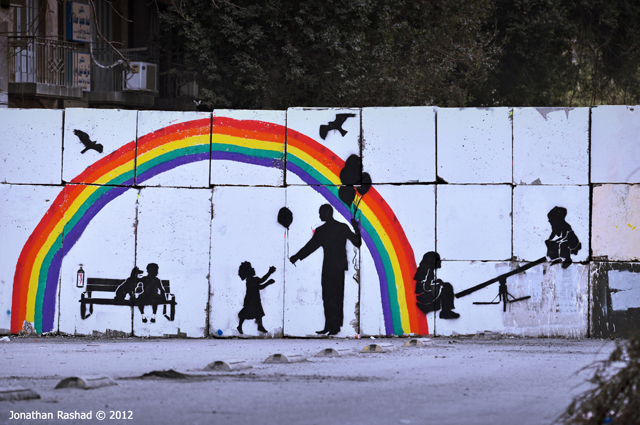
 The book with the most recent and beautifully documented instances of street art in a revolution is 2012's Revolution Graffiti, which captures pieces from Egypt's uprising. A rich variety of artworks are categorized here by theme, artist, or street and display an impressive range of styles from hand writing to stencils and everything in between. This is a gorgeous book, and demonstrates clearly and gorgeously just how powerful a message on a wall can really be.
I'd like to leave you with this hopeful, lovely message from that last book:
7 thoughts on “Written Revolution”
Thought provoking message, simple yet bold.
It really is amazing how artist can show their social and political beliefs with simple street art.
I agree, it makes you really think.
It’s funny how street art is known to look bad on a community, but sometimes it can bring people together.
I love how that last one is so positive and uplifting, just like the one on the book about Palestine. It’s a beautiful reminder of what SHOULD be, and what people are hoping for.
Very true, I love walking around downtown trying to decipher the messages the artists want to send.
I actually think it brings colour and personality into a community. Of course some graffiti is illegal done…