The War of 1812: Win, Lose, or Draw? (Part 1)
Both Canada and the United States began their
bicentennial celebrations and acknowledgement of the War of 1812 earlier this
year. The war is of interest to Canadians as the then-British colonies of Upper
and Lower Canada (aka Ontario and Quebec) formed part of the battlefields on
which the conflict was fought between the United States (with France) and Great
Britain (along with her colonial allies). Many books have been written on the
War of 1812 but a good cross-section of titles will bring out different aspects
of interest to the amateur and professional historian alike such as: different
theatres of the war (land-based vs. naval); the April 1813 occupation of York
(present day Toronto) by American forces; leading British military
personalities in the war including Sir Isaac Brock; the pitting of people with
similar backgrounds against one another; and, the political divisions in the
United States of America between the Federalists and the Jeffersonians.
Whatever one’s thoughts are on whether the war
was won, lost or stalemated between the opposing sides, reading a variety of
titles on the war can bring much to the forefront as we learn more about a war
that has been a mystery to many people. Here are some examples:
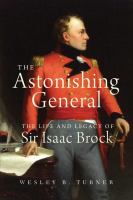
The
astonishing general: the life and legacy of Sir Isaac Brock / Wesley
B. Turner, 2011.
Retired historian Turner examined the enduring
popularity and recognition of General Brock. Brock had an aptitude for
understanding people and their intentions. Friend and foe alike admired Brock.
He won'the support of generous benefactors, who appreciated his treatment of
soldiers, his relationship with the military, and his influence upon the
political process in Upper Canada.
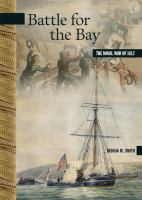
Battle
for the Bay: the Naval War of 1812 / Joshua M. Smith, 2010.
Historian Smith examined the coastal warfare
that occurred along the northeastern United States and in the Bay of Fundy
area. The British used local people as crewmembers on their ships to battle
against American privateers seeking profits in the Bay of Fundy region. Smith
covered the September 1813 battle of the American brig Enterprise and the brig
HMS Boxer (assisted by the provincial ships Bream and Brunswicker).
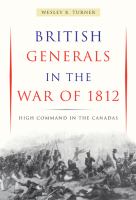
British
generals in the War of 1812: high command in the Canadas / Wesley
B. Turner, 2011.
Retired historian Turner examined the records and roles of five British
Generals in Canada during the War of 1812 (Sir George Prevost, Isaac Brock, Roger Sheaffe, Baron Francis de
Rottenburg, and Gordon Drummond), taking into account their British army
experience and participation in the European and West Indian theatres of
operation. The author examined each general’s leadership qualities and offered
his opinion on why only Isaac Brock is remembered today.
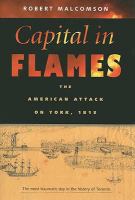
Capital
in flames: the American attack on York, 1813 / Robert Malcolmson,
2008.
American forces landed on the western side of
York (close to the current grounds of the CNE) in April 1813. Their amphibious
operation was delayed by the deliberate explosion of York’s armaments magazine
by British forces. British troops led by Major-General Sir Roger Sheaffe
retired from the field. Rev. John Strachan and others did their best to rally
the local citizenry. American'troops looted York and took valuable military
supplies and food, departing after six days of occupation within the protection
of their naval dominance of Lake Ontario. It is questionable whether the
burning of the White House and other Washington D.C. buildings in August 1814
was intended as retaliation for the occupation of York.
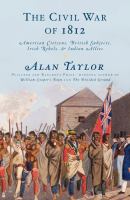
The civil
war of 1812: American citizens, British subjects, Irish rebels, & Indian
allies [1st ed.] / Alan Taylor, 2010.
Pulitzer-prize winner and historian Taylor has
produced arguably the most attentive and detailed treatment of the War of 1812,
approaching the conflict as a civil war between people of similar backgrounds
(Aboriginal tribes, Irish and Scottish immigrants, American-born, British North
American-born and British-born) separated by a political boundary. Military
conflict along the Niagara River and in the Great Lakes served to polarize
opinions. Taylor covers the topics of dissension, military recruitment, and
forceful seizure of farms and villages.
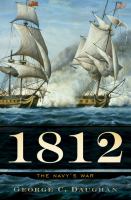
1812: the
navy's war / George C. Daughan, 2011.
Historian Daughan stressed the importance of the
young United States’ naval victories over the Royal Navy during the War of 1812
within the context of trade blockades as part of Great Britain’s war with
France and the incitement of aboriginal peoples in the fight against American
expansionism. The author also examined developments on shore, including: the
political divisions between the pro-British Federalists (who opposed the war)
and the pro-French Jeffersonians; Andrew Jackson’s victory at New Orleans; the burning
of Washington D.C. and the White House by British forces; and the dubious
attempts of the United States to invade British North America.
This
selected list is by no means exhaustive so I will review additional titles on
the War of 1812 in the near future.
Comments