Celestial Incursions: Past and Present: Tunguska 1908 and Chelyabinsk 2013
Many
have by now heard about the
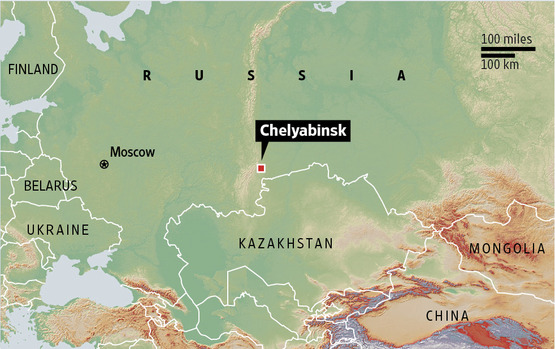
exploding meteor that injured many people in Central Russia on February 15, 2013
in the Chelyabinsk region as well as damaging much property. Stuart Clark,
writing in The Guardian, offered an
excellent question and answer article to readers, including questions
about the February 15, 2013 event as well distinguishing between an asteroid, a
meteor, a meteorite, and a meteoroid. Those with an interest in astronomy
and earth sciences might want to read about the Tunguska event of June 30,
1908 in which a
celestial body (possibly an asteroid or a comet) exploded over Siberia in
Russia, levelling forests over an area comprising some 2,150 square kilometers.

Toronto Public Library’s collections include book
titles published at different times that deal with the Tunguska event and the
various theories as to what happened. Science fact, or science fiction? You
decide for yourself. Here is a quick look at some titles available at Toronto
Public Library:
Cauldron
of hell: Tunguska / Jack Stoneley with A.T. Lawton, 1977.
Stoneley expounded upon some of the possible
theories connected to the Tunguska event, including extremely large ball
lightning, a black hole, anti-matter, an exploding alien space vehicle and so
on. (See also: Kirkus
Review, 1977.) Place Hold
The
fire came by: the riddle of the great Siberian explosion / John Baxter and
Thomas R. Atkins, 1976.
Baxter
and Atkins discredited the possible black hole and anti-matter theories offered
to explain the Tunguska event but settled on an atomic or nuclear event,
possibly by the explosion of an overheated extraterrestrial spaceship, owing to
a melted fuel core. (See also: Kirkus
Review, 1976.) Place Hold
The
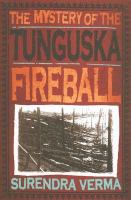
mystery of the Tunguska fireball / Surendra Verma, 2006.
The Tunguska event did not produce a crater or
leave behind material from outer space that was recovered. Consequently, a
meteorite was not the likely culprit for causing an explosion. Verma examined a
variety of theories (including a comet, anti-matter, a small black hole, a
lightning ball, and an alien spacecraft) by looking at their pros and cons and impartially
analyzing the evidence. Brian Clegg, reviewing the book in Popular Science, argued that the book had structural problems
and that readers might be confused with the move from theory to theory and
from argument to counter-argument, in addition to a digression on the
extinction of dinosaurs (and a possible link to what happened in 1908). Place
Hold
The
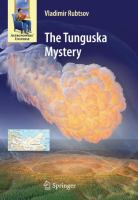
Tunguska mystery / V.V. Rubtsov, 2009.
The author, Director of the Research Institute
on Anomalous Phenomena (based in the Ukraine), used the scientific method to
examine and dispel many theories that have been advanced about the 1908
Tunguska event, including the impact from a meteorite that left no meteorite
fragments. The extraterrestrial vehicle theory has the support of only a
limited number of individuals. While other factors were considered, including
seeking a statistical explanation for the pattern of felled trees, and
thermoluminescent tests for radiation traces, the definitive answer to the
Tunguska event has yet to be uncovered. Choice offered a favourable review
(accessible in the catalogue
record) but the
Times Higher Education was more critical, citing the downplaying and
dismissal of the explosion of fragments of Comet Shoemaker-Levy in Jupiter’s
atmosphere in 1994, in a manner akin to the unfolding of the Tunguska event. Place Hold
Not convinced? Not sure what you think about
speculative non-fiction? Are you a fiction reader instead? If the answer is
yes, then consider the following title:
Singularity
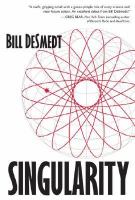
/ Bill DeSmedt, 2005.
This debut novel (reviewed in Publisher’s Weekly
Review – accessible through the catalogue
record), depicted the 1908 Tunguska event then switched to the near-future
where scientist Jack Adler discovered that a microscopic black hole was
responsible for the 1908 Tunguska event. Marianna Bonaventure of the U.S.
Department of Energy’s Critical Resources Oversight Mandate (CROM) worked with
analyst Jonathan Knox to infiltrate the holdings of a Russian billionaire to
determine his motives for finding the “Tunguska object.” Place Hold
Comments