Snapshots in History: April 12: Remembering Fox, Gagarin, and Roosevelt
On April 12, let us pause to remember Terry Fox, Yuri Gagarin, and Franklin Delano
Roosevelt. Why would we want to remember three distinctive and significant
personalities together? Mr. Roosevelt, a former President (32nd) of
the United States who served through much of the Great Depression and the
Second World War, died of a cerebral hemorrhage on April 12, 1945. Soviet
cosmonaut Yuri Gagarin was the first person to fly into outer space and orbit
the Earth with his spacecraft Vostok 1 on April 12, 1961. And, one of Canada’s
own folk heroes, Terry Fox, began his Marathon of Hope to raise money for
cancer research in St. John’s, Newfoundland and Labrador, on April 12, 1980.
Toronto Public Library collections offer a means
of exploring the worlds of individuals from the past such as FDR, Terry Fox,
and Yuri Gagarin through biographies, autobiographies, and memoirs. Here is a
quick list of some titles available for borrowing from Toronto Public Library
branch locations:
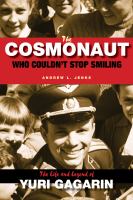
The
cosmonaut who couldn't stop smiling: the life and legend of Yuri Gagarin /
Andrew L. Jenks, 2012.
Academic Jenks accessed materials (with some difficulty) from the opened
Soviet archives to sift through the overt propaganda presented to the outside
world coupled with historical evidence and more recent interviews to balance
out what actually transpired with the first person to enter outer space. Arguably,
Gagarin was one of the more photographed individuals in the early 1960s when he
visited with famous personalities such as Fidel Castro, Gina Lollobrigida,
Jawaharlal Nehru, and Queen Elizabeth II.
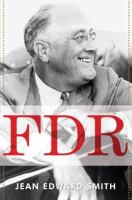
FDR
[1st ed.] / Jean Edward Smith, 2007.
The bulk of biographer Smith’s work dealt with Franklin Delano
Roosevelt’s four terms as American president (1933-1945), including combating
the Great Depression and bringing the United States closer to the Allied powers
during World War 2. The book also took note of negative and failed aspects of
Roosevelt’s presidency, including the state’s treatment of Japanese Americans
(Nisei) during World War 2, and the failed attempt to stack the Supreme Court
with appointees more favourably disposed to Roosevelt’s liberal viewpoint owing
to opposition by the bipartisan “Conservative
Coalition”. Smith examined FDR’s private life with particular focus on four
important women in his life who influenced him: his mother Sara Delano
Roosevelt, wife and cousin Eleanor Roosevelt, Lucy Mercer Rutherfurd (FDR’s
great love interest), and Missy LeHand (FDR’s secretary and confidante).
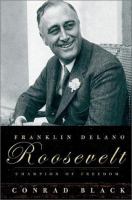
Franklin
Delano Roosevelt: champion of freedom [1st
ed.] / Conrad Black, 2003.
Despite his conservative viewpoint, Lord Black
of Crossharbour offered a comprehensive tome about the person that he believed
to be the most important leader of modern history, “the architect of the
postwar world” with Roosevelt’s championing of a United Nations organization; his
shifting of the United States from neutrality towards support for Great Britain
and China before the Americans were drawn into the Second World War; his
ability to manage the American war effort and the diplomatic channels with Great
Britain and the Soviet Union; and the introduction of the New Deal to combat
the Great Depression in the United States. The author also delved into
Roosevelt’s personal life, including his determination to overcome polio, and his
extramarital activities.
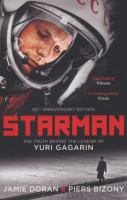
Starman:
the truth behind the legend of Yuri Gagarin [50th anniversary ed.] / Jamie Doran and Piers Bizony,
2011.
Earth’s first person in space also became
troubled by alcoholism and the corrupt Soviet state. The authors used KGB files
and restricted documents from Soviet/Russian space authorities as well as material
from interviews conducted with friends and colleagues to paint a picture of an
individual in turmoil who met an untimely death from an airplane crash in 1968
at 34 years of age.
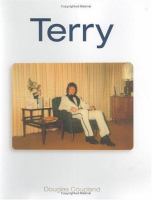
Terry
/ Douglas Coupland, 2005.
Douglas Coupland wrote this biography of
Terry Fox (1958-1981) with the
support of the Fox family that brought to the public eye over 100 photographs
of family memorabilia previously unseen.
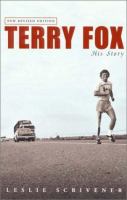
Terry
Fox: his story [New rev. ed.] / Leslie
Scrivener, 2000.
Leslie
Scrivener tells the story of the courageous one-legged runner and cancer
survivor who sought to give back and raise one million dollars for cancer
research. Community response varied from indifference to excitement across
Canada until Fox was forced to give up his Marathon of Hope run owing to the
recurrence of cancer which claimed his young life in 1981. Before he died,
Canadians rallied around Terry Fox and raised $22 million – one dollar for
every Canadian at the time.
Comments