Snapshots in History: April 26: Remembering the Chernobyl Nuclear Disaster
On
April 26, let us pause to remember the Chernobyl nuclear disaster
that occurred at Pripyat, Ukraine on April 26, 1986 when an explosion and fire
occurred at the Chernobyl Nuclear Power Plant, resulting in the wide dispersal
of radioactive particles into the atmosphere, especially over the western
sections of the then-USSR and neighbouring European countries. Arguably the
worst nuclear power plant disaster in history, the Chernobyl event is only one
of two such events classified as high as level 7 on the International
Nuclear and Radiological Event Scale (INES) established in 1990 by the International Atomic Energy Agency (IAEA), the
other being the Fukushima Daiichi nuclear disaster of March 11, 2011 in Japan. Toronto Public Library collections provide
access to materials containing information on the Chernobyl nuclear disaster,
including the following:
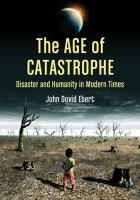
The
age of catastrophe: disaster and humanity in modern times / John David
Ebert, 2012. Book.
Man-made disasters are on the rise and the
efforts to keep nature and civilization separated are not likely given their
interconnectedness. It is more challenging to distinguish natural disasters
from man-made ones. Ebert analyzed a number of post-World War 2 or “neomodern”
disasters such as Bhopal (1984) and Chernobyl (1986) as well as several
disasters of planetary scale, including Hurricane Katrina and the flooding of
New Orleans (2005) and the Tohoku Earthquake, Tsunami, and Fukushima Daiichi
Nuclear Power Plant meltdown (2011).
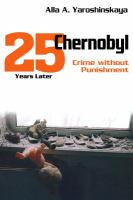
Chernobyl:
crime without punishment / Alla Yaroshinska, 2011. Book.
Russian journalist Yaroshinska documented the
disinformation campaign by the then-Soviet government to avoid responsibility
and admittance of wrongdoing of the Chernobyl disaster. This book, while coming
out 25 years after the 1986 event, brought matters into the 21st
century by documenting government inertia on the part of Belarus, Russia, and
Ukraine as millions of people have sought justice, compensation, and
recognition of suffering as a result of the disaster. Radioactive pollution
still permeates the surrounding environment. This book also questioned the
efficacy of nuclear power.

Visit
sunny Chernobyl: and other adventures in the world's most polluted places /
Andrew Blackwell, 2012. Book.
Not everyone would appreciate this account of “extreme
tourism” in visiting polluted places such as Chernobyl. However, journalist
Blackwell tackled the task with humour and seriousness both in asking pertinent
questions but also in the need to appreciate the Earth for what it is and not
what one would like it to be. Environmental stewardship and economic desires
continue to be in conflict. Canada is not off the hook either as the Alberta
oil sands are considered.
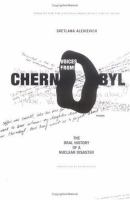
Voices
from Chernobyl: the oral history of a nuclear disaster [1st Picador ed.]
/ Svetlana Aleksievich, preface and translation by Keith Gessen, 2006.
Book.
This book won'the National
Book Critics Circle Award category for general non-fiction .
Journalist Aleksievich interviewed hundreds of people affected by the Chernobyl
disaster – from the general population to firefighters brought in to deal with
the fire without proper protective equipment. The interviewees demonstrated the
anger, angst and uncertainty with which they have lived.
Consider
the following fiction title about the Chernobyl disaster:
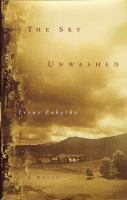
The
sky unwashed: a novel / Irene Zabytko, 2000. Book.
This debut novel was inspired by real life
experiences of villagers who defied the forced evacuation of their community in
the Ukraine in the aftermath of the Chernobyl disaster. In the novel, Starylis
was presented as a farming town that served as a bedroom community for the
nuclear plant workers. Yurko Petrenko, who along with his wife Zosia worked at
the Chernobyl facility, developed radiation sickness. While Yurko’s mother
Marusia remained with her ill son in Kiev, Zosia and their children went to
Moscow in search of a better existence. After Yurko died, Marusia went home to
Starylis to live out the rest of her life, despite the declaration by the
government that the area was uninhabitable.
Consider watching the following DVDs:
Chernobyl
diaries / Olivia Taylor Dudley et al., 2012. DVD. Feature Film. Holds can
be placed starting on May 15, 2013.
Six tourists hired an extreme tour guide to take
them to the abandoned city of Pripyat, Ukraine, where the former workers of the
Chernobyl Nuclear Power Plant once lived. The group came into contact with
mutant beings. This film may appeal to those who enjoy horror films.
Radioactive
wolves: Chernobyl's nuclear wilderness / Klaus Feichtenberger et al., 2011.
DVD. Documentary.
Filmmakers and scientists teamed up to research wolf
packs and other wildlife thriving in Chernobyl’s so-called “dead zone” surrounding
the encased reactor with its concrete sarcophagus.
Comments