Snapshots in History: August 6 & 9: Remembering Hiroshima, Nagasaki, and the Atomic Bombs
(Credits: Canadian
Broadcasting Corporation (CBC Digital Archives); Medium: Television; Program:
Cdn. [Canadian] Frigates for Far East – Canadian Army Newsreel [Hiroshima:
Canadian Navy prepares for Far East combat]; Broadcast Date: July 22, 1945;
Duration: 1:51)
(Credits: Canadian Broadcasting Corporation (CBC
Digital Archives); Medium: Television; Program: Newsmagazine [Hiroshima: still
feeling the fallout]; Broadcast Date: July 31, 1960; Guest: Fumio Shigeto;
Host: Norman DePoe; Reporter: Michael Maclear; Duration: 8:01)
(Credits: Canadian Broadcasting Corporation (CBC
Digital Archives); Medium: Radio; Program: Assignment [The Hiroshima Maidens];
Broadcast Date: Aug. 8, 1957; Guest(s): Yoshie Enokawa, William Maxwell Hitzig,
Shigeko Niimoto, Hiroko Tasaka, Helen Yokoyama; Host: Maria Barrett; Reporter:
Colin Edwards; Duration: 7:54)
(Credits: Canadian Broadcasting Corporation (CBC
Digital Archives); Medium: Radio; Program: Assignment [A Canadian in
Hiroshima]; Broadcast Date: Aug. 7, 1961; Guests: Joe Ohari; Host: Maria
Barrett; Reporter: Laurence Nowry; Duration: 13:05)
(Credits: Canadian Broadcasting Corporation (CBC
Digital Archives); Medium: Radio; Program: IDEAS [Hiroshima: the morality of the
bomb]; Broadcast Date: Sept. 13, 1984; Guests: Alice Kimball-Smith, Robert
Oppenheimer, Robert Wilson; Interviewer: Owen Gingerich; Duration: 11:06)
(Credits: Canadian Broadcasting Corporation (CBC
Digital Archives); Medium: Television; Program: The Journal [Hiroshima: was it
right?]; Broadcast Date: Aug. 5, 1985; Guest: Arjun Makhijani; Host: Jim Nunn; Interviewer:
Keith Morrison; Duration: 4:46)
(Credits: Canadian Broadcasting Corporation (CBC Digital
Archives; Medium: Television; Program: The National [Witness at Nagasaki];
Broadcast Date: August 5, 1985; Guest: Jack Ford ; Reporter: Dan Bjarnason;
Duration: 2:40) (“Canadian prisoner of war Jack Ford describes seeing the
second atomic bomb fall on Nagasaki.”)
On August 6 and 9 and beyond, take a moment to
remember the anniversary of the atomic
bomb explosions on Hiroshima, Japan on August 6,
1945 and Nagasaki, Japan on August 9,
1945 during the latter stages of the Second World War. To date, the atomic
bombs dropped on those two cities are the only ones to be used in wartime. When
one looks back at these events, one cannot ignore the immediate death and
destruction brought upon the Japanese people and these cities by these
instruments of enormous power nor can one overlook the longer-term ill-health
effects brought about by radiation exposure. On the other hand, the United
States was concerned about heavy American casualties in the event of a
large-scale invasion similar to that carried out in France in June 1944. Add to
that the mistreatment of many Allied prisoners-of-war (verified by survivors)
by Japanese forces and the ethical debates abound about who did what to whom. The
debate
about the nuclear bombings of Hiroshima and Nagasaki continues to the
present time. Public libraries often carry materials offering divergent points
of view on controversial topics. Consider the following items for loan from
Toronto Public Library collections:

Before
the fall-out: the human chain reaction from Marie Curie to Hiroshima / Diana Preston, 2005. Book. Adult Non-Fiction.
The nuclear bomb explosion over Hiroshima killed an
estimated 140,000 people. This book looked at different people at different
times who, arguably, contributed to the creation and deadly detonation of the
atomic bomb, including Marie Curie and her discovery of radium, the research
contributions of Albert Einstein, Robert Oppenheimer, Lord Rutherford and
others to the process. During World War Two, members of the American Manhattan
Project found themselves in competition with the allied British Maud Committee
and the opposing German Uranium Club.
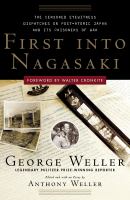
First into
Nagasaki: the censored eyewitness dispatches on post-atomic Japan and its
prisoners of war / George Weller, 2006. Book. Adult Non-Fiction.
The late Pulitzer Prize-winning reporter relayed his
challenges in dealing with the media blackout imposed by General Douglas
McArthur and the Allied occupation forces following the atomic bombings of
Hiroshima and Nagasaki. Weller was able to enter Nagasaki posing as an American
colonel but wrote of what he saw and expressed concern over “the anatomy of the
radiated man”. Unfortunately, his dispatches were intercepted by the military
censors. Weller was also the first journalist to enter Japanese prisoner-of-war
camps where Allied prisoners recounted their experiences of harsh labour and
torture. Following Weller’s death in 2002, his son found a fragile copy of this
previously unpublished work and brought it to life. Those interested in war
zone reporting will find this book interesting.
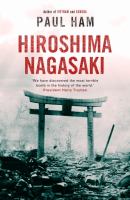
Hiroshima
Nagasaki: the real story of the atomic bombings and their aftermath
/ Paul Ham, 2012. Book. Adult Non-Fiction.
Relive the story of the Hiroshima and Nagasaki
bombings through survivors’ accounts: child labourers forced to work in war
factories as well as wives and children of men off at war. Add to that the fact
that no warning was offered of what was about to happen. The American
leadership tried to justify the atomic course of action as their best course of
action with an emphasis on military targets. This view is challenged by the
previously intense Allied air bombing campaign against Japanese cities and
civilians. Many people still believe that the atomic bombs dropped on Hiroshima
and Nagasaki helped to end the Second World War.
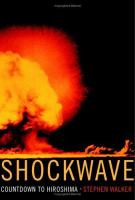
Shockwave
: countdown to Hiroshima [1st ed.] / Stephen Walker, 2005. Book.
Adult Non-Fiction.
This book focused on a three-week period in
July-August 1945, beginning with the first atomic bomb test in New Mexico on
July 16, 1945 and leading to the detonation of the “Little Boy” atomic bomb
over Hiroshima on August 6, 1945. Interviews with witnesses and survivors
enhanced the book’s staging of events, viz.: the co-pilot of the Enola Gay
airplane that dropped the bomb on Hiroshima (who kept a detailed diary), the
atomic scientist who armed the bomb in mid-air using a screwdriver, and the
Japanese student who searched for his lover amidst the ruins of Hiroshima.
Consider borrowing these DVDs from Toronto Public
Library collections:
Atomic
mom
[DVD] / Emiko Okada, M.T. Silvia, and Pauline H. Silvia; Women Make Movies,
2011. English/Japanese with subtitles. DVD. Documentary. Adult Non-Fiction.
Put together two women with different experiences of
the atomic bomb – an American research scientist who attended several nuclear
explosions at the Nevada Test Site and who is now having second thoughts about
the American atomic testing program – and a Japanese survivor of the Hiroshima
explosion who was 8-years old at the time of detonation (and whose 12-year old
sister was never found) and who now commits her efforts to education and
disarmament as well as sharing her account of what happened on August 6, 1945.
Hiroshima
[DVD] / Martin Duckworth, Michael Fukushima, and Terre Nash; National Film
Board of Canada, 2005. English. DVD. Documentary. Adult Non-Fiction.
The contents include: 1) No more hibakusha (55 min,
28 s) directed by Martin Duckworth; 2) If you love this planet (25 min, 51 s)
directed by Terre Nash; and, 3) Minoru: memory of exile (18 min, 43 s) directed
by Michael Fukushima.
Click here for French
language version.
Hiroshima
[DVD] / A & E Television Networks, 2011. DVD. Documentary. Adult
Non-Fiction.
This documentary helped to dispel a myth that there
was film footage of the actual moment of detonation over Hiroshima. Join
historian Martin Morgan and others as they analyzed an unprecedented event in
world history.
24
hours after Hiroshima [DVD] / National Geographic, 2010. DVD.
Documentary. Adult Non-Fiction.
This documentary reported on what an expert and
scientific team from the Manhattan Project (established by the Allies to
develop the atomic bomb) determined happened within the first 24 hours of the
explosion of the atomic bomb over Hiroshima.

White
light, black rain the destruction of Hiroshima and Nagasaki [DVD] /
Taro Goto, Atsuko Shigesawa, and Steven Okazaki; HBO Video, 2007.
English/Japanese with English subtitles. DVD. Documentary. Adult Non-Fiction.
View archival footage and stark photographic
representations of the destruction of Hiroshima and Nagasaki. Listen to
interviews from Japanese survivors and from Americans who felt that their
intervention in this unique manner would help to end World War Two.
Comments