Snapshots in History: March 24-25: Remembering the Great Escape from Stalag Luft III
(Credit: YouTube – Ted Barris – 30 Seconds on The Great Escape (1) – Published on November 4, 2013)
(Credit: YouTube – Ted Barris – 30 Seconds on The Great Escape (2) – Published on
November 11, 2013)
(Credit: YouTube – Ted Barris – 30 Seconds on The Great Escape (3) – Published on November 29, 2013)
(Credit: YouTube – Ted Barris – 30 Seconds on The Great Escape (4) – Published on
November 29, 2013)
(Credit: YouTube – Ted Barris – 30 Seconds on The Great Escape (5) – Published on
December 16, 2013)
(Credit: YouTube – City TV Official – The Great Escape: A Canadian Story (interview with
Ted Barris) – Published on November 11, 2013)
(Credit: YouTube – The Agenda with Steve Paikin (TVO) – Ted Barris: The Great Escape
(interview with Ted Barris) – Published on November 11, 2013)
(Credit: CBC Digital Archives – Wally Floody and the Great Escape – Medium: Television
Program: Summer Festival; Broadcast Date: Aug. 18, 1980; Guest(s): Wally
Floody; Host: Riki Turofsky; Duration: 6:34 – URL: http://www.cbc.ca/player/Digital%2BArchives/War%2Band%2BConflict/Second%2BWorld%2BWar/ID/1865493834/ )
(Credit: YouTube – NOVA – THE GREAT ESCAPE – History/Discovery/Military (documentary) – Published on March 5, 2014)
On March 24-25 and beyond, take a moment to remember “The Great Escape” attempt of Allied airmen from German prisoner-of-war camp Stalag Luft III at Żagań, Poland (formerly Sagan, Germany) on March 24-25, 1944. This grand escape attempt was intended to accommodate some 200 prisoners-of-war through the tunnel codenamed “Harry”. “Harry” was constructed along with tunnels codenamed “Tom” and “Dick” (involving 600 prisoners-of-war) to increase the probability of escape as it was assumed that the Luftwaffe soldiers and officers would not envisage the likelihood of 3 tunnels being dug simultaneously. This strategy was the brainchild of RAF Squadron Leader Roger Joyce Bushell (codenamed “Big X”) with the intent of fostering the escape of some 200 prisoners issued with false papers, civilian clothes, and escape equipment.
Some logistical challenges ensued, especially how to hide the sandy subsoil unearthed by the digging and tunneling. An ingenious method of pouches were placed inside the prisoners’ pants who released the subsoil at strategic points such as in garden plots where the subsoil could be more easily mixed in with the topsoil.
Innovative measures were developed by participants to make the tunneling process more efficient and safer, including the use of Klim cans to make tools and create ventilation shafts in the tunnels, and the development of an air pump to pump fresh air into the tunnels, thereby providing sufficient oxygen for the prisoners to work and for candles to burn and provide light. Electric lights were obtained and connected surreptitiously to the prisoner camp’s power grid.
The camp officers and soldiers were suspicious that the prisoners-of-war were up to something. The disposal of the sandy subsoil on the surface proved to be too risky over time so the decision was made to begin filling in the tunnel “Dick” (with the subsoil) in after a camp extension was built over the hidden entrance. Parts of “Dick” were used for preparing and storing forged papers, civilian clothing and other items such as maps and compasses essential to the escape, Prisoners-of-war had bribed friendly camp guards with coffee, chocolate, and cigarettes to obtain train timetables, maps, and access to documents. The tunnel “Tom” had been found by camp guards after observing prisoners-of-war removing the sandy subsoil from the hut where the entrance to Tom” was located, forcing the prisoners-of-war to halt construction on the tunnel “Harry” until January 1944; the tunnel was finished in March 1944.
The escape was set for the evening/morning of March 24/25, 1944. However, problems ensued with a frozen trapdoor, cold and snowy conditions outside of the camp (conducive to leaving footprints), and the crushing realization that the tunnel had been dug too short with the opening exposed short of the neighbouring forest and close to a guard tower. The decision was made to scale back the initial 200 prisoners-of-war designated to escape to only 100. 76 Allied prisoners-of-war managed an initial escape from Stalag Luft III but the 77th was caught coming out of the tunnel by a camp guard early in the morning on March 25, 1944.
Unfortunately, 73 of the 76 escaped prisoners-of-war were recaptured with 50 of them executed as a reprisal, a violation of the Geneva Convention, as it was a duty of prisoners-of-war to attempt escape.
Postscript: The British Channel 4 documentary “Digging the Great Escape” uncovered a secret fourth tunnel named “George” that was constructed following the Great Escape and intended for fighting rather than escape purposes.
Consider the following titles for borrowing from Toronto Public Library collections:
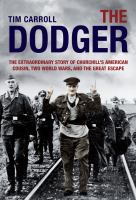
The dodger: the extraordinary story of Churchill's cousin and the great escape / Tim Carroll, 2013. Book. Adult Non-Fiction. 940.54709 DOD CAR
Read the story of American-born John Bigelow Dodge (who was a cousin to Winston S. Churchill by marriage) who survived World War One battles at Antwerp, Gallipoli, the Somme, and Passchendaele, failed in an attempt to be elected as a Conservative MP in the east end of London, England, enlisted in the 51st Highland Division to serve in France but was captured after a futile, abortive swim to a ship off Calais that was no longer there. “Johnny” Dodge charmed his German captors but they tired of his escape attempts so he was sent to Stalag Luft III. Dodge survived the Great Escape attempt of March 1944, was sent to Sachsenhausen concentration camp but escaped again, evading capture for a month after which he was chained to the floor awaiting execution. However, fate spared Dodge as he was entrusted to take a peace message to Winston Churchill seeking to make a deal with the western Allied forces but not with the Soviet forces. Dodge had to survive the Allied bombing of Dresden before making it to England to deliver the German request that was rejected outright by Churchill and the British government. Dodge received the Military Cross on account of his numerous escape attempts and died in 1960. Dodge inspired Steve McQueen’s fictional character in the 1963 feature film “The Great Escape”.
Read the review in the Daily Mail. Read the review in the Telegraph.
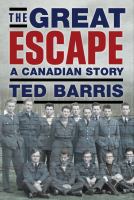
The great escape: a Canadian story / Theodore (Ted) Barris, 2013. Book. Adult Non-Fiction. 940.54724 BAR
Canadian military historian Theodore (Ted) Barris interviewed the surviving Canadian prisoners-of-war involved in the Great Escape and accessed archival material never seen before to shine new light on the involvement of Canadian airmen in the complex planning of the March 1944 escape from Stalag Luft III. Six Canadians were executed by the Gestapo as part of the group of fifty. Barris explored the survivors’ guilt and anger over their colleagues’ executions.
Also available in eBook (Access Online) format.
Read the review in the Globe and Mail. Read the review in Publishers Weekly.
As part of Keep Toronto Reading in 2014, Toronto Public Library is hosting author Ted Barris to discuss The great escape: a Canadian story at two branch locations:
Gerrard/Ashdale Branch, 1432 Gerrard Street East – Thursday, April 10, 2014, 6:45-8:00 p.m.
Morningside Branch, 4279 Lawrence Avenue East – Tuesday, April 15, 2014, 6:30-8:00 p.m.
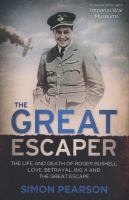
The great escaper: the life and death of Roger Bushell: love, betrayal, Big X and The great escape / Simon Pearson, 2013. Book. Adult Non-Fiction. 940.54724 BUS PEA
Journalist Simon Pearson authored this first biography of South African-born Squadron Leader Roger Joyce Bushell, the mastermind of the Great Escape also known as “Big X”. Bushell’s family donated his papers to the Imperial War Museum which assisted Pearson in penning this book. Read the story of the multilingual Bushell who became a barrister championing the underdog as well as an international ski champion, and a fighter pilot with attractive girlfriends. Bushell was shot down on May 23, 1940 over occupied France and made three escape attempts over the course of the war, including the Great Escape. Bushell was one of the fifty prisoners-of-war executed by the Gestapo on March 29, 1944.
Read the review in the Huffington Post UK. Read the review in the Sunday Times.
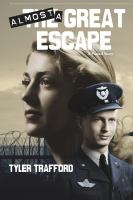
Almost a great escape: a found story / Tyler Trafford, 2013. Book. Adult Non-Fiction. 813.54 TRA
The author discovered an album of old letters and photographs following his mother Alice Trafford’s death in 2004 that revealed her past involvement with a Norwegian pilot named Jens Müller who was training at Little Norway in Canada during World War Two. Jens Einar Müller became one of only three of the 76 prisoners-of-war to have successfully completed the Great Escape.
Read the review in Publishers Weekly.
Human game: the true story of the 'great escape' murders and the hunt for the Gestapo gunmen / Simon Read, 2012. Book. Adult Non-Fiction. 940.54724 REA
Follow the story of Allied military police led by Squadron Leader Francis P. McKenna after the Second World War to investigate the executions of the fifty Allied prisoners-of-war on account of the Great Escape and to bring their killers to justice.
The great escapers: the full story of the Second World War's most remarkable mass escape / Tim Carroll, 2005. Large Print Book. Adult Non-Fiction. 940.54724 CAR
The great escape from Stalag Luft III: the full story of how 76 Allied officers carried out World War II's most remarkable mass escape / Tim Carroll, 2004. Book. Adult Non-Fiction. 940.54724 CAR
Read this account of how Allied prisoners-of-war engaged in intricate tunneling to escape Germany’s “escape-proof” camp, culminating in the Great Escape of March 1944. Those recaptured were vigorously interrogated by the Gestapo and fifty of them were shot as a reprisal. Learn also about the often overlooked but more successful “Wooden Horse” escape attempt made in October 1943, albeit on a much smaller scale.
Read the review in Publishers Weekly.
The tunnel king: the true story of Wally Floody and the great escape / Barbara Hehner, 2004. Book. Children’s Non-Fiction. J 940.54724 FLO HEH
Canadian miner and RCAF Flight Lieutenant Wally Floody worked on the tunnels in the lead-up to the Great Escape. However, the Germans grew suspicious that something was amiss and transferred several prisoners, including Wally Floody, out of Stalag Luft III, prior to March 24, 1944. Unfortunately, Floody’s friend and fellow miner, RCAF Flying Officer Hank Birkland, participated in the Great Escape and was one of the fifty Allied prisoners to be executed.
Review the review from CM (Canadian Review of Materials) (Volume XI Number 5 – October 29, 2004).
A gallant company: the men of the great escape / Jonathan F. Vance, 2003. Book. Adult Non-Fiction. 940.5472 VAN / 940.54723 VAN
Historian Jonathan Vance interviewed most of the survivors of the Great Escape and received help from families of greater than fifty percent of the fifty executed prisoners-of-war. The author included newly uncovered anecdotes and photographs surrounding surviving participants of the Great Escape.
Read the review of the 1998 edition in Canadian Military History Book Review Supplement, Spring 1998, pages 14-15.

The great escape: the full dramatic story with contributions from survivors and their families / Anton Gill, 2002. Book. Adult Non-Fiction. 940.54724 GIL
This book delved into research for a war crimes trial derived from the Allied investigation into the atrocities surrounding the execution of fifty of the escaped prisoners-of-war from the Great Escape. The author also conducted interviews with survivors of the Great Escape and family members of the executed airmen.
Consider the following DVD documentary:
Great escape [1 videodisc] / a Windfall Films production for Nova/WGBH Boston; produced by David Dugan; written and directed by Mark Radice, [2005]. DVD. Documentary. Adult Non-Fiction. 940.53174 GRE
This PBS Nova documentary examined the events of the Great Escape and filmed an archaeological dig that occurred on the site of Stalag Luft III. Read the transcript of the documentary here. Visit the PBS Nova page for documentary details.
Consider the following classic feature film based on the true story:
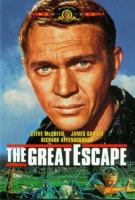
The great escape [1 videodisc] [widescreen version] / Steve McQueen, James Garner, Richard Attenborough, James Donald, Charles Bronson, Donald Pleasence, and James Coburn, c1998, [1963]. DVD. Feature Film. FEATURE GRE
The 1963 feature film featured Steve McQueen as American Army Air Force Captain Virgil Hilts (“Cooler King” – a character arguably based on American Army Air Force pilot and prisoner-of war David M. Jones who participated in the Great Escape), Richard Attenborough as Squadron Leader Roger Bartlett (Big “X” – the fictionalized version of Roger Bushell), and Charles Bronson as Flight Lieutenant Danny Velinski (“Tunnel King”) amongst others in a star-studded international cast.
Comments