Snapshots in History: February 4: Remembering Rosa Parks

(Credit: National Archives and Records Administration Records of the U.S. Information Agency Record Group 306)
It is fitting during Black History Month that one remembers the African-American civil rights activist Rosa Parks (Born: February 4, 1913 in Tuskegee, Alabama; Died: October 24, 2005 in Detroit, Michigan). For many people, Rosa Parks’ claim to fame was her courageous stand in fighting racial segregation on public buses in Montgomery, Alabama on December 1, 1955 by refusing to give up a seat in the bus section reserved for African-Americans after the section for white passengers had already been filled. Her arrest for refusing to comply with unfair rules led to the Montgomery Bus Boycott from December 1, 1955 to December 20, 1956 which ended when the United States Supreme Court ruled that Montgomery city and Alabama state laws on bus segregation were unconstitutional. Leading civil rights leaders such as Reverend Dr. Martin Luther King Jr. and Ralph Abernathy played prominent roles in the boycott campaign.
Rosa Parks, along with her husband Raymond Parks, were members of their local chapter of the NAACP (National Association for the Advancement of Colored People). Due to her active role in the civil rights struggle in Alabama, Rosa Parks and her husband suffered economic hardship and briefly re-located in Hampton, Virginia before settling in Detroit, Michigan. Parks fought against segregation there in education and housing as well. While often disagreeing with Dr. King on process, Parks was able to convince King to appear with local Democratic Representative candidate John Conyers who was elected to Congress in November 1964. (John Conyers still sits in the House of Representatives and is currently the longest-serving member of the present American Congress.). Following his initial election, John Conyers hired Rosa Parks to work as a secretary in his Detroit office, a position from which she retired in 1988. Parks kept Conyers well-informed on socio-economic and community issues.
Following her retirement, Parks penned an autobiography and lived a private life in Detroit. She received different awards, including the NAACP Spingarn medal in 1979, the Presidential Medal of Freedom (1996), and the Congressional Gold Medal. Rosa Parks suffered from frail health and dementia in her later years. Upon her death, Rosa Parks’ body lay in honour in the Capitol Rotunda. After she died, Rosa Parks was honoured with a posthumous statue in the United States Capitol’s National Statuary Hall.
Consider the following titles for borrowing from Toronto Public Library collections:
Books:
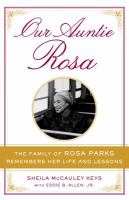


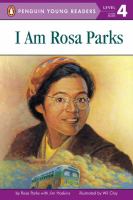

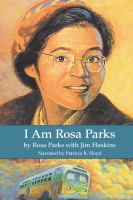
eBooks:

Large Print:

DVD Documentaries:


Comments