Snapshots in History: March 19: Remembering Louis Riel and the 1885 North-West Rebellion
On March 19 and beyond, take a moment to remember Métis leader (and founder of the province of Manitoba) Louis Riel (Born: October 22, 1844; Died: November 16, 1885) in connection to the anniversary of the establishment of the Provisional Government of Saskatchewan on March 19, 1885, an event that led to the start of the North-West Rebellion on March 26, 1885 with the Battle of Duck Lake. A force under the command of Métis military leader Gabriel Dumont defeated a smaller force of North-West Mounted Police troops. A month later on April 24, 1885, Dumont’s forces defeated a larger Canadian military force at the Battle of Fish Creek, while allied indigenous Cree and Assiniboine forces under Chiefs Poundmaker and Fine Day defeated a larger Canadian force at the Battle of Cut Knife on May 2, 1885. However, the Battle of Batoche from May 9-12, 1885 was a victory for a larger Canadian militia and regular military force over Dumont and Riel and their supporters. This was the turning point in the rebellion and led to the collapse of the provisional government on June 3, 1885. The subsequent capture of Louis Riel, his trial and eventual execution on November 16, 1885 in Regina, Saskatchewan remain controversial footnotes in Canadian history.
Many see Louis Riel as leader in the fight for indigenous and Métis rights (in spite of mental health issues and spending time in an asylum in the 1870s (between the 1869-1870 Red River Rebellion and Riel’s ensuing provisional government of Manitoba [including the court-martial and execution of opponent Thomas Scott on Riel’s orders], the subsequent founding of Manitoba as a province within Canadian Confederation and into the 1880s leading up to the North-West Rebellion.)). Lands promised to the Métis people in Manitoba were mismanaged by the federal government and opportunities were stymied before they could even get started; this contributed to a westward migration into the Northwest Territories onto land that is now part of the province of Saskatchewan. Riel and some of his supporters fled to the United States for a time as a general amnesty was not forthcoming following the execution of Thomas Scott.
Fast forward back to 1885 and Riel’s trial for treason. The jury found him guilty but recommended mercy. However, the presiding judge sentenced him to death. Fifty years after Riel’s execution, one of the jurors opined that Riel was tried for treason but executed for having Thomas Scott executed. Francophone Canada (especially Québec) began to turn away from the Conservative Party towards the Liberal Party for several generations following Riel’s execution.
A less popular viewpoint puts the blame squarely on Louis Riel and the Métis people for their own misfortunes.
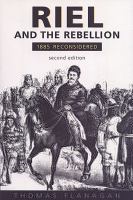
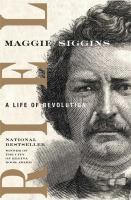
Consider the following titles for borrowing from Toronto Public Library collections to learn about Louis Riel and the Métis people:
Books:


eBooks:

Comments