Snapshots in History: July 24: Remembering Simón Bolívar

Given the backdrop of the current 2015 Pan American Games (and the upcoming 2015 ParaPan American Games) in the Greater Toronto Area, it seemed fitting for Snapshots in History to recognize the origins of some of the South American countries competing at these Games. Consequently, on July 24 and beyond, take a moment to remember Simón Bolívar (born Simón José Antonio de la Santísima Trinidad Bolívar y Palacios on July 24, 1783 in Caracas (the capital of present-day Venezuela); died December 17, 1830 in Santa Marta (in present-day Colombia)), who played a leading military and political role in the establishment of independent countries in Venezuela, Ecuador, Bolivia, Peru, and Colombia, free from Spanish colonial rule.
Simón Bolívar was born into a wealthy, Creole family but lost both of his paren'ts at a young age. Bolívar received private instruction from a variety of sources but Don Simón Rodríguez proved to be the most influential as both a tutor and mentor by inculcating the ideas of enlightenment, freedom, and liberty in young Bolívar. When his mentor was forced to leave after being accused of conspiring against the Spanish colonial administration, Simón Bolívar entered the military academy Milicias de Veraguas, furthering his knowledge of armaments and military strategy and his belief in liberty that would hold him in good stead during the wars of independence against Spain. In an interesting, historical footnote, Simón Bolívar witnessed the coronation of Napoléon 1 at Notre Dame in Paris that left a strong impression upon him.
While in Europe, Bolívar was influenced by rationalist thinkers of the day such as Rousseau and Montesquieu on political thinking, and Voltaire on philosophical thinking, not to mention Hobbes and Locke amongst others. In Paris, Bolívar also met German scientist Alexander von Humboldt, who having returned from his expedition to Latin America, offered the opinion that the Spanish colonies in Latin America were ready to foster their own destiny. While visiting Rome with Simón Rodríguez, Bolívar pledged to fight for independence from Spain. He was also decidedly opposed to slavery.
Simón Bolívar came back to Venezuela in 1807. With Napoléon 1 naming Joseph Bonaparte as King of Spain and its colonies (including Venezuela), Bolívar joined the independence movement and the Caracas-based movement gained independence in 1810. Consequently, Bolívar undertook a diplomatic mission to Great Britain seeking support, while the fight for independence continued back in South America. Bolívar and his followers invaded Venezuela on May 14, 1813 under the guise of the “Admirable Campaign” (Compana Admirable), leading to the creation of the Venezuelan Second Republic. Bolívar, known as The Liberator (el Libertador), was forced to flee to Jamaica when civil war broke out in the new republic. In exile, Bolívar composed his “Letter from Jamaica” that outlined his plan for a South American republic with a British-type Parliament coupled with a President-for-Life. Needless to say, Bolívar encountered opposition to the idea of a permanent President that could not be removed from office.
Bolívar gained support from Haïti and returned to South America to continue the struggle. He launched independence campaigns in Ecuador and Venezuela with victory at the Battle of Carabobo on June 24, 1821 leading to Venezuelan independence with a triumphant entry into Caracas five (5) days later. 1821 also saw the establishment of a federation called Gran Colombia (comprising modern day Venezuela, Colombia, Ecuador, and Panama). Subsequently, he became dictator of Peru in 1824, and the creation of Bolivia in 1825 (named after Bolívar himself).
Gran Colombia was difficult to govern and his attempt to create a union of nation-states was met by opposition from different factions. Bolívar declared himself dictator of Gran Colombia temporarily in 1828 and escaped an assassination attempt with the assistance of his mistress and fellow revolutionary Manuela Sáenz. He gave up his position in 1830 and planned to go to Europe in exile but died of tuberculosis on December 17, 1830 in present-day Colombia.
People looking back may question Simón Bolívar’s beliefs and methods but it is hard to argue that he shaped the fortunes and future of much of today’s South America. Even Karl Marx, writing in the 1858 New American Cyclopedia, criticized his wealthy background and his authoritarian, Bonapartist tendencies.
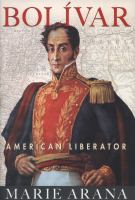
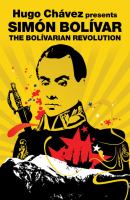
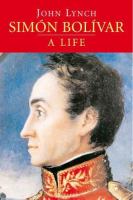
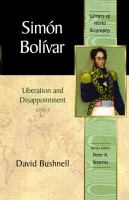
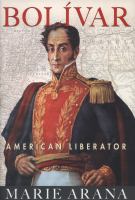
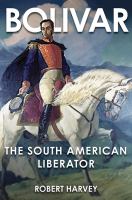
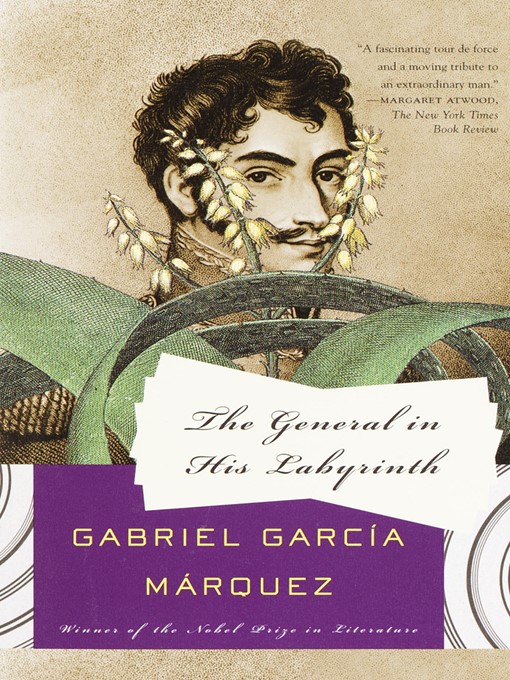
Consider the following titles for borrowing from Toronto Public Library collections, including the novel by Colombian Nobel Prize laureate Gabriel García Márquez – The General in His Labyrinth (translation of El general en su laberinto):
Books:


Comments