Alex Colville: Beneath the Surface
"More than any other artist in Canada, Colville has a galvanizing,
sea-to-shining-sea appeal."
Toronto Star
I am really looking forward to going to see the Art Gallery of Ontario's
retrospective exhibition in honour of Alex Colville, who died last
year. His work is indeed appealing, yet mysterious, and somehow
strikes a chord with many people. Spanning Alex Colville's entire
career, this is the biggest show of his work ever assembled.
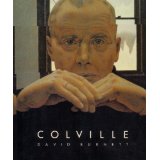
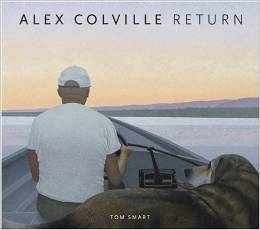
As reported in the Toronto Star, "More than any other artist in Canada,
Colville's images permeate both our psyche and our everyday life…" This
has certainly been true for me. I remember when I was a child, and
Canada was celebrating its Centennial in 1967, how fascinated I was by
the beautiful new Canadian coins with the rock dove on the penny, the
hopping rabbit on the nickel, the mackerel on the dime, and the bobcat
on the quarter. Little did I know that they were designed by Alex Colville.
I don't remember ever having a fifty cent piece with its howling wolf,
or a dollar coin with its Canada goose, but perhaps the
Royal Canadian Mint will some day reissue these lovely coins.
Later, when I lived in Montreal, I remember going to the Montreal
Museum of Fine Arts and being intrigued and somewhat puzzled by
Alex Colville's 1964 painting, "Church and Horse." Along with several
other of Alex Colville's images, it has appeared on a Canadian postage
stamp.
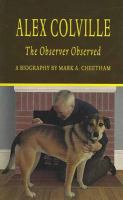
Alex Colville's images were there again when I went on a trip to Ottawa,
to visit the Canadian War Museum. His sombre paintings reflected how
profoundly this 24 year-old artist was affected by what he saw in Europe, particularly after the 1945 liberation of the Bergen-Belsen concentration
camp. Alex Colville had become an official war artist in 1944, having
joined the army after graduating from Mount Allison University in
New Brunswick. Alex Colville had moved to Nova Scotia as a child in
1929, and was born in Toronto in 1920.
After World War II, Alex Colville turned to painting images with which
we are more familiar: his family, animals and landscape. As familiar
as these images are to us from reproductions, book and record covers,
I was still somewhat startled to learn that four of his works appear
in Stanley Kubrick's horror film, "The Shining." Alex Colville also
thought Joel and Ethan Coen were "great filmmakers," according to
his daughter, Ann Kitz. Ann Kitz is the keeper of her father's artistic
legacy, and has been involved in the Art Gallery of Ontario's current
exhibition. Here is her touching recollection of her father, and his
relationship with her mother, Rhoda Colville:
Not only familiar to many Canadians, Alex Colville's paintings reached
a wider audience with the touring exhibition of his 1983 Art Gallery
of Ontario retrospective. The exhibition toured in Germany and the
Far East, and, for the first time for a living Canadian artist, to Japan.
Gu Xiong, a Vancouver-based artist, has said that "Horse and Train"
had a profound influence on him when it was shown in China in the
1980s.
You can visit the Art Gallery of Ontario for free with a Sun Life Financial
Museum + Arts Pass, and look forward to discovering what the
exhibition's curator, Andrew Hunter, says about Alex Colville's work,
"There's what you see on the surface, but you can so easily go
deeper. He wasn't controlling about that. He wanted you to come
to the work and take it where you want to go."
4 thoughts on “Alex Colville: Beneath the Surface”
Great post, Muriel. I had no idea Colville was behind the mackerel dime, the bobcat quarter and the rabbit nickel. I’m going to have to watch “The shining” again to spot the Alex Colville works!
Thank you, Maureen. I am just so glad I appreciated Alex Colville’s work in such a tangible way with the Centennial coins, before I even knew who he was. You are braver than me to watch “The Shining” again, but it would be interesting to spot Alex Colville’s paintings in the film!
This is a nice tribute. I did not realize the 1967 coins involved his creative talents. This was an enjoyable read.
Thank you very much, Ann. It was interesting to reflect on how much Alex Colville’s images have had a part in my, and other people’s, lives.