Matthew Henson: the first African-American Arctic explorer
Toronto's had a lot of cold weather and snow lately, but it still doesn't amount to much compared to what Matthew Henson experienced during his seven trips to the Arctic as a member of Robert Peary's expeditions. Henson, the world's first black Arctic explorer, accompanied Peary seven times over the course of 23 years, including their last trip in 1909 when they may or may not have become the first explorers to reach the North Pole.
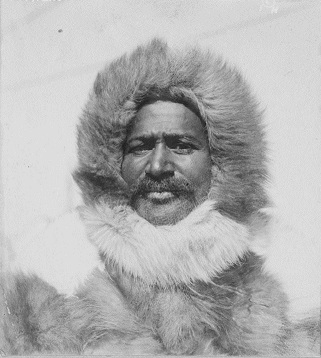
Henson was born on a Maryland farm in 1866 and began working as a cabin boy on ocean-going ships at the age of 12. By the time he turned 20 he'd already sailed around the world and become a skilled navigator. During a rare spell spent working on land he met Peary, who recruited him as an aide after learning about his experiences at sea. Henson quickly worked his way up to "first man" status and proved himself an indispensable craftsman and dog sled team driver, and also mastered the Inuit language over the course of six grueling expeditions.
In 1908, Peary mounted his eighth and last attempt to reach the Pole; the first seven had been unsuccessful, although the 1906 expedition had set a "farthest north" record. After struggling across hundreds of miles of snow, water, ice and dangerous Arctic conditions, Henson and four Inuit guides accompanied Peary on his final push to the Pole. However, by that point Peary was incapacitated by illness and frostbite and sent Henson ahead as a scout while he was being pulled along in a sled, which meant he was actually the first person to step foot on the Pole and plant the American flag.
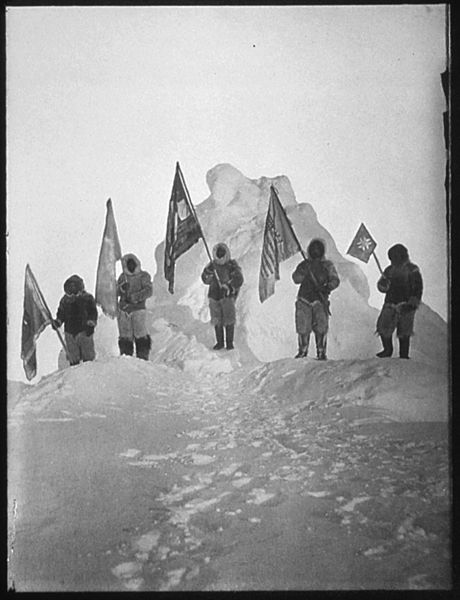 Henson and the Inuit members of the Peary sledge team posing at the North Pole
In the wake of the expedition Henson did not receive the credit and acclaim he deserved due to the racism of the day, but he did publish his autobiography, A Negro Explorer At The North Pole, in 1912 and collaborated with writer Bradley Robinson on a 1947 biography entitled Dark Companion. He was also admitted to the exclusive Explorers Club in 1937, was granted honorary doctorates by two universities, and was formally honored by the U.S. Navy, Congress and Presidents Truman and Eisenhower before he died in 1955.

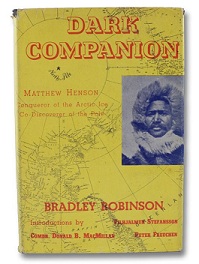
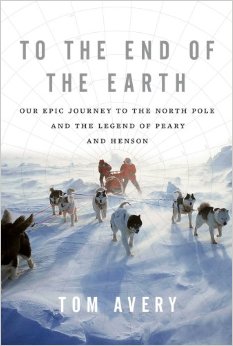
Controversy still rages over whether Henson and Peary actually reached the Pole. Researchers have examined Peary's diary and the astronomical observations listed in his expedition records and concluded that they did not. However, in 2002 British explorer Tom Avery set out to recreate their journey using the same equipment available to the 1909 expedition and traveling the same route. His party completed the journey four hours faster than Peary's records indicated, which added credence to Peary's claims. Avery tells his story in the book To The End Of The Earth: Our Epic Journey To The North Pole And The Legend of Peary And Henson.
Whether or not Henson and Peary actually made it all the way to the North Pole, Henson's legacy as an African-American hero and one of the 20th century's greatest explorers is secure.

Comments