Shakespeare’s Macbeth: Double, Double Toil and Trouble
There is so much toil and trouble in Shakespeare's Macbeth that I think it will continue to captivate audiences forever! Recently, I went to the Stratford Festival to see their excellent 2016 production of Macbeth, starring the mesmerizing Ian Lake as the power-mad Medieval Scottish general Macbeth. Macbeth is spurred on by his passionate wife Lady Macbeth (played by Krystin Pellerin) to murder King Duncan, so Macbeth can'take the Scottish throne for himself.
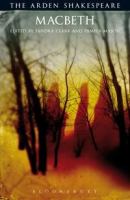
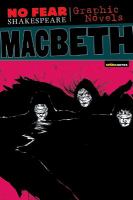
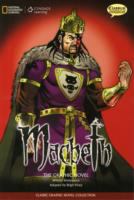
First Witch: When shall we three meet again? In thunder, lightning, or in rain?
Second Witch: When the hurlyburly's done, When the battle's lost and won.
Third Witch: That will be ere the set of sun.
~Macbeth, Act I, Scene I
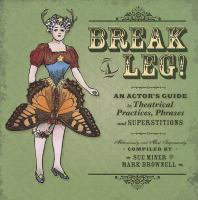
The three witches figure prominently in Macbeth, with their chilling and thrilling foretelling and incantations. So important are the witches to the play, that at the 2016 Stratford production, I noticed that the stage there is covered with moss and rocks, instead of being presented as a castle. This is a natural setting for the witches, and all of the characters in the play are so enmeshed in the supernatural that the Toronto Star noted that, "…the characters never really leave the witches' territory in the woods." If you are, as I am, interested in stage designs, Toronto Reference Library’s Special Collections in the Arts has the largest stage design collection in any Canadian public library.
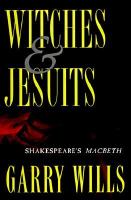
In Witches & Jesuits, Pulitzer Prize-winning Garry Wills argues that Macbeth was written in the context of the failed 1605 Gunpowder Plot to blow up the English monarchy and Parliament. Wills also states that Shakespeare believed the Jesuits had backed the treason, and the playwright also intended the witches to serve as a demonic presence throughout Macbeth. For more about Shakespeare, try Toronto Public Library's recommended websites.
I find the play Macbeth to be especially fascinating, since it is supposedly cursed! Backstage at the theatre, the word "Macbeth" is not mentioned, and "The Scottish Play" has been used as a substitute name. Macbeth was first performed at Shakespeare's
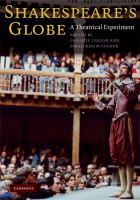
original Globe Theatre in London in 1611. The reconstructed Globe Theatre is on the south bank of the River Thames, not far from where the original theatre stood. The Globe Theatre will be presenting Macbeth until October 1, 2016 in this special year, which marks 400 years since Shakespeare's death.
Closer to home, have fun reading Shakespeare aloud with Shakespeare Readers at Toronto Public Library's Beaches branch; try English Country Dancing (danced during Shakespeare's time) at Locke branch on October 1, 2016 or venture outdoors to High Park for a pay-what-you-can Shakespearean performance by Canadian Stage of Hamlet or All's Well That Ends Well.
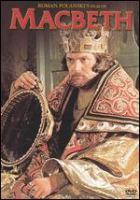
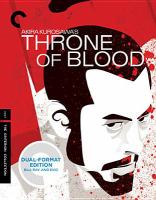
Macbeth has been recently captured on film with Michael Fassbender as Macbeth, and Marion Cotillard as Lady Macbeth. The Toronto Star described them in the film as, "Two of the world's finest actors, they make a magnetic pair." Director Roman Polanski's controversial Macbeth is a particularly violent and graphic version, and director Akira Kurosawa transposes Macbeth to feudal Japan.

4 thoughts on “Shakespeare’s Macbeth: Double, Double Toil and Trouble”
Macbeth is one of my favourite Shakespeare plays. I can’t wait to see the newest film version, with Michael Fassbender and Marion Cotillard. I didn’t get around to seeing it when it first came out, so thanks for the reminder.
I am glad you enjoy Macbeth, too. The desire for power and wealth, and the lengths to which some people will go to, to attain them, is such a timeless theme.
Hi Muriel:
Thank you for this interesting blog. Someday I would love to attend the Stratford Festival and enjoy a Shakespearean play. I would probably like see Coriolanus–a less popular play–since that was a play I examined in an undergrad course that brought back good memories.
Hi Ann,
You are most welcome. I hope the Stratford Festival puts on “Coriolanus” soon for you to see – the last time they did was in 2006.