Vintage Homeschooling Advice by Ellenor Fenn, aka “Mrs. Lovechild”
With physical classrooms closed and students at home, paren'ts are feeling the pressure to help their children learn. Paren'ting philosophies have changed over the centuries, but stressing about your child’s education is nothing new. Out of curiosity, I turned to our Osborne Collection of Early Children's Books to explore some vintage homeschooling advice.
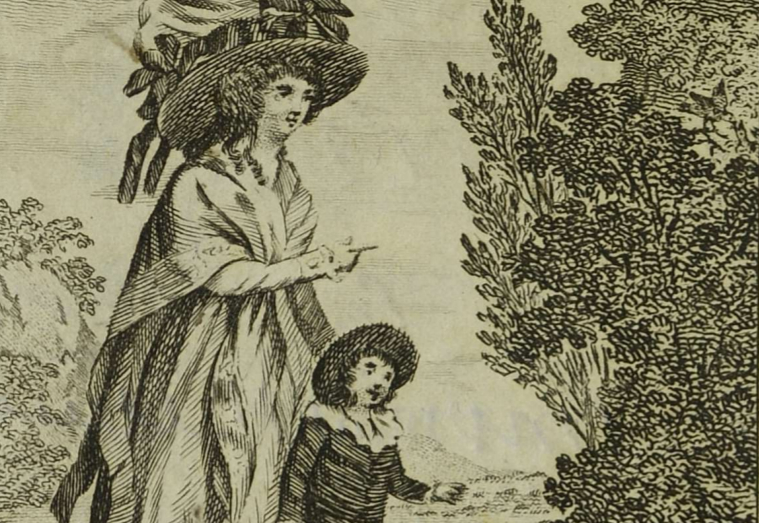
Travelling back to the 18th century, I looked at the works of education writer Ellenor Fenn. She wrote books designed to ease her readers' homeschooling distress. Centuries before paren'ting Instagrams or Facebook Groups, mothers turned to Fenn for guidance.
Who was Ellenor Fenn?
Ellenor Frere (birth name) was born in 1744 to a privileged family in Suffolk, England. She did not attend formal schooling and was educated by her aunt. This was common as many upper class 18th-century women were taught at home. In 1766, she married fellow writer John Fenn and settled down in Norfolk, England. She had no biological children but raised two adopted children. Later in life, Fenn became active in the Sunday School movement. This movement sought to teach working class children basic reading, writing and math.
Fenn published under the punny pseudonyms Mrs. Teachwell and Mrs. Lovechild from 1783 until her death in 1813. She was prolific, writing more than 45 books for mothers and children during this period. Some of her most popular works remained in print for more than 50 years after her death. We have 20+ digitized editions of her work, as well as more non-digitized items.
Eighteenth and 19th-century mothers found value in Fenn’s words, but how do her works hold up for modern readers? Fenn's advice is a mix of 18th-century values and progressive ideas. Reading her books shows how education and paren'ting has changed, but also stayed the same.
Make learning a game
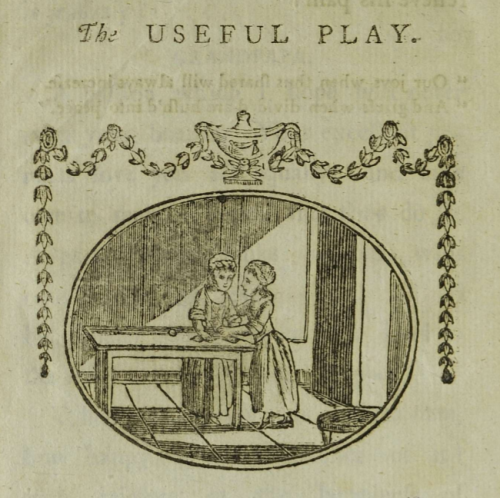
Fenn was an early advocate for using play and games to teach young children. Nowadays, we talk about play-based learning for kindergartners. Her 18th-century books focus on the value of "teaching in sport." In The Art of Teaching in Sport, she says that toys can "serve to convey instruction" allowing "precious hours of childhood…improved to good purpose." She recommends using "lively" games to teach children spelling, math and sciences. Fenn suggests that home educators should make learning engaging and match it to the attention span of their child.
Fenn’s books assume that mothers fill the role of home educator. They encourage women to be "mistress of the revels among her little people." In her books, male educators are school masters, not fathers. In the 21st century, women continue to take on more caregiving work than their male counterparts. The pandemic has even increased that workload for many mothers.
Follow your child's curiosity
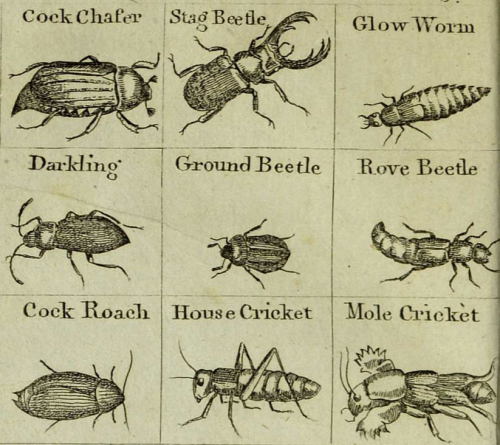
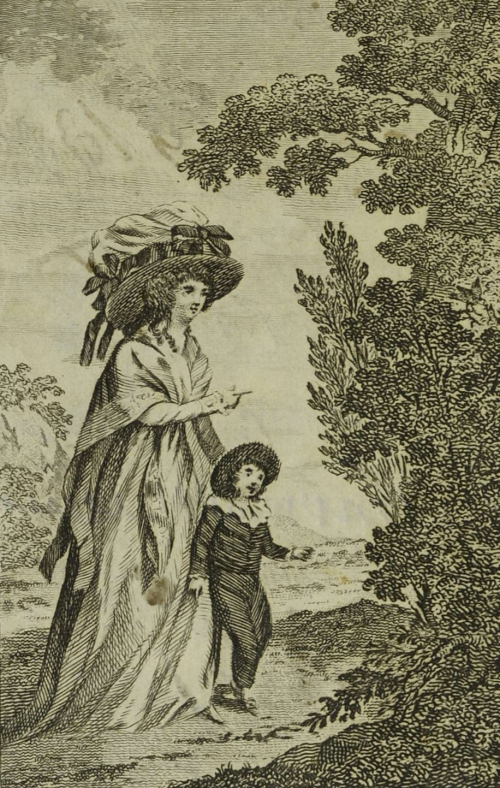
Memorization and repetition were popular methods of education in the 18th century. Fenn’s books discuss those methods, but also encourage mothers to follow their child’s natural curiosity. The Rational Dame encourages mothers to "[t]alk to a child of an object which has caught his attention, and fear not, he will 'With greedy ear devour up your discourse.'" Her books recommend using outdoor walks as a learning opportunity. Garden walks can help teach biology, geography and other subjects. During this pandemic, paren'ts are using neighbourhood walks to engage their children. Some are setting up local scavenger hunts and encouraging outdoor exploration.
Learn with your child
In 2020, math is a major source of stress for many families. Methods for teaching basic math concepts have changed, leading to confused homework help sessions. In 18th-century England, it was grammar which caused upper class mothers distress.
In Parsing Lessons for Young Children, Fenn says "[l]adies view [grammar] as arduous undertaking and are fearful of engaging in it." English grammar used to be an afterthought, with Latin grammar prioritized by educators. Latin learning and grammar were usually reserved for men, with privileged boys studying it at school. Many women would not have studied English or Latin grammar at home or school.
In the late 18th century, English grammar received more attention and mothers were now expected to teach it at home. Fenn tried to assist these newly-minted grammar teachers with their homeschooling efforts. Two of Fenn’s most popular books were The Child’s Grammar: Designed to Enable Ladies who may not have Attended to the Subject Themselves to Instruct their Children and The Mother’s Grammar. The books offer lessons plans and explanations which allow teacher and student to learn together.
Further reading
Want to read more of Fenn's vintage homeschooling advice? Browse 20+ books on our Digital Archive.
You can find more in-depth information about Fenn and her work in these journal articles:
- "Mistress of Infantine Language": Lady Ellenor Fenn, Her Set of Toys, and the "Education of Each Moment" by Andrea Immel
- Disciplining Women?: Grammar, Gender, and Leisure in the Works of Ellenor Fenn (1743–1813) by Carol Percy
- Ellenor Fenn as "Mrs. Teachwell" and "Mrs. Lovechild": A Pioneer Late Eighteenth-Century Children's Writer, Educator, and Philanthropist by David Stoker
You can also explore 38 ways to use the library from home, which includes several online learning resources and online homework help.
4 thoughts on “Vintage Homeschooling Advice by Ellenor Fenn, aka “Mrs. Lovechild””
I love her! This is basically the same philosophy we are using at home now. We haven’t logged into the online classroom in weeks.
Funniest bit in
‘To Catch Flies or Dialogues in short sentences: Adapted to Children 3-8’…
“I conceive a lady,whose babes are but the visitors of ·an hour in the parlour, to exclaim-” This is just such stuff as my boy- and girl themselves
would write if they could make use of a pen.” Now that is precisely the highest compliment which I could receive.
The Parsing book is almost exactly how I was taught in Northern Ontario French schools in the 1970s! The Cobwebs book is very cool, but the use of the long s would throw off most adults, I think, let alone children. Fun, though. Maybe a read-aloud?
Love Mrs Lovechild: “Need it be hinted to mothers, that a long winded harangue
ls by no means adapted to children, no-remarks offered in ihort
frnten~es (as oceafion requires) or anfwers given to queftions artfully
introd’uced, are much more agreeable to them,” — The Rational Dame
(see what I mean about the long s?!).
Good post, interesting perspective. Thanks, Myrna!
Hi Mac,
Glad you enjoyed the blog post! The use of long s definitely slowed down my reading a couple time as I was researching this post. Luckily for modern readers, Cobwebs to Catch Flies was her most popular book and there are several later editions which use the more easily readable “short” s. We have an edition from the 1870s, which might make easier reading for modern children and adults: https://www.torontopubliclibrary.ca/detail.jsp?Entt=RDMDC-37131009530916D&R=DC-37131009530916D