Nunavut Day: July 9, 2021
Happy Nunavut Day! Let's learn more about Nunavut and how it came to be.
Nunavut, which means "our land" in Inuktitut, is the most northern territory in Canada, with most residents being Inuit.
Efforts to create Nunavut had been going on since the 1970s, with the Inuit Tapirisat of Canada filing its first land claim. Splitting the Northwest Territories in two was also considered before in the 1960s by the Diefenbaker government, but because there was no consultation, it did not happen.
In 1982, all people who lived in the Northwest Territories voted about dividing the province. 53% of the territory voted in favour of dividing, and for the next 10 years, residents and the government negotiated where the boundaries between territories would be.
In 1993, the Canadian Government settled an Inuit land claim, which gave "the Inuit outright control of more than 350,000 square kilometres of territory," cash payments, and making the Nunavut Act (1993). What the Nunavut Act of 1993 did was create the boundaries of Nunavut from the Eastern side of the Northwest Territories. The Act that made this official, called The Nunavut Land Claims Agreement Act, took effect on July 9, 1993.
While the Act took effect in 1993, the new borders came into effect on April 1, 1999.
We're sharing some books and documentaries in our collection that uplift voices from Nunavut.
Note: All Indigenous contributors have their Nation noted next to their name in brackets. All descriptions are from the Toronto Public Library website.
Books for Children
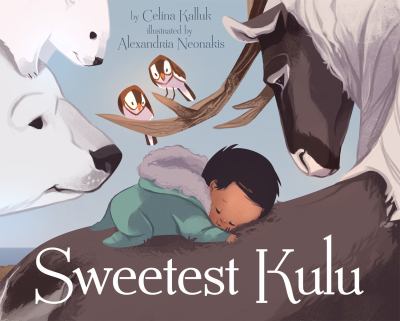
Sweetest Kulu by Celina Kalluk (Inuit), illustrated by Alexandria Neonakis
"This beautiful bedtime poem, written by acclaimed Inuit throat singer Celina Kalluk, describes the gifts given to a newborn baby by all the animals of the Arctic. Lyrically and tenderly told by a mother speaking to her own little "Kulu, " an Inuktitut term of endearment often bestowed upon babies and young children, this visually stunning book is infused with the traditional Inuit values of love and respect for the land and its animal inhabitants."
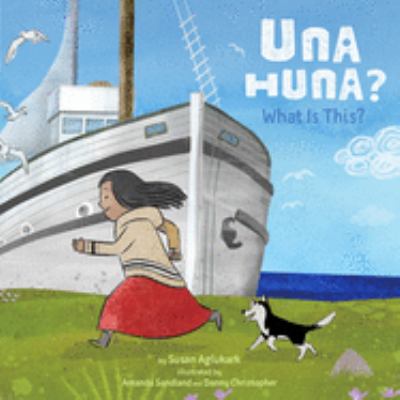
Una Huna: What Is This? by Susan Aglukark (Inuit)
"Ukpik loves living in her camp in the North with her family. When a captain from the south arrives to trade with Ukpik's̉ father, Ukpik is excited to learn how to use the forks, knives, and spoons he brings with him. At first, Ukpik enjoys teaching the other children how to use these new tools. But soon, she starts to wonder if they'll need to use the new tools all the time, and if that means that everything in camp will change. After a conversation with her grandmother, Ukpik realizes that even though she will learn many new things, her love for her family and camp will never change."
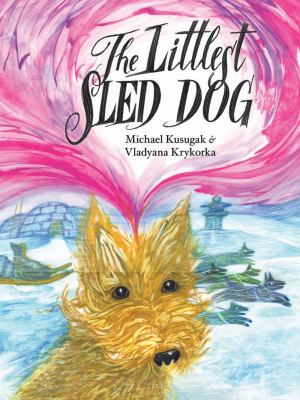
The Littlest Sled Dog by Michael Kusuguk (Inuit), illustrated Vladyana Krykorka
Igvillu is a little dog with big dreams. One of her favorite dreams is of becoming a sled dog. When Igvillu is adopted from her kennel by an Inuit storyteller and moves to northern Canada, she comes face-to-face with real sled dogs. Igvillu loves living in the North, chasing siksiks and dreaming about her future. She's a dog who believes anything is possible!
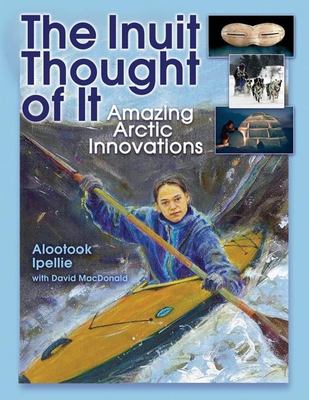
The Inuit Thought of It: Amazing Arctic Innovations by Alootook Ipellie (Inuit)
Today's Arctic communities have all the comforts of modern living. Yet the Inuit survived in this harsh landscape for hundreds of years with nothing but the land and their own ingenuity. Join authors Alootook Ipellie and David MacDonald as they explore the amazing innovations of traditional Inuit and how their ideas continue to echo around the world.
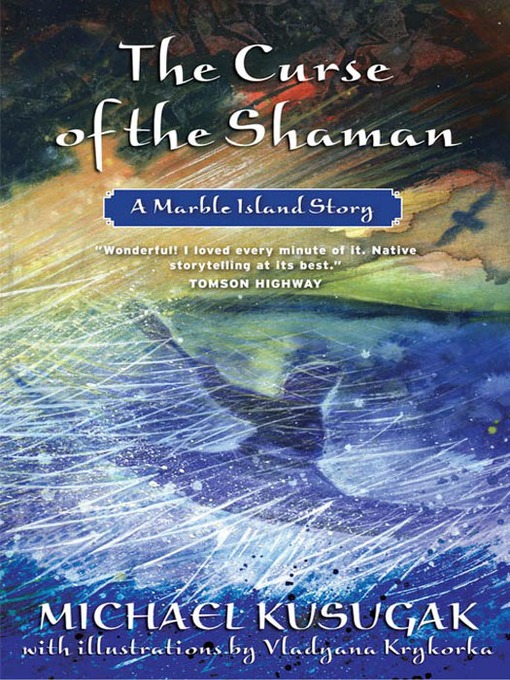
The Curse of the Shaman: A Marble Island Story by Michael Kusugak (Inuit), with contributions by Vladyana Krykorka
"Sometimes even shamans get cranky. That was baby Wolverine's misfortune–to be cursed by an out-of-sorts shaman frustrated by his own baby daughter's incessant crying. Not only has shaman Paaliaq forbidden the future marriage of Wolverine to Breath, Paaliaq's beautiful but teary baby girl, he has cursed Wolverine, banishing him when he becomes a young man. And even when a contrite Paaliaq later revokes the curse, the shaman's even crankier magic animal will not. Now Wolverine finds himself stranded on a barren island, locked in a life-or-death struggle to return to his home, his family and a very special young girl.
Michael Kusugak, consummate storyteller and bestselling author, conjures up an Inuit tale of adventure, perseverance and first-time love shot through with humanity and humour. This is a story perfect for its pre-teen and 'tween audience, where even the strong and the mighty have bad days, the bully gets his due and a dream can come true."
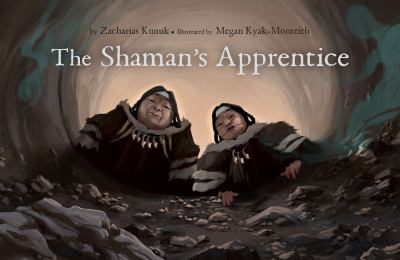
The Shaman's Apprentice by Zacharias Kunuk (Inuit), illustrated by Megan Kyak-Monteith (Inuit)
". . . tells the story of a young shaman in training who must face her first test–a trip to the underground to visit Kannaaluk, The One Below, who holds the answers to why a community member has become ill. Facing dark spirits and physical challenges, the young shaman must learn to stifle her fear and listen to what Kannaaluk has to tell her."
Books for Teens
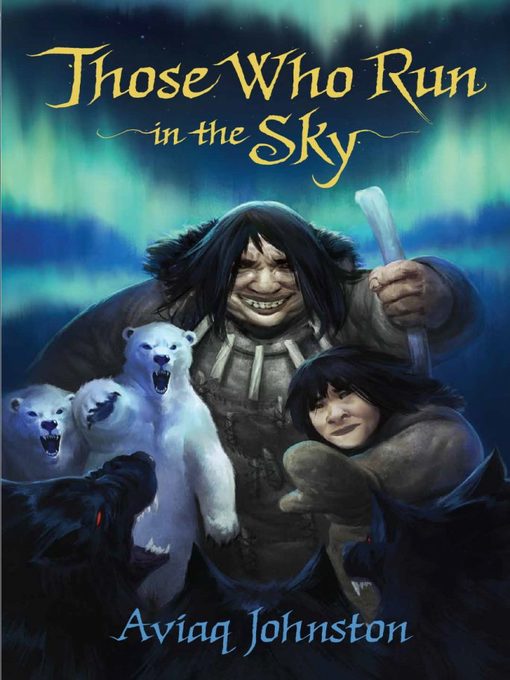
Those Who Run in the Sky by Aviaq Johnston (Inuit)
"After a strange and violent blizzard leaves young shaman-in-training Pitu stranded on the sea ice–without his dog team or any weapons to defend himself–he soon realizes that he is no longer in the word that he once knew. The storm has carried him into the world of the spirits, a world populated by terrifying creatures. As he tries to find his way back home, Pitu is plagued by black wolves with red eyes, ravenous and constantly stalking him, water-dwelling creatures that want nothing more than to snatch him and pull him into the frigid ocean through an ice crack, as well as beings less frightening, but equally as incredible, such as a lone giant who can carry Pitu in the palm of her hand and keeps caribou and polar bears as pets. After stumbling upon a fellow shaman who has been trapped in the spirit world for many years, Pitu must master all of his shamanic powers to make his way back to the world of the living, to his family and to the girl that he loves."
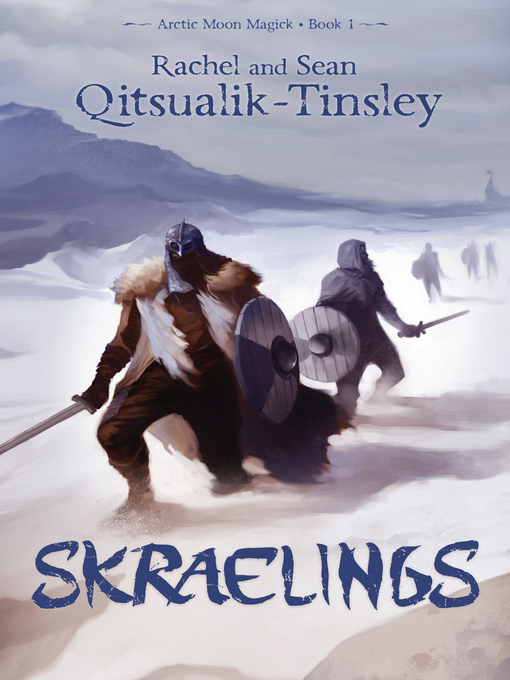
Skraelings: Clashes in the Old Arctic by Rachel Qitsualik-Tinsley (Inuit, Cree and Scottish) and Sean Qitsualik-Tinsley (Mohawk and Scottish)
"In this adventurous novel – set in the ancient Arctic, but narrated for modern readers by an inquisitive and entertaining contemporary narrator – a young, wandering Inuit hunter named Kannujaq happens upon a camp in grave peril. The inhabitants of the camp are Tunit, a race of ancient Inuit ancestors known for their shyness and meekness. The tranquility of this Tunit camp has been shaken by a group of murderous, pale, bearded strangers who have arrived on a huge boat shaped like a loon.
Unbeknownst to Kannujaq, he has stumbled upon a battle between the Tunit and a group of Viking warriors!
As the camp prepares to defend itself against the approaching newcomers, Kannujaq and a Tunit shaman boy named Siku discover that the Vikings may have motivations other than murder and warfare at the heart of their quest.
This lush historical fiction is steeped in Inuit traditional knowledge and concepts of ancient Inuit magic. The unique time and place brought to life in this exciting novel will delight young fans of historical and fantastical fiction alike."
Books for Adults
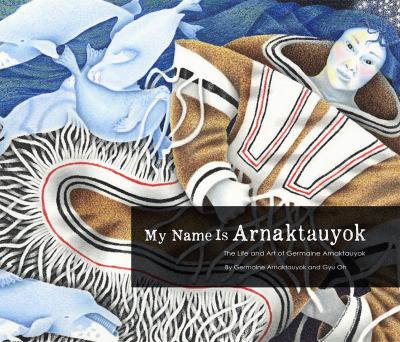
My name is Arnaktauyok: The Life and Art of Germaine Arnaktauyok by Germaine Arnatauyok (Inuit)
Germaine Arnaktauyok is one of the Canadian North's most prolific and recognizable artists. In this book, she tells the story of her life in her own words: her "very traditional Inuk life" growing up in Nunavut at a camp near Igloolik, and her experiences later in a residential school in Chesterfield Inlet; her education as an artist in Winnipeg and Ottawa; and her return to the North, where she continues to create drawings, etchings, and illustrations that have been featured in museums and galleries worldwide. She also provides commentary on several of her works, offering a seldom seen perspective on her inspiration and process. Featuring over one hundred full-colour reproductions of Germaine Arnaktauyok's fascinating pieces from throughout her career, this beautiful book provides an in-depth look at one of the world's most important artists.
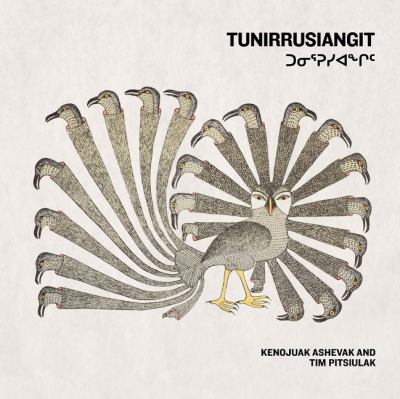
Tunirrusiangit: Kenojuak Ashevak and Tim Pitsiulak with contributions from Laakkuluk Williamson Bathory (Kalaaleq/Greenlandic Inuk), Koomuatuk Curley (Inuit), Anna Hudson, Kenojuak Ashevak (Inuit), Taqralik Partridge (Inuit), Jocelyn Piirainen (Inuit), Tim Pitsiulak (Inuit), and Georgiana Uhlyarik
Kenojuak Ashevak shot to fame in 1970 when Canada Post printed The Enchanted Owl, a print of a black-and-red plumed nocturnal bird, on a postage stamp. She later became known as the magic-marker-wielding "grandmother of Inuit art," famous for her fluid graphic storytelling and her stunning depictions of wildlife. She was a defining figure in Inuit art and one of the first Indigenous artists to be embraced as a contemporary Canadian artist.
Ashevak's legacy inspired her nephew, Timootee (Tim) Pitsiulak, to take up drawing at the Kinngait Studios. In his relatively short career, he became a popular figure, known for drawing animal figures with a hunter's precision and capturing the technological presence of the South in Nunavut.
Tunirrusiangit, "their gifts" or "what they gave" in Inuktitut, celebrates the achievements of two remarkable artists who challenged the parameters of tradition while consistently articulating a compelling vision of the Inuit world view. Published to coincide with a major exhibition at the Art Gallery of Ontario, opening on 16 June and continuing until late August, Tunirrusiangitfeatures more than 60 reproductions of paintings, drawings, and documentary photographs. Completing the book are essays by contemporary artists and curators Jocelyn Piirainen, Anna Hudson, Georgiana Uhlyarik, Koomuatuk Curley, Laakkuluk Williamson Bathory, and Taqralik Partridge that address both the past and future of Inuit identity.
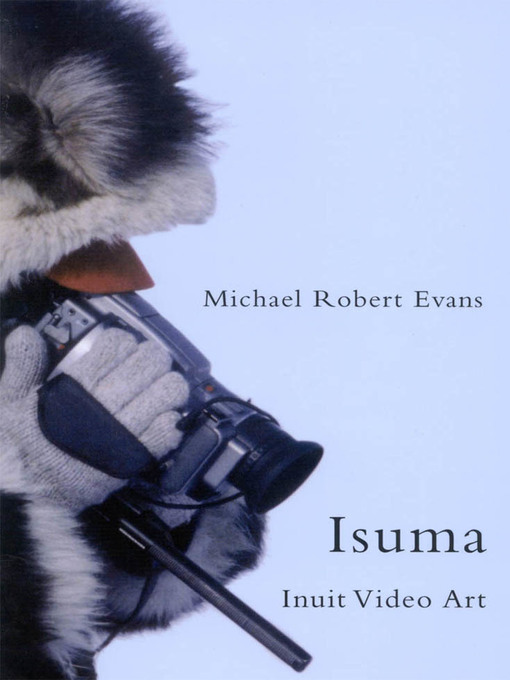
Isuma: Inuit Video Art by Michael Robert Evans
Since winning the Camera d'Or Award at the Cannes Film Festival in 2001, Igloolik Isuma Productions has been among the most well-known and influential indigenous film companies in the world. Isuma's premier movie, Atanarjuat (The Fast Runner) – the first-ever feature film produced by the Inuit and presented entirely in the Inuktitut language – has received numerous awards and critical acclaim. In Isuma: Inuit Video Art Michael Evans explores multiple aspects of the production company's filmmaking, including its cultural and political stances, its embrace of folklore and respect for ancestors, and its role in the Arctic community of Igloolik. In-depth interviews with the people of Isuma and a thoughtful analysis of their films reveal how the producers combine their vision of Inuit wisdom and honour with the demands of modern filmmaking to create compelling and visually stunning films that share Inuit culture with an international audience. Isuma: Inuit Video Art is a pragmatic, comprehensive and accessible study, bringing Isuma's Arctic to life while positioning its efforts within a larger frame of indigenous media and cultural expression.
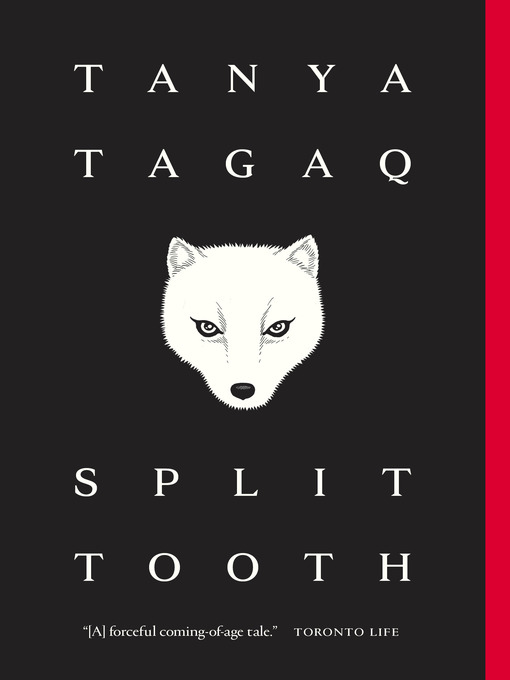
Split Tooth by Tanya Tagaq (Inuit)
"From the internationally acclaimed Inuit throat singer who has dazzled and enthralled the world with music it had never heard before, a fierce, tender, heartbreaking story unlike anything you've ever read. Fact can be as strange as fiction. It can also be as dark, as violent, as rapturous. In the end, there may be no difference between them. A girl grows up in Nunavut in the 1970s. She knows joy, and friendship, and paren'ts' love. She knows boredom, and listlessness, and bullying. She knows the tedium of the everyday world, and the raw, amoral power of the ice and sky, the seductive energy of the animal world. She knows the ravages of alcohol, and violence at the hands of those she should be able to trust. She sees the spirits that surround her, and the immense power that dwarfs all of us. When she becomes pregnant, she must navigate all this. Veering back and forth between the grittiest features of a small arctic town, the electrifying proximity of the world of animals, and ravishing world of myth, Tanya Tagaq explores a world where the distinctions between good and evil, animal and human, victim and transgressor, real and imagined lose their meaning, but the guiding power of love remains. Haunting, brooding, exhilarating, and tender all at once, Tagaq moves effortlessly between fiction and memoir, myth and reality, poetry and prose, and conjures a world and a heroine readers will never forget."
Documentaries
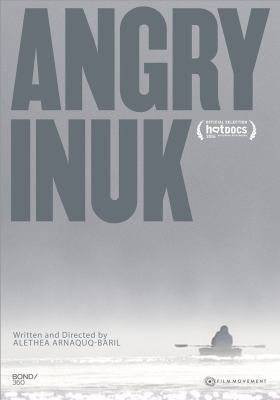
Angry Inuk directed by Alethea Arnaquq-Baril (Inuit), cinematography by Qajaaq Ellsworth (Inuit), featuring Joannie Ikkidluak (Inuit), Aaju Peter (Inuit – Greenland) and Bonnie Thompson
An Inuk filmmaker takes a close look at the central role of seal hunting in the lives of the Inuit, the importance of the revenue they earn from sales of seal skins, and the negative impact that international campaigns against the seal hunt have had on their lives.
The Grizzlies by Alethea Arnaquq-Baril (Inuit), Tantoo Cardinal (Cree and Métis), Damon D'Oliveira
In this inspiring true story, a group of Inuit students in a small, struggling Arctic community is changed forever through the transformative power of sport.
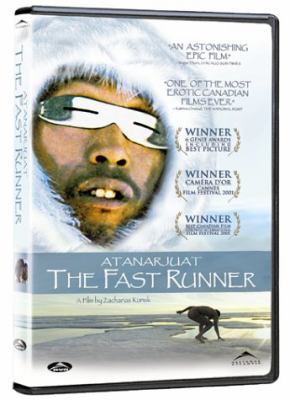
Atanarjuat, The Fast Runner by Paul Apak Angilirq (Inuit) and Zacharias Kunuk (Inuit)
"Evil in the form of an unknown shaman divides a small community of Inuit. Twenty years later, two brothers emerge to challenge the evil order: Amaqjuag, the Strong One, and Atanarjuat, the Fast Runner. Atanarjuat wins the hand of the lovely Atuat away from the boastful son of the camp leader, Oki, who vows to get even. Oki ambushes the brothers in their sleep, killing Amaqjuaq, as Atanarjuat miraculously escapes running naked over the spring sea ice."
—
Updated on July 9, 2021 to include Tantoo Cardinal's Nation.
Comments