Zhang Ailing (Eileen Chang), a Genius Writer
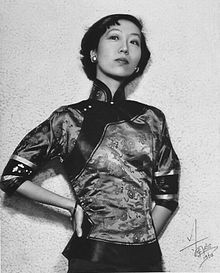
Zhang Ailing (Eileen Chang) is one of the great writers of 20th-century China and was revealed to be a genius from an early age. She wrote numerous literary works throughout her life, including novels, essays, screenplays and literary writings. She lived and worked in Shanghai, Hong Kong and the United States, all of which figure prominently in her work. "The Fall of the Pagoda", "The Book of Change" and "Little Reunions" are all of a semi-autobiographical nature.

This book tells the story of a girl Pipa in her late teens who runs away from her opium addict father’s Shanghai mansion after she has a fight with her stepmother.

"The Fall of the Pagoda" explores the childhood of a small girl named Lute (Pipa in Chinese Pinyin) in Shanghai at a time when traditional values are turned upside down and new values have yet to be established.
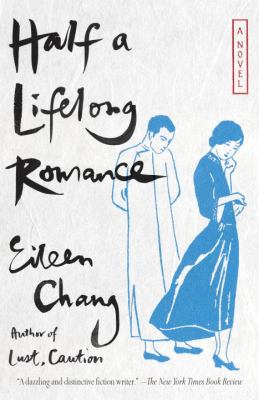
In 1930s Shanghai, Shen Shijun, a young engineer, has fallen in love with his colleague, the beautiful Gu Manzhen.

This intricate novel follows a young Chinese woman, known as Julie (Sheng Jiuli), who comes of age during World War II.

A pleasant and emotional story about Bai Liusu leaving her family for the Battle of Hong Kong. While the war did not turn her into a revolutionary woman, it affected Fan Liuyuan, encouraging him to finally get married. Marriage, however, did not make him into a saint.
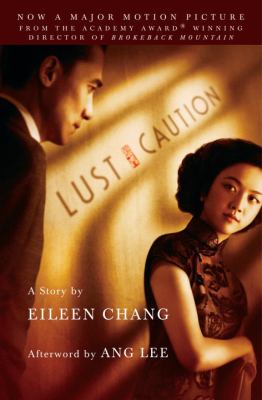
In the midst of the Japanese occupation of China and Hong Kong, two lives become intertwined: Wong Chia Chi (Wang Jiazhi), a young student active in the resistance, and Mr. Yee (Yi), a powerful political figure who works for the Japanese occupational government.

Two young students, Liu Ch’uen (Liu Quan) and Su Nan, fall in love when they are sent to a farm to help the peasants take over the fields.
4 thoughts on “Zhang Ailing (Eileen Chang), a Genius Writer”
I first heard the author’s name in early 80s when I went to university in Shanghai, at the time her reputation was rehabbed and her works regained interest. Zhang Ailing was a genius in her literary world, but she was also intelligent and chose to leave mainland, which prevented her from being prosecuted and purged in many political campaigns. There is one stain in her life: she married with Hu Lancheng, a writer, editor, and a high profile collaborator who worked in the puppet government during the Japanese occupation of China. Anyone can disagree: We should judge the artist’s works, not her personal life.
Hi Guikang, I agree with you. Thanks for reading and also for sharing the author’s life story.
張愛玲的氣質和性格鑄就了她的寫作天才,也注定了她的命運。我讀的她的第一個故事就是紅玫瑰與白玫瑰,那句”硃砂痣”與”蚊子血”,”明月光”與”白飯粒”的經典評論永遠都記得。
Hi Annie, I am also Ailing’s fan. Toronto Public Library will order 紅玫瑰與白玫瑰 soon. Please stay tuned. Thanks for your comment.