National Aboriginal Veterans Day: November 8, 2020
Many of us honour our veterans on Remembrance Day. But did you know that there is a day to honour Indigenous veterans? National Aboriginal Veterans Day honours First Nations, Inuit and Métis individuals who have served in the air force, navy, or army.
National Aboriginal Veterans Day began in 1994, "when Indigenous veterans were not recognized in Remembrance Day activities." It is recognized on November 8 each year.
It is estimated that over "12,000 Indigenous people from Canada served" (PDF) in war and peace efforts, "with at least 500 of them losing their lives."
In World War 1, over 4000 Indigenous peoples served in the military. All soldiers chose to join, as Indigenous communities were against conscription. Indigenous communities opposed conscription (PDF) because they were not allowed to be Canadian citizens or vote at that time.
At first, Status First Nations were not allowed to join the military (PDF). This is because the military thought that Indigenous peoples would use uncivilized war conduct.
From 1916 onward, this practice was rarely applied (PDF) with any consistency due to a pressing need for service. Many Indigenous soldiers went on to be snipers and reconnaissance scouts.
During World War 2, many Indigenous people also served as Code Talkers. Code Talkers translated important messages to and from Indigenous languages to share over the radio. As Indigenous languages were local to North America, it made an unbreakable code that "baffled enemy forces."
On the battlefield, every soldier was treated with equality. At home, Indigenous veterans were not treated the same.
Canadians believed that Indigenous veterans already had "extra benefits" through treaties. Thus, it would be considered unfair (PDF) to provide them with the same level of support other veterans received. Veterans received supports such as receiving land, loan and repayment programs and financial compensation. Indigenous people either had restricted access or no access without losing their legal status (PDF).
Let’s honour our Indigenous veterans by learning more about their experiences during and after war. You can read more about their roles in these books, as well as the articles under additional reading.
Please note where an author is Indigenous, we have included their nation next to their name.
Kids and Teens
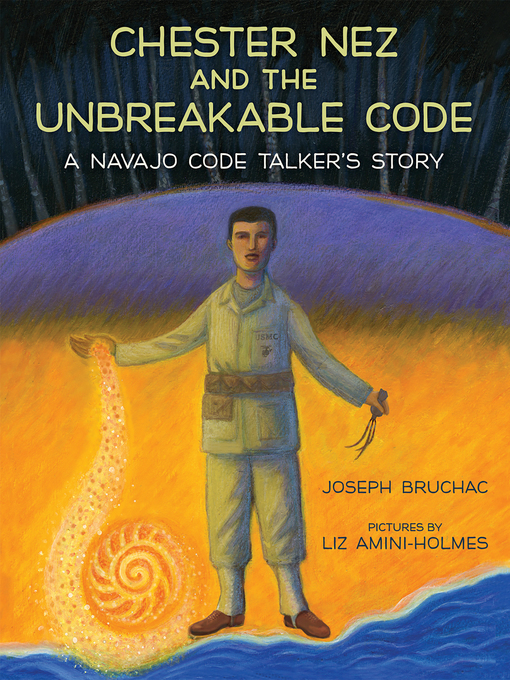
Chester Nez and the Unbreakable Code: A Navajo Code Talker's Story by Joseph Bruchac (Abenaki), illustrated by Liz Amini-Holmes
"As a boy, Chester Nez was taught his native language and culture were useless, but he was later called on to use his Navajo language to help create an unbreakable military code during WWII."
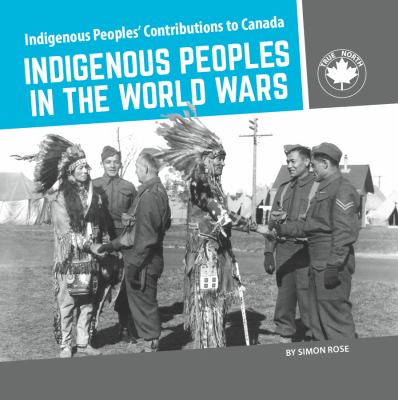
Indigenous Peoples in the World Wars by Simon Rose
This book "discusses the role of Indigenous soldiers during World War I and World War II as well as how they were treated when they arrived back home to Canada."
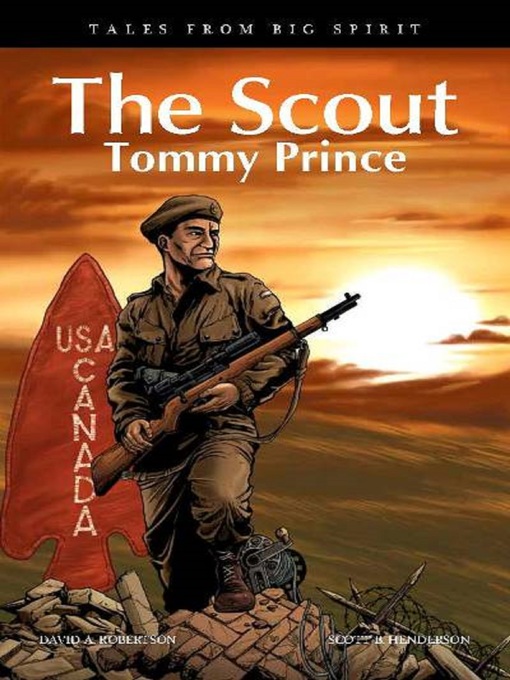
The Scout: Tommy Prince by David Alexander Robertson (Cree), illustrated by Scott B. Henderson
"A search down a wooded path for a well-hit baseball turns into an encounter between Pamela and a veteran soldier standing in front of a monument. The statue commemorates the heroism of Sgt. Tommy Prince, the most decorated Aboriginal soldier in Canada. Pamela is curious, and the veteran is happy to regale her with the story of the expert marksman and tracker, renowned for his daring and bravery in World War II and the Korean War."
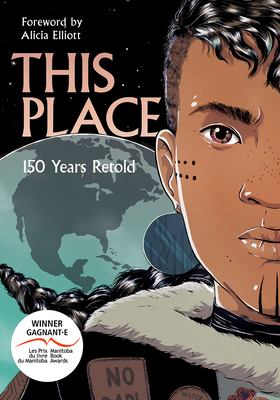
"Explore the past 150 years through the eyes of Indigenous creators in this groundbreaking graphic novel anthology. Beautifully illustrated, these stories are an emotional and enlightening journey through Indigenous wonderworks, psychic battles, and time travel. See how Indigenous peoples have survived a post-apocalyptic world since Contact."
We recommend reading Peggy, which is about Francis Pegahmagabow. It was written by contributor David Alexander Robertson (Cree) and illustrated by Natasha Donovan (Métis).
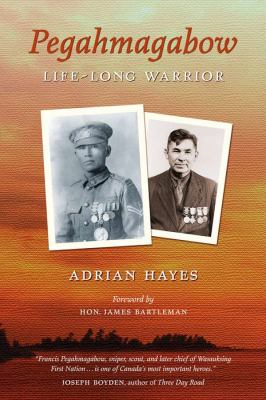
Pegahmagabow: Life-Long Warrior by Adrian Hayes
"A member of the Parry Island band (now Wasauksing First Nation) near Parry Sound, Ontario, Francis served with the Canadian Expeditionary Force in Belgium and France for almost the entire duration of the First World War, primarily as a scout and sniper. Through the horrific battles and inhumane conditions of trench warfare, his actions earned him three decorations for bravery – the most ever received by a Canadian aboriginal soldier.
Physically and emotionally scarred by his wartime ordeals, Francis returned to Parry Island to try to rebuild his life. He had been treated as an equal in the army, but quickly discovered things hadn't changed back in Canada. As a status Indian his life was regulated by the infamous Indian Act and by local Indian agents who seemed bent on thwarting his every effort to improve his lot.
So, Francis became a warrior once more – this time in the even longer battle to achieve the right of aboriginal Canadians to control their own destiny."
Adults
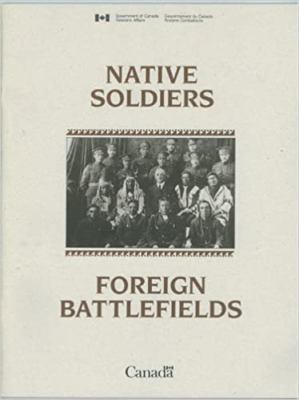
Native Soldiers, Foreign Battlefields by Janice Summerby
This book, published by Veterans Affairs Canada, shares various biographies of Indigenous soldiers.
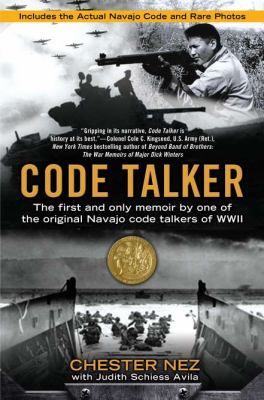
Code Talker by Chester Nez (Navajo)
"The first and only memoir by one of the original Navajo code talkers of WWII.
His name wasn't Chester Nez. That was the English name he was assigned in kindergarten. And in boarding school at Fort Defiance, he was punished for speaking his native language, as the teachers sought to rid him of his culture and traditions. But discrimination didn't stop Chester from answering the call to defend his country after Pearl Harbor, for the Navajo have always been warriors, and his upbringing on a New Mexico reservation gave him the strength – both physical and mental – to excel as a marine.
During World War II, the Japanese had managed to crack every code the United States used. But when the Marines turned to its Navajo recruits to develop and implement a secret military language, they created the only unbroken code in modern warfare–and helped assure victory for the United States over Japan in the South Pacific."

Indigenous peoples and the Second World War: The Politics, Experiences and Legacies of War in the US, Canada, Australia and New Zealand by R. Scott Sheffield and Noah Riseman
"During the Second World War, Indigenous people in the United States, Australia, New Zealand and Canada mobilised en masse to support the war effort, despite withstanding centuries of colonialism. Their roles ranged from ordinary soldiers fighting on distant shores, to soldiers capturing Japanese prisoners on their own territory, to women working in munitions plants on the home front. R. Scott Sheffield and Noah Riseman examine Indigenous experiences of the Second World War across these four settler societies. Informed by theories of settler colonialism, martial race theory and military sociology, they show how Indigenous people and their communities both shaped and were shaped by the Second World War. Particular attention is paid to the policies in place before, during and after the war, highlighting the ways that Indigenous people negotiated their own roles within the war effort at home and abroad."
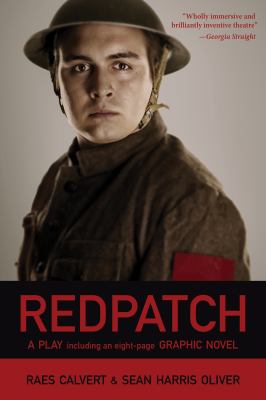
Redpatch: A Play by Raes Calvert (Métis) and Sean Harris Oliver
"The story of a Métis soldier fighting for Canada on the Western Front of Europe during WWI. Vancouver 1914, a young Native man named Jonathon Woodrow, desperate to prove himself as a warrior enlists to fight in the Canadian army. Relying on his experience in hunting and wilderness survival, Pte. Woodrow quickly becomes one of the most feared trench-raiders in the 1st Canadian Division. But as the war stretches on, and with no end to the fighting in sight, Pte. Woodrow begins to realize that he will never go home again."
Additional Reading
- Indigenous Veterans: From Memories of Injustice to Lasting Recognition: Report of the Standing Committee of Veterans Affairs (PDF) by Neil R. Elli
- Indigenous veterans: They fought for freedom, democracy and an equality 'they could never share' by Zoe Tennant
- Canada’s Indigenous soldiers wove unbreakable wartime code with native languages by Lynn Capuano
- Indigenous Veterans: Equals on the Battlefields, But Not At Home by Indigenous Corporate Training Inc.
—
Edit: added "know" in first sentence.
Edit: added David Alexander Robertson's nation in "The Scout."
3 thoughts on “National Aboriginal Veterans Day: November 8, 2020”
All veterans are the same and need to be honoured as such on the same day.
They are brothers in arms.
Indigenous veterans showed up for Canada even despite systemic discrimination, challenges and barriers. They contributed directly to crucial and decisive moments in Canada’s wartime history. We can show up for Indigenous veterans by highlighting and honouring their contributions. It’s the least Canada and Canadians can do. Thank you to all Indigenous veterans, past, present and future <3 <3 <3
No. You are wrong. Indigenous veterans are not treated the same and have not historically be honoured on the same day as their so called “brothers in arms”. When my Great-grandfather returned from WW2 he was not welcomed at the Legion Halls and widows did not receive a pension for their husbands’ services. Our community also started making beaded poppies to remember our own, because our soldier not only endured the wars and service but systemic racism also, from their brothers and country.
Also…your comment is very misinformed. It’s as if you failed to actually read the information offered to you in the article you are so passionately commenting against…
First Nations, Inuit and Metis people were not eligible for conscription because they were not citizens of Canada (they were also unable to vote), but many volunteered despite the challenges they faced, including traveling long distances from remote communities to enlist, learning a new language (English), and coping with racism against them. Indigenous people were not allowed to join the Canadian Air Force until 1942 and the Canadian Navy until 1943. Both men and women enlisted, serving as soldiers, nurses and in other roles. Many served with distinction, winning medals for bravery in action.
After the war, enlisted Indigenous people returned home to continued discrimination, including in some cases denial of benefits, loss of Indian Status, and expropriation of their land by the government for non-Indigenous veterans. It was only in 1995 that Indigenous veterans were allowed to lay wreaths commemorating their fallen comrades at the National War Memorial in Ottawa. The first monument commemorating the role of Indigenous people during these three wars was dedicated in 2001 in Ottawa. It took until 2003 for the Government of Canada to provide veterans’ benefits to First Nations soldiers who had been denied them in the past, and Metis veterans have never received them.
https://www.righttoplay.ca/en-ca/national-offices/national-office-canada/whats-new/honouring-indigenous-veterans-this-national-aboriginal-veterans-day/