A Book about Your Heritage or Culture: Picks for the TPL Reading Challenge 2021
I was just an infant when I arrived in Canada. My first home language was Greek, eventually learning English during school. My paren'ts and I practiced our Greek heritage through community events, and I went to Greek classes after school and Saturdays. By university I was living two cultures, two heritages. I participated in the Greek Parades on the Danforth, and I attended hockey games at the Maple Leaf Gardens. I went to concerts featuring Greek singers at the Danforth Music Hall, and I really liked Gowan, Luba and other Canadian singers when they performed at Ontario Place. When the Canadian Olympic team enters the stadium during the Parade of Nations I get emotional. When my plane lands in Greece I have a strange feeling that I am going back to something, and I suppose I am.
What my family and I also enjoyed about Canada in those early years were the different cultures in the city and in the country in general. Years ago we used to happily attend the Toronto Caravan events, and we were amazed with the different types of dance troupes we saw on stage. My paren'ts put aside their prejudices and homogeneous experiences from their village and embraced living in a multicultural society.
Caravans are now in the past, and new multicultural events are taking place, through street festivals, parades, cable and internet and my favourite, literature.
When I visited Greece after a 15-year absence in 2013, I became reacquainted with the culture of my birth, in addition to my still many immediate family members there. The land and the sea though mesmerized me more… I also became interested in fiction set there, and I have found some amazing material. There are just too many books to list. Here are the more recent ones I have read.

An Aegean April by Jeffrey Siger
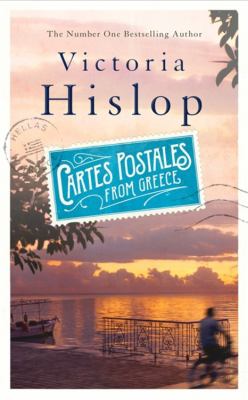
Cartes Postales From Greece by Victoria Hislop
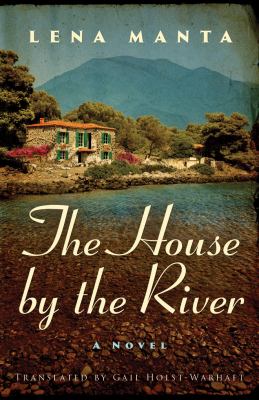
The House by the River by Lena Manta
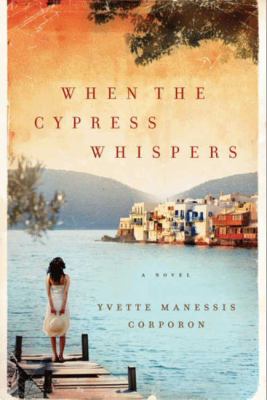
When the Cypress Whispers by Yvette Manessis Corporon
Canadian authors have written about their immigrant experiences and their heritage successfully these past few years. We have had the fortune of meeting some of them during author readings. Here are just a few.
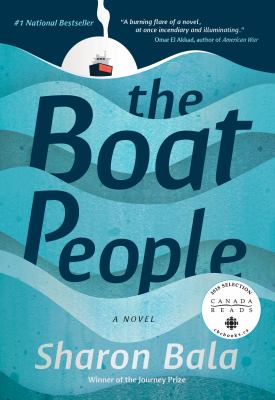
The Boat People by Sharon Bala
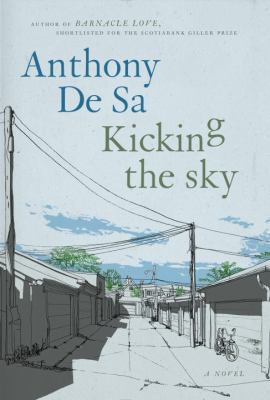
Kicking the Sky by Anthony De Sa
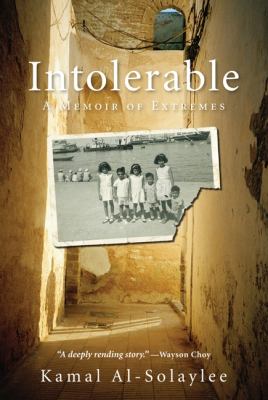
Intolerable by Kamal Al-Solaylee
Recommendations from TPL Staff
Here are some of our staff picks for "a book about your heritage or culture".

The Chinese in Toronto from 1878: From Outside to Inside the Circle by Arlene Chan
This is the first title that I'd like to recommend. This book traces the humble beginnings of the Chinese in Toronto in the 1880s to the present. Their stories and contributions are told through newspaper clippings, archival photos, and narratives from old-timers and newcomers. This book offers a thorough look into the Chinese Canadian Community. As a history buff, this is one book that must be read!
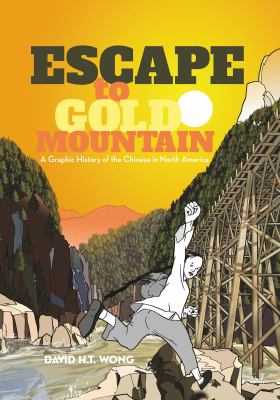
Escape to Gold Mountain: A Graphic History of the Chinese in North America by David H.T. Wong
I recommend this book, too. This graphic novel tells the uneasy story of how the Chinese came to North America over the course of 100+ years. I was engrossed in the fictional, but representative, Wong family and their journey in North America.
– Elsa, Senior Services Specialist
The Bastard of Istanbul by Elif Shafak
This is a story about the women in two families – one Turkish, one Armenian – linked together in an intricate way. Full of contradictions, the characters pull us deep into Istanbul's romantic and anguishing past.

The Home That Was Our Country: A Memoir of Syria by Alia Malek
This book is a fascinating and tragic tale of a country's descent into chaos. At the start of the Arab Spring, Alia Malek returns to her grandmother's apartment building in the heart of Damascus. She tells the story of the many lives that crossed and how the fates of her neighbors reflect the fate of her country.
– Lucas Emirzian, Librarian
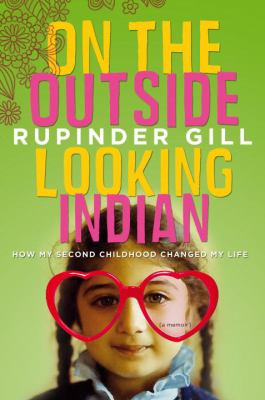
On The Outside Looking Indian by Rupinder Gill
This book is about what life was like growing up in Canada in the 1980s for immigrant South Asian families. Rupinder describes how many children of immigrants were raised by the rules of one culture, and also saw those living a distinctly different way. Rupinder uses humour to describe her bucket list to pursue the adolescent experiences that she missed out during her growing years. This book resonated with me as I shared many of her experiences, struggling to fit in as a kid in the '70s and '80s. When I had my daughter, I made sure that I shared some of those experiences that I missed out in my childhood years.
– Pia, Branch Head

There's a part to this book, Irish Pantry: Traditional Breads, Preserves, and Goodies to Feed the Ones You Love by Noel McNeil that says no matter how tough times are or how many people there are to feed, the well-stocked pantry can produce the perfect gift with these recipes. That you can'tell an Irish person respects you if you are offered a cookie and this is just manners. I think that captured the essence of the culture the most for me of any description I have ever read. Highly recommend the shortbread from this book.
– Jennifer McB, Library Assistant
American Dirt by Jeanine Cummins
This is a novel about the incredible hardships a Mexican mother and her young son face trying to escape the ruthless cartel and their journey across the country to get to safety in the United States. From what I've learned, I think this story is a pretty accurate depiction of the migrant life and its many dangers. Reading this book made me nostalgic for my mother's country and my family there, and it also opened my eyes to the nightmare that is cartel violence.
– Lisa M., Library Assistant
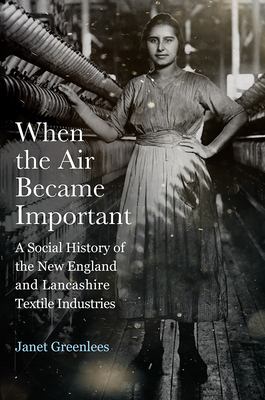
My Great Grandparen'ts, before they came to Canada in the early 1900s, were skilled weavers. I found this book last year, When the Air Became Important: A Social History of the New England and Lancashire Textile Industries by Janet Greenlees and it looks at the textile workers and their lives. Health wasn't really considered necessary by the bosses of these factories as there seemed to be an endless surplus of workers. I enjoyed reading about the type of life my great grandparen'ts might have lived. I have no way of knowing if they came to Canada due to health reasons. A fabulous read for those who are a fan of British history.
– Katherine G., Library Assistant
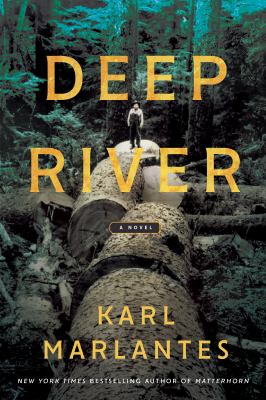
Deep River by Karl Marlantes has several appeal factors for me as a one-time student of labour history. I have an interest in labour activism in the twentieth-century, in particular Finnish labour activism in North America. The reader gets that in spades with young Aino Koski and her connection to the Industrial Workers of the World (IWW) (Nickname: "Wobblies"). The flight of the Koski family from Tsarist-controlled Finland in the early twentieth-century to the United States offers a parallel to my own family's arrival to Canada from post-World War 2 Finland. My father was the only family member who spoke English. Aino Koski's brothers Ilmari and Matti faced dangerous working conditions in the logging industry in Washington State. My grandfather, my father, and my uncles spent time working in a sawmill in Timmins, Ontario in the early 1950s.
– John P., Branch Head
Recommendations from Facebook
These are just some of the books that the members of our Reading Challenge Facebook discussion group are reading and recommending! You can read the entire thread, even without a Facebook account.
- Middlesex by Jeffrey Eugenides
- Zorba the Greek by Nikos Kazantzakis
- Kalyna by Pam Clark
- Chop Suey Nation by Ann Hui
- A Place for Us by Fatima Farheen Mirza
- When All is Said by Anne Griffin
- How the Scots Invented Canada by Ken McGoogan
- Burning Cities by Kai Aareleid
- Forty Autumns by Nina Walner
- Clanlands by Sam Heughan and Graham McTavish
- Zagreb Noir
- Barkskins by Annie Proulx
- A Concise History of The Netherlands by James C Kennedy
- Norse Mythology by Neil Gaiman
- The Hiding Place by Corrie Ten Boom
- A Long Walk to Freedom by Nelson Mandela
- The Power of One by Bryce Courtenay
- The Girl and the Goddess by Nikita Gill
- A Man Called Ove by Fredrik Bachman
- The Red Address Book by Sofia Lundberg
- Nordic Tales from Chronicle Books
- Born a Crime by Trevor Noah
- London by Edward Rutherfurd
- The Russlander Sandra Birdsell
- How The Irish Saved Civilization: The Untold Story of Ireland's Heroic Role from the Fall of Rome to the Rise of Medieval Europe by Thomas Cahill
- Watching the English: the Hidden Rules of English Behaviour by Kate Fox
- A Thousand Splendid Suns Khaled Hosseini
- This Gulf of Fire by Mark Molesky
- The Lost Garden by Helen Humphreys
- Mondo Canuck by Geoff Pevere
- Havana: A Subtropical Delirium by Mark Kurlansky
- A Strange Kind of Paradise: India Through Foreign Eyes by Sam Miller
- All That Matters by Wayson Choy
- The Scapegoat by Sophie Nikolaidou
- Lives of the Saints by Nino Ricci
What are you reading or recommending for "a book about your heritage or culture"? Share below in the comments! Or join in at an upcoming Reading Challenge Online Book Discussion.
6 thoughts on “A Book about Your Heritage or Culture: Picks for the TPL Reading Challenge 2021”
I’ve gone literal. I did a search of TPL holdings for books on Finnish history. I found a title called, From Grand Duchy to a Modern State. It consists of 3 essays, dividing Finland’s history into 3 segments, bringing it forward from 1809 to 1999.
Despite my Finnish heritage, I knew virtually nothing about this history of my paren’ts’ country. Thanks for encouraging me to dive in!
Let’s have an honest look at Greece. It’s not all food, fun and parades.
This book explains the tragedy of my ethnic Macedonian family when they were living in Greece.
Thank you Toronto Public Library for making available this incredible resource.
It is essential to keep the spirit of those children who never returned home.
Children of the Greek Civil War : refugees and the politics of memory
Danforth, Loring M., 1949-
Contributors: Boeschoten, Riki van.
2012, Book , xv, 329 pages cm.
1 copyReference only – not holdable
Summary
At the height of the Greek Civil War in 1948, thirty-eight thousand children were evacuated from their homes in the mountains of northern Greece. The Greek Communist Party relocated half of them to orphanages in Eastern Europe, while their adversaries in the national government placed the rest in children’s homes elsewhere in Greece. A point of contention during the Cold War, this controversial episode continues to fuel tensions between Greeks and Macedonians and within Greek society itself. Loring M. Danforth and Riki Van Boeschoten present here for the first time a comprehensive study of the two evacuation programs and the lives of the children they forever transformed.
Marshalling archival records, oral histories, and ethnographic fieldwork, the authors analyze the evacuation process, the political conflict surrounding it, the children’s upbringing, and their fates as adults cut off from their paren’ts and their homeland. They also give voice to seven refugee children who poignantly recount their childhood experiences and heroic efforts to construct new lives in diaspora communities throughout the world. A much-needed corrective to previous historical accounts, Children of the Greek Civil War is also a searching examination of the enduring effects of displacement on the lives of refugee children.
Netherlands is my heritage. Found a delightful book “Why the Dutch are Different” by Ben Coates. An English born writer who ends up in Rotterdam and writes about life there. He also does a great job of threading in historical facts too.
Thanks for your contribution Angeline. I will definitely look up this book.
Thanks for your comment.
That’s fantastic Ann!
Thanks for your comment!
Sounds so great!
Thanks!