Reading Challenge 2021: Innovation Council Suggestions
What is the Innovation Council?
TPL’s Innovation Council is an advisory group of leaders from the academic, creative and technology communities. Council members provide the library with feedback, ideas, and collaboration to help us develop new services. They also help connect the library to the technology and innovation spheres in Toronto and beyond.
What are they reading?
Please enjoy these Reading Challenge picks from council members Tai Huynh, Ramona Pringle, Zahra Ebrahim and Emily Porta. Happy reading!
Tai’s picks
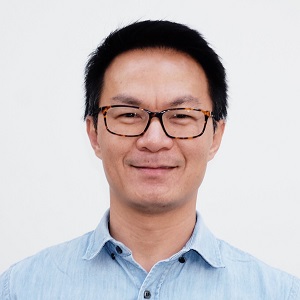
Tai Huynh is a designer and social innovator interested in how creativity can support changemaking. Tai is Creative Director at UHN OpenLab where he works with an inter-disciplinary team to design solutions to pressing issues at the intersection of health and society. Tai’s founding editor-in-chief of The Local, an award-winning magazine exploring urban health and social issues in Toronto, and co-founder of Choosing Wisely Canada. Tai has a Master of Design from OCAD University and MBA from York University.
A book about someone unlike yourself
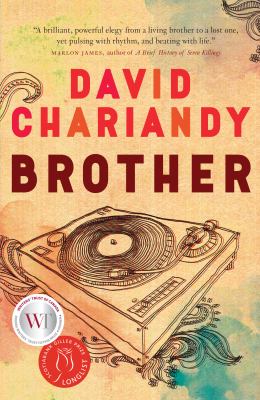
Brother by David Chariandy
I just love Chariandy’s writing in this book, a coming of age novel set in a housing project in Scarborough not unlike the one I grew up in. However, this one’s about two brothers of Black ancestry as they confront issues of race and violence while growing up without a father. Chariandy’s writing is efficient, precise and paints a vivid picture of early-1990s Scarborough that, while familiar to me at the general level, is also intensely tragic and unfamiliar, but relatable. At a mere 177 pages, you can devour this gem of a book in one sitting.
A book about your heritage or culture
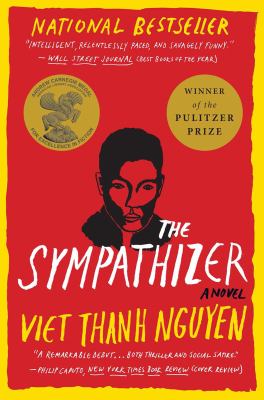
The Sympathizer by Viet Thanh Nguyen
The Sympathizer is a thrilling — and highly comical (at least to us Vietnamese) — novel about the final days of the American war in Vietnam. It follows a group of south Vietnamese war actors, one of whom is a mole for communist north, as they escape to America. From there, they try to plot a counter-revolution, quite comically from the back of a liquor store, all the while trying to fit in. The novel is a social satire about east versus west, Hollywood’s Americanization of the war, and offers a refreshing take on a tired storyline about the Vietnamese. Oh, and The Sympathizer won'the 2016 Pulitzer Prize for Fiction.
A book by two or more people
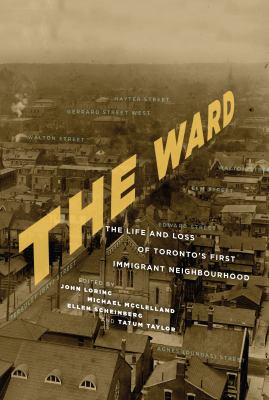
The Ward: The Life and Loss of Toronto's First Immigrant Neighbourhood edited by John Lorinc, Michael McClelland, Ellen Scheinberg and Tatum Taylor
This book is all about Toronto. More precisely, a small parcel of downtown that served as a landing pad for many immigrants up until the middle of the twentieth century. It’s a collection of essays and reflections from a number of prominent civic leaders, architects and journalists, painting a vivid picture of pre-WWII life in this small corner of the city. There isn’t much left of The Ward today, much of it razed through successive waves of “slum clearing” for example, to build Nathan Phillips Square and new City Hall. I spend of lot of my work time (when not in a pandemic) at Toronto General Hospital, and I can’t tell you how many times I pause for a moment while walking down Elizabeth Street to picture what the past must have been like there.
Ramona’s Picks
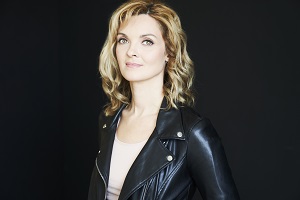
Ramona Pringle is an award-winning educator, creator and technologist, who has built her career around helping others navigate the rapidly changing digital world. She is an Associate Professor in the RTA School of Media at Ryerson University, and Director of The Creative Innovation Studio, and a technology columnist for CBC.
A book where the main character is not human
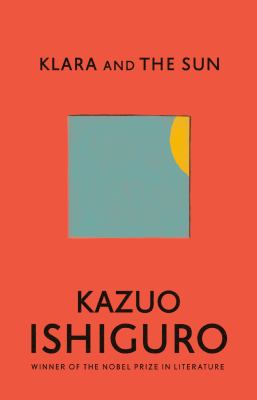
Klara and the Sun by Kazuo Ishiguro
Admittedly, my great fascination with new technology has less to do with the technology itself, and more to do with what it reveals about us, as humans: our aspirations, longings, anxieties, fears and flaws. This book satisfies exactly that. In Klara and the Sun, we get a glimpse of ourselves, through the eyes of Klara, an Artificial Intelligence “Friend,” who is the nonhuman narrator of this novel.
Despite not being “the latest model,” Klara has keen observational abilities, and though she starts off in awe of humans, she also notices what the people themselves often don’t see in each other, for instance, sadness flickering across someone's face. This book is, what I would call gentle, or quiet, science fiction. It’s set in a near future in which humanoid robots are ubiquitous, but really, it’s about friendship, family, loss and love.
A children’s book by an LGBTQ2S+ author
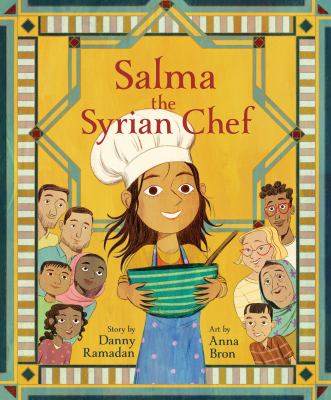
Salma the Syrian Chef story by Ahmed Danny Ramadan; art by Anna Bron
My daughter is three and a half and we go through books like water. She could happily read a dozen books before bedtime and so we’re always looking for new titles to add into the rotation. The best is when we both love them.
We both love to cook. We love to read books about food together, and about the adventures of brave little kids, and this has it all. We loved this book which is an adventure in cooking, and friendship and love.
A book that is the first in a series
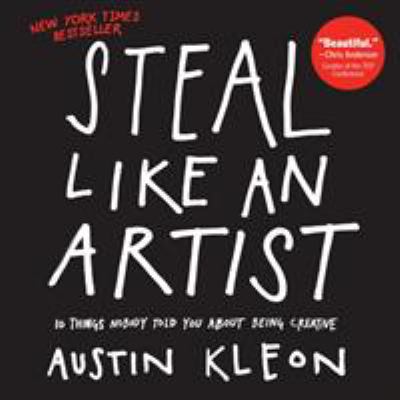
Steal Like an Artist: 10 Things Nobody Told You about Being Creative by Austin Kleon
This book is the first in a series of three great books for creators and designers. The follow ups are Show Your Work and Keep Going. This is the book I’ve recommended the most times this year, be it to collaborators, grad students, researchers or entrepreneurs. As much as I love to lose myself in an immersive novel, I also love visually dominant books that you can open at any page for inspiration. This does just that. I’ve read it from cover to cover, but I’ll often just pick it up and flip to a random page for inspiration on being creative, and generating new ideas.
Zahra’s Picks
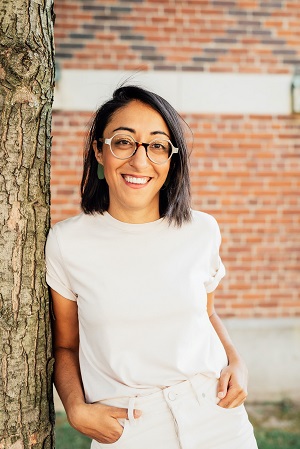
Zahra Ebrahim is the CEO of Monumental, an organization dedicated to supporting an equitable recovery from COVID-19, by building fair and just cities and institutions. She is an Adjunct Professor in Geography and Planning at the University of Toronto, the Chair of the Board of Park People, and the Vice-Chair of the Canadian Urban Institute.
A book that is someone else's favourite
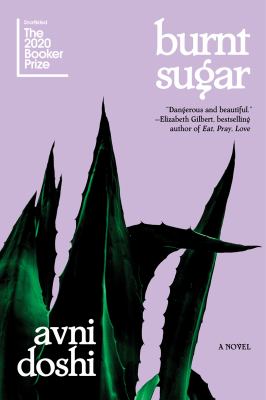
Burnt Sugar by Avni Doshi
A friend who always has awesome book recommendations recommended this novel, a complex love story, but one between a mother and daughter. When shared with me, my friend talked about how it avoids some of the more commonly used literary tropes about Indian women, sharing a modern narrative of intersectional identity.
A book by or about someone you'd like to meet

Finding my Voice: My Journey to the West Wing and the Path Forward by Valerie Jarrett
I’m inspired by folks who work at intersections, and to me, Valerie Jarrett has embodied one of those leaders. She’s a leader who doesn’t (always) work at the front of the room, expands the notion of what it means to be a leader, and shows off the power in knowing where your voice can have the most positive impact. Her book documents her journey across issues, organizations, administrations and communities, and I’ve been hoping to read it for a few years now!
A book that made you feel comforted or hopeful
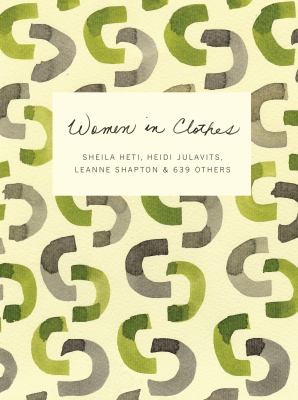
Women in Clothes edited by Sheila Heti, Heidi Julavits and Leanne Shapton
In a year where we’ve lost a sense of what it means to dress to be in the world, I thought I would finally pick up this delightful book by Sheila Heti, Heidi Julavits and Leanne Shapton. It surveys writers, activists and artists to talk about how their garments shape their everyday lives. I love the idea of dreaming of what a post-COVID world will feel like, where we leave our homes, and have the opportunity to share parts of ourselves and our identities through how we dress and adorn ourselves.
Emily’s Picks

Emily Porta holds a Master of Information degree in Library and Information Science from the University of Toronto’s iSchool (2013), and worked in libraries for awhile before landing in the technology industry, where she has been CEO, Board Chair, and Co-Founder of an education non-profit, and currently works as a Senior Scrum Master for Fiix Software in downtown Toronto.
A book set in the future
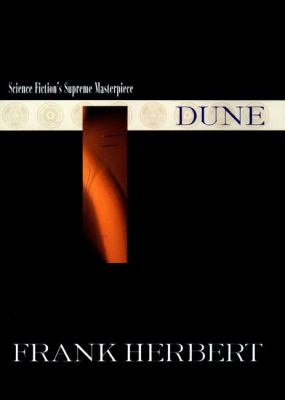
Dune by Frank Herbert
As science fiction is my favourite genre, I spent quite a bit of time debating with myself on which book to choose. While I considered reminding people of favourites or picking an obscure novel that I felt deserved more attention, ultimately I simply couldn’t choose. So, I went with Dune. Dune has everything. If you look it up on Wikipedia, it’s included in half the social science fiction sub-genres because it’s about every social topic you can name. I have a bit of a love-hate relationship with this book, which I’m still trying to finish. On the one hand I wish I’d found this sprawling adventure novel as a young child, when the action and depth of the world would intrigue me more. On the other hand, I feel like I wouldn’t fully understand it’s politics, half-revealed mysteries, or deep social commentary at 80. Truly if you “read only one” book about the future, make it Dune and you probably won’t have to read any others.
A book about growing older
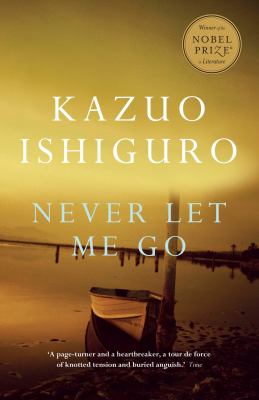
Never Let Me Go by Kazuo Ishiguro
Never Let Me Go is a quietly terrifying novel set in a world where cloned children are raised to be harvested for organs. Perhaps not the typical novel you’d think of when imagining a book about growing older. However the book revolves around a group of children who eventually learn of their fate (that they will die for others to live), and they for the most part simply accept this. They represent how much we can accept based off of the culture we grow up in, and the little ways we might think to “rebel” or get out of our fates as we grow up, by holding on to hopeful ideals into our young adulthood (in this case, the idea that two children who grow up to be in love “enough” will be granted a pardon from their organ donor fate).
A book by a Canadian indigenous woman or non-binary person
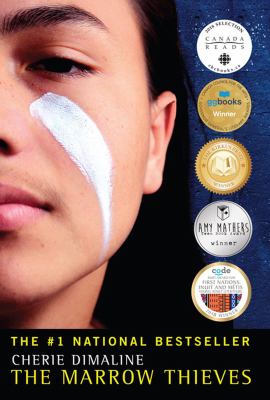
The Marrow Thieves by Cherie Dimaline
Dimaline’s novel is aimed at young adults, but it’s worth a read for Canadians at any age. The dystopian story takes place in a now-common setting in this genre, of a world made largely uninhabitable by climate change. But Dimaline expertly uses the realistic dystopian future to highlight and echo the very real history of indigenous people in Canada and North America as a whole, as the characters struggle to avoid non-Indigenous people hunting them for their bone marrow. I love the blend of history, present and future and this book serves as a warning for all of us that history can and does repeat.
What are your choices for the Reading Challenge? Share below in the comments, or join the discussion at a Reading Challenge Online Program!
Comments