International Pronouns Day: 2022
It’s the third Wednesday in October, and that means that it’s International Pronouns Day! Founded in 2018 by Shige Sakurai, this yearly event is a celebration of all gender identities. We can use this celebration to normalize sharing personal pronouns with friends, family and coworkers.
Pronouns – what are they?
Pronouns are the words we use everyday to refer to others and ourselves. They act as a substitute for names and nouns, helping us to avoid repetition in a sentence. The most common personal pronouns that people use are he/him or she/her. There are alternatives depending on what an individual feels best expresses their gender and who they are.
Singular they/them pronouns can be used instead of, or alongside, she/her and he/him pronouns. They/them is a gender-neutral pronoun and any person of any gender can use it. While they/them as a singular pronoun may seem current, it has actually been around since the early 1300s. People often use it to refer to someone when they don’t know who they are. You might have already used it today!
Consider the following:
"It looks like someone forgot their library card at the printer. I’ll leave it at the circulation desk so they can find it.”
Neopronouns
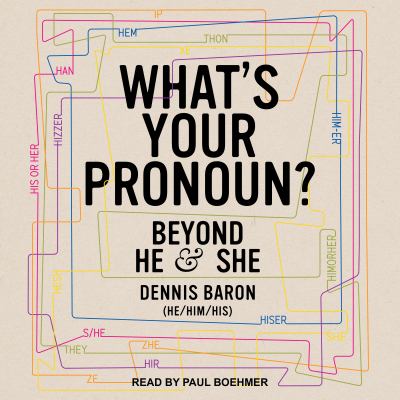
Neopronouns can be used by anyone and include gender-neutral options such as ze, em, co, eir, and others. Like they/them, the usage of neopronouns is not new. There are examples of neopronouns existing as far back as the 1800s, such as ‘thon’, as explored in this blog post by Dennis Barron, English professor at the University of Illinois. You can read about this and more in Baron’s book titled What's your pronoun? : Beyond He and She, found in our catalogue.
What should I do if I don’t know what pronouns someone uses?
Politely ask the person for their pronouns. Making assumptions about gender or pronouns based on someone's appearance can be upsetting or disrespectful. When you’re introducing yourself, it’s a good idea for you to share your own personal pronouns. In doing so, it helps to break the ice and remove some of the uncertainty the other person may be feeling.
Note that some folks you meet may not use any pronouns at all and would prefer to be addressed by their name instead.
What if someone uses more than one pronoun?
The use of multiple pronouns is valid. For example, let’s say my friend Isaac uses he/him and ze/zir pronouns. I can use either pronoun when referring to Isaac.
“Isaac is having a party on Friday and he’s wondering if you would like to go. Ze is really looking forward to seeing you there!”
Adjusting to new pronouns
Sometimes, people you know – friends, family members, or colleagues – reach a point in their personal journeys where they change their personal pronouns to something they feel is more authentic and appropriate to their gender identity. The easiest way for you to show your support is by referring to them by these new pronouns right away. This isn’t only the respectful thing to do; using the proper pronouns can be life-saving. A recent study on transgender and nonbinary teens confirms that the acceptance of gender identity by peers and family members greatly reduces distress and rates of suicide.
That said, if you use the wrong pronouns by mistake, don’t worry too much about it. To err is human, as they say; slip-ups happen. Offer your brief but sincere apology to the person and move on.
Misgendering
Repeatedly and deliberately referring to someone by the wrong personal pronouns is called misgendering. This is a form of discrimination and harassment and can be a traumatic experience for the person being misgendered. If you or someone you know is or has been misgendered in the workplace, the Ontario Human Rights Commission offers suggestions on how to approach the situation.
International Pronouns Day and Beyond
Words have power – and using the right pronouns on International Pronouns Day and year-round is a simple but effective way of validating others and making online and in-person spaces friendlier and more inclusive. Language is always evolving, but some things stay the same: every human being has the right to compassion, and the right to feel included at the Library and in the world beyond.
Looking to learn more? Check out some of our recommended reads for more information, or for books featuring different pronouns.
- Recommended Children's Titles
- Recommended Young Adult Titles
- Recommended Adult Titles
- Recommended Non-Fiction Titles
- Further Reading
Recommended Children's Titles

What are your Words? A Book About Pronouns by Katherine Locke
When Uncle Lior comes to visit, they always asks Ari, “What are your words?” Some days Ari uses she/her, and other days Ari is more of a he/him. On the day of the big neighbourhood celebration, Ari isn’t sure what words to use. Ari decides to ask what everyone else’s words are to see if any feel right.

The Pronoun Book by Cassandra Jules Corrigan
This book is perfect for introducing children ages 5+ to gender diversity and identity. Join Ellie and Casey as they learn what pronouns are, how they relate to us, and why it’s important to get them right!

Jacob's School Play: Starring He, She and They by Ian and Sarah Hoffman
Jacob’s class is putting on a school play! While they learn their lines and craft their costumes, they learn about pronouns. Co-written by Sarah & Ian Hoffman, paren'ts of a gender nonconforming child.
Recommended Young Adult Titles

I Wish You All the Best by Mason Deaver
Ben De Backer is having a tough year. After coming out as nonbinary, their paren'ts kicked them out. They’ve been living with their estranged older sister Hannah, and her husband, Thomas. Ben’s trying to keep a low profile in their new school, but are pulled out of their comfort zone by a new outgoing friend. Ben uses they/them pronouns.

Mask of Shadows by Linsey Miller
Sallot Leon is a great highway thief, maybe one of the best. That's not enough for them though: they've spent 10 years trying to get revenge against the nobles who destroyed their family. Sal gets the opportunity to infiltrate the Queen’s personal assassins, bringing them closer to their goal. Sal is gender fluid and uses they/them pronouns.
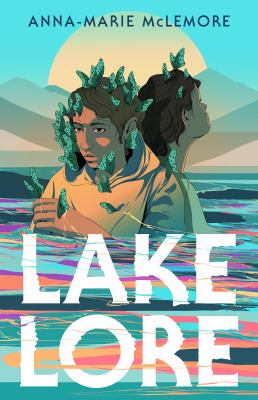
Lakelore by Anna-Marie McLemore
Everyone who lives near the lake knows the stories of the ethereal world underneath it. Lately, the lines between the two worlds have started to blur. Despite not speaking in seven years, Bastian Silvano and Lore Garcia have to work together to stop the secrets of the lake from coming to the surface. Bastian and Lore are both non-binary and use they/them pronouns.
Recommended Adult Titles
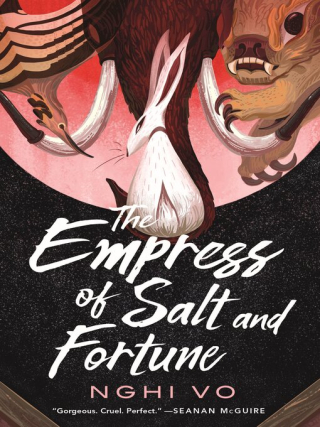
The Empress of Salt and Fortune by Nghi Vo
A 2021 nominee for a Hugo award, the Empress of Salt and Fortune is a book that highlights the oft-overlooked voices of women and queer people in history. It follows Chih (they/them), a nonbinary cleric of the Singing Hills abbey as they listen to a story about the recently deceased Empress In-yo.
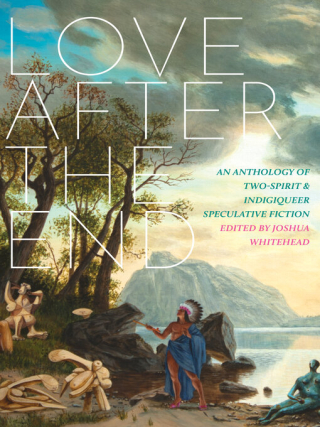
Love After the End edited by Joshua Whitehead
This anthology features young adult stories from queer and two-spirited indigenous writers. There are several characters who use they/them pronouns.

Love and Other Disasters by Anita Kelly
Dahlia Woodson and London Parker are both contestants on the popular reality show Chef’s Special. Dahlia is recently divorced and on the verge of bankruptcy. London is dealing with the reality of announcing their pronouns (they/them) on national television for the first time. Will the two contestants clash, or find more in common than their baking skills?
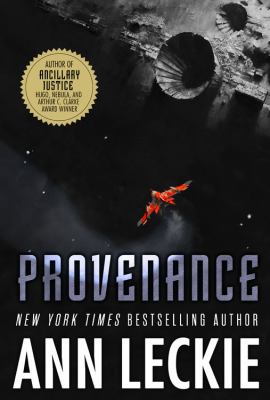
Provenance by Ann Leckie
Ingray Aughskold is ambitious, and has one chance to secure her family’s future by reclaiming their lost artifacts. She’ll need to rescue a famous thief from a prison planet to steal them back amidst an international war. What could possibly go wrong? The Hwae culture in Leckie’s Imperial Radch setting have three genders, one of which uses Spivak pronouns (e/em/eir).
Recommended Non-Fiction Titles

How to They/Them: A Visual Guide to Nonbinary Pronouns and the World of Gender Fluidity by Stuart Getty
This guide uses visual representations to explain what gender fluidity means, and how we can use they/them pronouns.

A Quick and Easy Guide to They/Them Pronouns by Archie Bongiovanni and Tristan Jimerson
Genderqueer artist Archie teams up with their longterm cisgender friend Tristan to create an easy resource for anyone who wants to learn about they/them pronouns.

Gender Queer: A Memoir by Maia Kobabe
In this autobiographical graphic novel, Maia Kobabe charts eir journey of self-identity and discovery. Gender Queer was started as a way to explain to eir family what it means to be nonbinary and asexual, but has become an important guide on gender identity. Maia Kobabe uses Spivak pronouns (e/em/eir).
Further Reading
For more information, check out a few resources in our catalogue:
- A carefully-curated list for paren'ts of gender-diverse and gender-nonconforming children.
- Some staff-picked books by gender diverse authors.
3 thoughts on “International Pronouns Day: 2022”
Great post! I didn’t know about the pronoun “thon”, that blog post was a great read.
Thanks for the article and the book list! I was just researching this topic and found one you may want to add to your list – “In the Watchful City”. The mc uses ae/aer and mc neopronoun rep is really hard to find. I also loved “Man O’War”in general and the pronoun rep was really fluid and interesting.
I really enjoyed “In the Watchful City”! I read it recently and I loved the idea of the qíjìtáng Vessel carries. The pronoun rep was amazing! It’s nice “to see so many new books coming out with great diversity. I’ve just placed a hold on “Man O’War – thank you for the recommendation! I hope to put them on our next list.