A Fine Balance – Dealing With Questions During Presentations
Seldom during our working lives can we avoid speaking in front of groups. Technical presentations, sales presentations, staff training sessions, and training of the public are ever-present requirements of business.
Those of us who speak in public regularly know that the learning process for making good presentations never ends. We are always learning, often the hard way.
Take the example of dealing with questions during a talk.
I taught a seminar some years ago that started off well. As I moved along, the attendees started to ask lots of enthusiastic questions. I decided to switch around my presentation to accommodate these questions, instead of waiting and answering them in the sections of the presentation that dealt specifically with their topic.
Things went off the rails almost immediately. One slightly off-topic question led to another even more so, until the thread of the presentation was completely lost. The originally enthusiastic participants were left confused, annoyed and disappointed.
How do you deal with questions during a presentation? Here are some suggestions.
Right at the beginning, clearly outline the scope of the presentation. Many people ask questions that are either too broad or too technical for the level of your talk. Making the depth and level of the course clear at the outset can – sometimes - prevent this.
Have a backup. Know ahead of time where to direct people who ask too-technical or off-topic questions. One suggestion is to mention other courses offered by your institution or other courses offered in the area that deal with aspects of what you are discussing. You might also want to consider having a Frequently Asked Questions sheet prepared ahead of time that answers briefly some of the questions that you have noticed come up often.
Deal with questions in their particular section of the presentation. When you say, "Good question, we are going to come to that just a few minutes", participants appreciate knowing that you are in control. If you decide to manage questions in this way, when planning the timing of your talk leave about 5-7 minutes at the end of each section to answer questions.
A different option is to indicate, at the beginning of a presentation, that you will not be taking questions at all during the talk but will have time at the end for discussion and queries. People don't mind this at all; just make sure you really do make time at the end. Leave fifteen minutes at least for this part of your class.
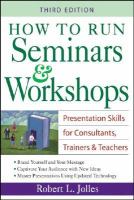
Here are some books at the Toronto Public Library that include information on different kinds of presentations and how to make them work well:


People need to trust you and know that you are in control before they can relax and learn in your class.
Do them a favour and allow them to do just that!
2 thoughts on “A Fine Balance – Dealing With Questions During Presentations”
Great article, certainly helps me who just entered the force!
Nice outline. Very useful. 😉