Beach blanket business books

Beach reading isn't necessarily literature. It may be hard to believe but there are quite a few busines books that actually qualify as beach reading material. A good beach book should have an excellent narrative flow and widespread appeal. A good beach book is engaging and a quick enough read that you can finish
most of before your sunscreen wears off. With any of the following beach books in hand, all you need to remember is your towel and
sunscreen. Enjoy!!
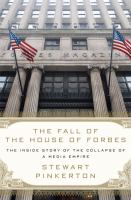 Forbes: the legendary name in finance journalism. Synonymous with
wealth, grand excess, glamour, and fun as well as style, insight,
gossip, and hard-nosed reporting, the media empire and the family behind
it form a remarkable story that has never been told. Now, in The Fall
of the House of Forbes, veteran journalist Stewart Pinkerton reveals the
hidden machinations, disastrous decisions, and personal foibles of a
century-old dynasty that rose to glittering heights and crashed just as
spectacularly.
A compelling narrative account of a powerful family’s dysfunction, The
Fall of the House of Forbes is a parable of capitalism at its best and
worst, and a metaphor for the current state of digital turmoil in
media.
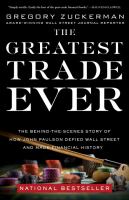 In 2006, hedge fund manager John Paulson realized something few others
suspected–that the housing market and the value of subprime mortgages
were grossly inflated and headed for a major fall. Paulson's background
was in mergers and acquisitions, however, and he knew little about real
estate or how to wager against housing. But Paulson was convinced this was his chance
to make his mark. He just wasn't sure how to do it. Colleagues at
investment banks scoffed at him and investors dismissed him. Even pros
skeptical about housing shied away from the complicated derivative
investments that Paulson was just learning about. But Paulson and a
handful of renegade investors such as Jeffrey Greene and Michael Burry
began to bet heavily against risky mortgages and precarious financial
companies. Initially, Paulson and the
others lost tens of millions of dollars as real estate and stocks
continued to soar. Rather than back down, however, Paulson redoubled his
bets, putting his hedge fund and his reputation on the line. In
the summer of 2007, the markets began to implode, bringing Paulson
early profits, but also sparking efforts to rescue real estate and
derail him. By year's end, though, John Paulson had pulled off the
greatest trade in financial history, earning more than $15 billion for
his firm–a figure that dwarfed George Soros's billion-dollar currency
trade in 1992. Paulson made billions more in 2008 by transforming his
gutsy move. Some of the underdog investors who attempted the daring
trade also reaped fortunes. But others who got the timing wrong met
devastating failure, discovering that being early and right wasn't
nearly enough.
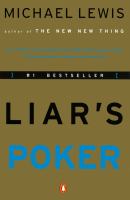 The time was the 1980s. The place was Wall Street. The game was called Liar's Poker. Michael
Lewis was fresh out of Princeton and the London School of Economics
when he landed a job at Salomon Brothers, one of Wall Street's premier
investment firms. During the next three years, Lewis rose from callow
trainee to bond salesman, raking in millions for the firm and cashing in
on a modern-day gold rush. Liar's Poker is the culmination of
those heady, frenzied years—a behind-the-scenes look at a unique and
turbulent time in American business. From the frat-boy camaraderie of
the forty-first-floor trading room to the killer instinct that made
ambitious young men gamble everything on a high-stakes game of bluffing
and deception, here is Michael Lewis's knowing and hilarious insider's
account of an unprecedented era of greed, gluttony, and outrageous
fortune.

Best friends Eduardo Saverin and Mark Zuckerberg had spent many lonely
nights looking for a way to stand out among Harvard University’s elite,
competitive, and accomplished student body. Then, in 2003, Zuckerberg
hacked into Harvard’s computers, crashed the campus network, almost got
himself expelled, and was inspired to create Facebook, the social
networking site that has since revolutionized communication around the
world.
With Saverin’s funding their tiny start-up went from
dorm room to Silicon Valley. But conflicting ideas about Facebook’s
future transformed the friends into enemies. Soon, the undergraduate
exuberance that marked their collaboration turned into out-and-out
warfare as it fell prey to the adult world of venture capitalists, big
money, lawyers.
 Love him for saving you 50 percent on last night’s Indian dinner or hate
him for cashing in big when he could be losing millions for merchants
and investors alike, Mason—Groupon’s thirtysomething founder and
CEO—made an incredible gamble when he turned down Google’s $6 billion
buyout offer to go it alone. The experts thought he was insane. Groupon
was little more than two years old and staffed from top to bottom with
twentysomethings. The wild ride couldn’t last, but Mason thought
otherwise, and with dreams of a potential IPO that could be massive, he
liked his odds.
But did he make the right decision, or did he
blow a chance to continue to grow “the fastest growing company in
history”? Is Mason an Internet genius, or is he sitting on another
bubble that could burst at any moment?
Comments