Tax free savings accounts vs Registered retirement savings plans
Registered Retirement Savings Plans (RRSPs) were introduced in 1957 in order to encourage individuals to set aside money for their retirement years. Although not popular in the beginning, contributions to RRSPs rose steadily and by 1997 30% of tax-filers were contributing. RRSP contributions are tax-deductible and income investment earned within an RRSP does not become taxable until that money is withdrawn. You can find out how much you are allowed to contribute to your RRSP on
last year’s notice of assessment from the Canada Revenue Agency – 18 per
cent of that year’s income to a maximum of around $23,000. Unused
contribution room from previous years gets carried over.
A Tax-Free Savings Account (TFSA) is a viable alternative to RRSPs. Introduced in 2009, TFSAs are not just intended for retirement savings. It is a savings vehicle that allows individuals to save and earn income investment without being taxed when it is withdrawn. Currently the maximum yearly contribution per person is $5,500. TFSA contributions are not tax-deductible but the
contributions and the investment earnings are exempt from tax upon
withdrawal. Unlike an RRSP, which must be converted to a Registered Retirement Investment Fund at age 71, a TFSA does not need to be converted and spare contribution room from previous years is available in the future.
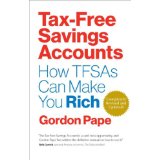
To do more research on saving for your retirement, take a look at these books:





Comments