Disruptive Technology Trends to Follow
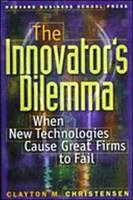
Think wearable technology like E-textiles — smartshirts, a sports bra that tracks your biometrics or a smart watch; social robotics interacting with customers such as Pepper robots which will now work alongside humans on cruise ships; or how about self-driving or autonomous cars? These technological creations are all what is known as "disruptive innovation". First coined by Harvard Business School professor, Clayton Christensen more than 20 years ago in an insightful and thought-proving book entitled The innovator's dilemma: when new technologies cause great firms to fail, disruptive innovation is reshaping, shifting and dramatically altering how we live, work, communicate and interact with our surroundings.
Often misunderstood and improperly applied, Christensen explained in 2014 that "disruption refers to the process that small companies can use to topple industry giants by grabbing a part of the market willing to sacrifice quality for a cheaper price, and then moving upstream by adapting to a larger market." Disruptive technology is a process and takes time to become successful, and when it disrupts, it uses a different kind of business model. Companies entering the marketplace for the first time or established businesses with this kind of disruptive technology, deliberately cause a shift in the competitive environment by creating new markets and disrupting established markets.
An example would be Apple's iPhone disrupting the laptop industry as the once predominant access point to the Internet. Christensen emphasized that companies who are being disrupted need not panic but instead, respond to this disruption in order to be just as competitive (traditional grocery stores offering online services to compete with other online grocery stores). Disruptive technology doesn't mean automatic success for a company. In fact, this type of technology may take some time to make its mark in an industry.
To put things into context, here are some examples of disruptive innovation:
Disruptor Disruptee
Personal computers Mainframe and mini computers
Cellular phones Landline telephone
Discount retailers Full-service department stores
Retail medical clinics Traditional doctor's office

Today's disruptive trends are definite game changers. In a recent report put out by McKinsey Global Institute (MGI), research showed that the 12 technologies they reviewed, together could generate between $14-33 trillion per year in 2025. These technologies have the ability to influence billions of consumers, and have an estimated earnings in the trillions of dollars across industries.
And to prove just how important disruptive technology has become, Aviva Canada is launching Aviva Ventures in Canada and will be investing more than $180 million CAD in the next five years in “high potential digital startups” globally. This will definitely have a major impact on the business landscape as companies compete for consumers worldwide.

Below are a few trends in disruptive technology to follow:
Mobile Technology
Companies are now connecting with consumers in many different ways (telecommuting, ecommerce, mobile apps and wearable technology) with the use of smartphones and mobile devices. MGI estimates that 2-3 billion people will have Internet access by 2025. Profit conscious businesses will now focus all their efforts into making mobile access more accessible to their customers.
Internet of Things (IoT)
"Cisco predicts that 50 billion devices (including our smartphones, appliances, and office equipment) will be wirelessly connected via a network of sensors to the Internet by 2020. Cisco also estimates that IoT will be valued at $4.6 Trillion for the Public Sector in the next ten years." As more devices become controlled remotely, all kinds of data will be retrieved about users. This will enable businesses to "provide better, interactive devices" (your car communicating with your office to perform certain tasks like turning on the air conditioner or coffee maker machine; or the smart light bulb that can help you to reduce your electricity usage through data collection and can work on its own or through an app).
3D Printing
3D printing is having success in many different industries and sectors from medical sciences, manufacturing, industrial to "virtual inventory" (producing parts on-demand) that will radically transform the way companies make their material and provide services to support this type of technology. Cost-effective, easily customized and produced, 3D printing has countless possibilities.
Cloud Computing
Simply put, cloud computing allows you to store and retrieve your information (data) on a remote server (the cloud) instead of saving it on your computer's hard drive. This data can be accessed whenever you want it with your mobile device or desktop through an Internet connection. In 2012, this market generated $100 billion and is expected to increase to $127 billion in 2017 and $500 billion by 2020. Google Drive, Apple's iCloud, Microsoft OneDrive and Dropbox are examples of cloud-based services where your files can either be stored, backed-up and/or synced. Uber, a mobile-app based transportation network (in the cloud), utilizes a cloud based business model by matching a driver with a customer for a fee for this service.


As technology evolves, so too must businesses in order to stay competitive. Disruptive technology bring with it many changes including new products and services, new customers and new competition. With that in mind, companies small and large should look at developing business strategies caused by this digital disruption.
Comments