Filmmaking 101: Part 3
The Toronto Public Library’s Innovator in Communities program is just wrapping up. Three different innovators have been working with participants in various communities across Toronto in a series of workshops aimed at using new technologies to create. Lindy Wilkins has been teaching programming and coding. Derek Quenneville has been teaching 3D printing. And I have been teaching filmmaking. It’s been a tremendously rewarding experience to see the participants in my workshop create short films in only six weeks.
In my previous blogs, I outlined the first three workshop sessions I led. My first blog post focused on Getting Started on Your Film and Planning Your Film. My second blog post focused on Shooting Your Film. This blog will focus on the last two sessions: Editing Your Film and Refining Your Film.
In the last two sessions of the workshop series, we discussed both the aesthetic and the technical aspects of video editing. We brainstormed the elements of good editing. In one session, a participant hit upon the perfect word: good editing feels seamless. And that’s exactly right. Good editing has lots and lots of seams. Colloquially, editing is referred to as cutting. Because the pieces of scenes and shots are all cut up and reassembled in a way that—when done well—makes it feel seamless.
In order to help them understand some of the technical aspects, I walked participants through some of the history of film and video editing. (If you want to learn more about the history of editing, The Cutting Edge is a great documentary, packed full of useful information and fascinating stories.)
I also demonstrated the basics of Final Cut Pro, which is a piece of professional editing software often used in the film and television industry. The participants then worked together to edit their own five-minute films, on various editing softwares available to them, including iMovie, MovieMaker, and Premiere.
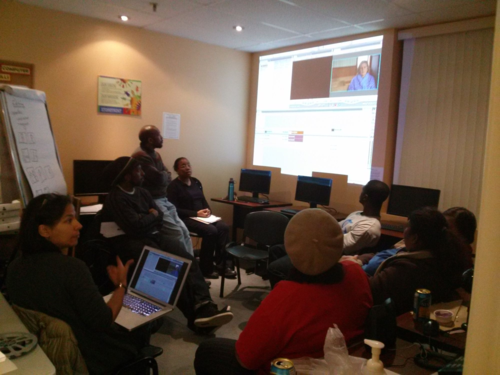
By the last class, we had a very diverse collection of films to screen, which included a music video, a sketch comedy, a documentary portrait of a musician, an historical film about a Black settler in Montreal, and an educational video about canning beets. We’re in the midst of planning a screening for all the participants to share their films with friends, families, and the wider community. I can’t wait to show and celebrate the work that have been accomplished in just six weeks of learning and practice. I'm so proud of what the participants have been able to create.
Chanda Chevannes is currently an Innovator in Communities with the Toronto Public Library. She is an award-winning Canadian documentary filmmaker with The People’s Picture Company and a board member with the Documentary Organization of Canada. Her most recent film is Living Downstream, a feature documentary about the environmental links to cancer.
Comments