The Use of Artificial Intelligence in Children’s Therapies
Artificial Intelligence (AI) is the ability for a computer or computer controlled robot to perform tasks commonly associated with intelligent beings. Here are a few unique examples of how AI can help with specific children's therapies. This includes speech therapy, social skills for autism and the identification of anxiety and depression.
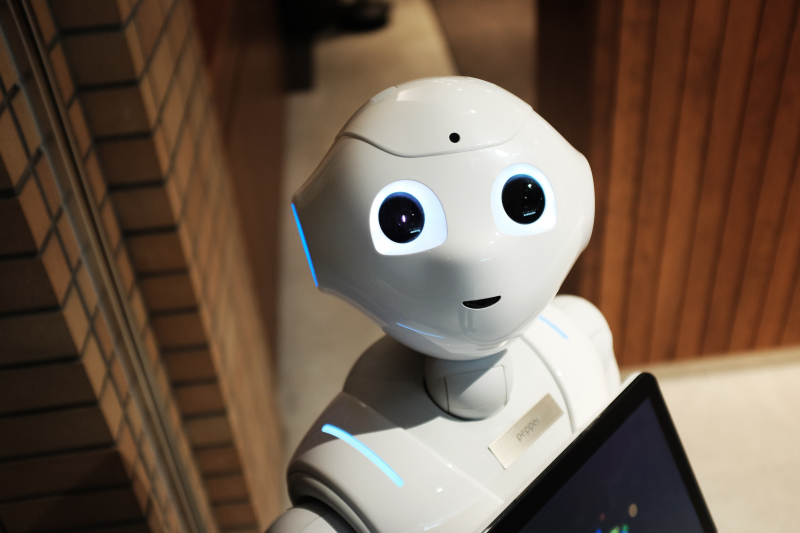
Speech Therapy
Children with speech delays and disabilities are often added to long waiting lists to access a spot in a government-funded program. The COVID-19 pandemic has added an additional barrier for children for children to access face-to-face therapy services. Thankfully, technology is helping address these challenges.
Romanian speech therapist Daniela Mihaescu believed that there was a better way. She wanted to help the 400,000 Romanian children with speech disabilities. In 2015, she joined the Romanian e-learning company, Ascendia to help them design engaging and educational digital content.
Together, Ascendia co-founders Alex and Cosmin Malureanu and Daniela created Timlogo. Timlogo is a solution for children with speech disabilities. It's an interactive, digital speech development tool. It uses AI to analyse children's pronunciation and diagnose specific speech issues. Then, Timlogo recommends the most relevant exercises for correction.
It learns and adapts over time, so as children improve, the suggested exercises evolve with them. Timlogo is designed to be fun and to hold kids' attention. It integrates games, characters and stories to spark the imagination.
Social Skills for Autism
The QTrobot from LuxAI was designed to help children with autism learn social interaction.
LuxAI (University of Luxembourg) says the QTrobot can increase these children's willingness to interact with human therapists. It can also decrease discomfort during therapy sessions.
One of the benefits of these robots that researchers see for children with autism is that they are simple, repetitive and consistent. This makes them unlike humans, who are very variable. This can be comforting for children with autism.
Robot-based therapy for autism has been studied for over a decade. Examples include: KASPAR, Robokind's Milo and Softbank Robotics' NAO.
More research with more children and for longer periods of time will be needed to determine long-term benefits. There is some fear that using this technology could bring these children closer to technology and further away from humans. So far, studies have shown an increased interaction between the children and the therapists through the use of the robot.
Identification of Anxiety and Depression
University of Vermont researchers have created an AI screening tool that can detect anxiety and depression. It does this by analyzing their voices.
The audio of three-minute stories that children created were fed into an AI machine learning algorithm. Then, the algorithm analyzed the statistical features of their voices.
The research team found that three audio features in particular were indicative of anxiety and depression findings. The three features are low-pitched voices, higher-pitched buzzer responses and repeatable speech changes and content. This testing is called the Trier-Social Stress Task. The task can be used to cause feelings of stress and anxiety.
Traditional methods of clinical interviews and paren't questionnaires were also part of this study. They were used together with the AI screening tool to determine a diagnosis. The study found that the algorithm used (AI) was very successful at diagnosing the children with anxiety and/or depression.
Learn About Artificial Intelligence at the Library
Are you interested in learning more about Artificial Intelligence? Here are some resources to get you started.
Courses from Lynda.com
Online tutorials that you can'take at your own pace. Create an account to track your progress. Learn more about Lynda.com.
To follow the links below to these courses, you may be asked to sign in with your library card. Course descriptions are all from Lynda.com.
- Artificial Intelligence Tools and Concepts. "Explore the artificial intelligence tools and concepts that can solve some of today's urgent business needs, such as: logistics, customer support, inventory prediction, and more."
- Artificial Intelligence Foundations: Machine Learning. "This course reviews the definition and types of machine learning: supervised, unsupervised and reinforcement. See how to use popular algorithms such as decision trees, clustering and regression analysis to see patterns in your massive data sets. Lastly, learn about some of the pitfalls when starting out with machine learning."
- Accountable Artificial Intelligence. "In this non-technical, conceptually oriented course, Barton Poulson digs into the hazards of AI, offering potential solutions to key concerns."
- Superhuman Innovation (Blinkist Summary). "Author Chris Duffey explores the possibilities that AI offers a variety of industries – from tech to fashion – as well as how humans and AI can collaborate to provide better services and solutions to pressing issues."
O’Reilley for Public Libraries (Formerly Safari Tech & Business Books Online)
Along with streaming ebooks, O’Reilley for Public Libraries offers a variety of online video courses. Learn more about O’Reilley for Public Libraries. To follow the links below to these courses, you may be asked to sign in with your library card. Descriptions are taken from O'Reilley.
- Artificial Intelligence in 3 Hours. "What do self-driving cars, face recognition, web search, industrial robots, missile guidance, and tumor detection have in common? They are all complex real-world problems being solved with applications of intelligence (AI). This course provides you with a broad understanding of the basic techniques for building intelligent computer systems and an understanding of how AI is applied to problems."

- Live Longer with AI. "This book discusses the impact that AI has on understanding the cellular basis of aging and how our genes are influenced by our environment-with the pandemic highlighting the interconnectedness of human and planetary health."
- Artificial and Human Intelligence in Healthcare. "With the fundamental breakthroughs in artificial intelligence and the significant increase of digital healthcare data, there's been enormous interest in AI for healthcare applications. One rapidly developing area is the use of deep neural networks for medical imaging, with applications ranging from diagnosing chest X-rays to the early detection of Alzheimer's to identifying cancer in pathology slides."
Other Book/eBook Recommendations
New Laws Of Robotics: Defending Human Expertise In The Age Of AI by Frank Pasquale

AI as a Service: Serverless Machine Learning with AWS by Peter Elger

Artificial Intelligence: Modern Magic or Dangerous Future? by Yorick Wilks
Artificial Intelligence for Dummies by John Paul Mueller and Luca Massaron
Artificial Intelligence: A Guide for Thinking Humans by Melanie Mitchell

Artificial Intelligence: An Illustrated History: From Medieval Robots to Neural Networks by Clifford A. Pickover
Comments