Diagnosing kidney diseases
The kidney is one of the most important organs in your body. Kidney diseases affect the quality of life of many Canadians: 33,832 Canadian were on renal replacement therapy in 2006, while about two million Canadians either have kidney disease or are at risk for it. (source) 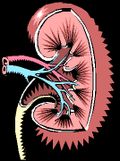
Your kidneys are two bean-shaped organs, each about the size of your clenched fist. They are located near the middle of your back, just below the rib cage. There are about a million tiny structures (called “nephrons”) inside each kidney, whose functions are:
- to remove wastes from the blood and return the cleaned blood to your body
- to regulate the amount of water in your body, removing excess water and retaining water when your body needs more
- to reproduce hormones
For example: Erythropoietin (EPO), which stimulates the bone marrow to make red blood cells;
Renin, which regulates blood pressure;
Calcitriol, the active form of vitamin D, which helps maintain calcium for bones and for normal chemical balance in the body
(source)
When nephrons are damaged, they lose their filtering capacity. Damage to the nephrons can happen quickly (for example, as a result of injury or poisoning). Most kidney diseases, however, destroy the nephrons slowly and silently. Only after years — even decades — will the damage become apparen't, leaving the kidneys unable to filtre wastes. (source)
Symptoms of worsening kidney disease include (source):
- changes in urination
- swelling
- fatigue
- skin rash or itching
- metallic taste in the mouth (ammonia breath)
- nausea and vomiting
- shortness of breath
- feeling cold
- dizziness and trouble concentrating
- leg or flank pain
To prevent kidney disease, it is important to understand the risk factors. Some of the most common ones are:
- diabetes
- high blood pressure
- family history of kidney disease
Early-stage detection tests for the following:
- the level of serum creatinine in your blood, to estimate your glomerular filtration rate (GFR)
- the level of protein in your urine (increased levels of protein show your kidneys are not working right)
- your blood pressure
Because most kidney diseases are incurable, it is always a serious diagnosis. However, you can'take certain steps to slow these diseases down. To help you make better medical decisions: (Source)
- know your lab tests
- control you blood pressure
- ask your doctor about certain medications (ACE and ARBs) that may help treat kidney disease
- ask your doctor about anemia
- ask your doctor about a low protein diet
- control your blood sugar level
- quit smoking
- avoid certain pain medication
For example, some over-the-counter pain pills containing ibuprofen, naproxen, and ketoprofen (e.g., Motrin® and Advil® and Aleve®) may affect kidney function. - exercise With your doctor’s permission, start a regular exercise program to control weight and keep your heart healthy and blood vessels working as well as possible.
As kidney diseases progress, they may worsen to the point where your kidneys completely stop working. Should this happen, the waste that builds up in your body can cause vomiting, weakness, confusion and coma: this is known as kidney failure. A person who has kidney failure needs to undergo dialysis or kidney transplantation.
Sylvia Chen, for Consumer Health Information Service (CHIS) at Toronto Public Library.
Further reading
Overview
- Kidney Foundation of Canada: Your Kidneys, Early Dectection and Prevention
- National Kidney Disease Education Program: Kidney Disease Overview
- National Institute of Diabetes and Digestive and Kidney Diseases: Kidney Disease and Kidney Failure
Diagnosis and symptoms
- National Institute of Diabetes and Digestive and Kidney Diseases: Diagnostic Tests
- Lab Tests Online: Kidney and Urinary Tract Function, Disorders, and Diseases – Tests
- Life Options: 10 Symtoms of Kidney Diseases, Lab Values Explained
Treatment
- CMAJ • November 18, 2008; 179 (11): Guidelines for Management Chronic Kidney Disease
- National Institute of Diabetes and Digestive and Kidney Diseases: Treatment, Dialysis
Living with kidney disease (coping):
- Kidney Foundation of Canada: Living with Kidney Disease
- National Kidney Disease Education Program: Talking to Your Family, Talking to Your Doctor
- National Kidney Foundation: Coping Effectively: A Guide for Patients and their Families
- Life Options Rehabilitation Program: What You Can Do
Nutrition
- National Kidney Foundation: Dining Out With Confidence, Vitamins and Minerals in Kidney Disease
- National Kidney and Urologic Diseases Information Clearinghouse: Nutrition for Early Chronic Kidney Disease in Adults, Nutrition for Later Chronic Kidney Disease in Adults, Nutrition in Children with Chronic Kidney Disease
Support group
- Kidney Foundation of Canada: Peer Support
Specific conditions
- MedlinePlus: Medical Encyclopedia: Kidney Disease
One thought on “Diagnosing kidney diseases”
The consequences of untreated high blood pressure can be high and include kidney disease and diabetes. In a few cases, anemia is a sign that one has developed high blood pressure. Anemia is a condition where your body isn’t producing enough healthy red blood cells. Brought on by high blood pressure, this is a common disorder of the kidneys. Shortness of breath, depression or unusual fatigue are all symptoms of anemia.
Blood pressure is measured by two numbers called systolic pressure and diastolic pressure. A blood pressure reading of 140/90 or higher is referred to by most experts as hypertension. A reading above 120/80 should be cause for you adding exercise to your routine, as well as monitoring your diet.