So You Want to be a Nurse …
 Are you at a career crossroad, and thinking about becoming a nurse? Yes, plenty of jobs out there, and if you have the right skills, it is very rewarding too.
A critical question to ask before your decision is "Am I the right candidate to be a nurse?" If you have the top 10 traits on the list below, congratulations – you are ready to proceed.
- A caring nature
- Empathetic
- Detailted-oriented
- Emotionally stable
- Adaptable
- A quick thinker
- Have great judgement
- Hard-working
- Great communication skills
- Physical endurance
There are 3 types of nursing positions in Ontario,
- Registered practical nurses (RPNs): to become an RPN, you must earn a diploma in practical nursing by taking a program consisting of four semesters over two years in a college program leading to a diploma in Practical Nursing. Because an RPN’s education is less comprehensive and more focused, RPNs’ careers are most appropriately suited to patients with less complex needs, and patients with stable and predictable conditions.
- Registered nurses (RNs): to become an RN, you must have a bachelor's degree. RNs either take a collaborative college-university nursing program or a four-year university nursing program – both leading to a Bachelor of Science in Nursing degree (BScN) or Bachelor of Nursing degree (BN). Because an RN’s education is more comprehensive, they have a deeper knowledge base to draw on in areas such as clinical practice, critical thinking and research utilization. RNs can care for patients with more complex needs in unpredictable situations.
- Nurse practitioners (NPs): an NP is an RN with advanced university education who provides personalized, quality health care to patients. Primary Health Care Nurse Practitioner Education in Ontario is delivered by a consortium of nine universities under COUPN (Council of Ontario University Programs in Nursing). NPs work in four specialties: primary health care, adult and pediatric care and anaesthesia.
More information on nursing education can be found in the Toronto Public Library's online database Career Cruising.
Once you have obtained your degree or diploma, you must pass an exam administered by your provincial nursing association to become a registered nurse.
Or if you are a foreign-trained nurse, check HealthForceOntario website for Entry to Practice Requirements.
Here are some books for you to take home from the Toronto Public Library on nursing as a career + nursing school entrance exams:
|
|
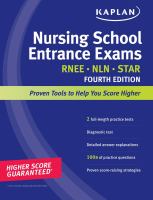 |
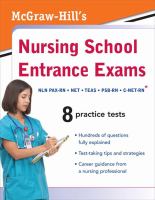 |
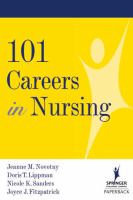 |
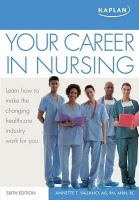 |
 |
 |
 |
Some websites of interest:
- OntarioColleges.ca: Nursing Programs
- Canadian Nursing Students Association: Why Should I Become A Canadian Nurse?
- College of Nurses of Ontario: Become a nurse in Ontario
- HealthForceOntario: Working as a nurse
7 thoughts on “So You Want to be a Nurse …”
Finally a clear concise, jargon-free explanation of how to become a nurse in Ontario and the that there are three types! Also appreciate the comprehensive links to the follow-up information. Thanks for the one-stop sourcing.
Do nurse practitioners get payed signifigantly lower than RNs?
I have thought about becoming a nurse, but then I heard about a legal nurse consultant in New Jersey, and wondered type of occupation this was. I did some research and found out that this is something nurse’s might opt for if they don’t like there role in a hospital, but I know that it does require nursing experience. I was wondering if anyone knows of this occupation?
comprehensive, they have a deeper knowledge base to draw on in areas such as clinical practice, critical thinking and research utilization.
It is my dream to become a successful nurse before but my paren’ts can’t afford to finance my studies in nursing schools.
Nursing is a sacred profession with much respect and dignity for a women to have a bright and successful career ahead to serve humanity in a better way.
Nursing is a good profession for girls with much respect and humanitarian service.