Daylight saving time and your health

Image courtesy of pixabay.com
Daylight Saving Time (DST) ends this coming Sunday on November 2. Clocks are moved back 1 hour and we get to sleep in, yahoo! Actually, I don't care about sleeping in, I really like the fact that I don't have to wake the kids up in the morning for school. For a few days at least, they manage to get themselves up on time.
Daylight saving time starts in March when clocks move forward one hour. The rationale behind this is that we get to take advantage of natural light–we get up earlier but have more daylight hours in the evening. I don't mind getting up earlier when the sun is out and it is great spending the evening in the park until almost 9 pm in the summer.
But, in the past few years, I've found myself somewhat befuddled with the time changes. When the clocks go back in the fall, I find it jarring that it is pitch dark when I leave work. My internal clock does not change as easily or rapidly as changing the hands of the clock. I was glad to read that I am not alone in my difficulties adjusting.
According to the National Institute of Health's Circadian Rhythms Fact Sheet, most living organisms have circadian rhythms which are "physical, mental and behavioral changes that follow a roughly 24-hour cycle, responding primarily to light and darkness in an organism's environment [italics mine]." So, just because we have changed the time on our clocks, doesn't mean our bodies will follow suit.
Chronobiology is the study of circadian rhythms. Circadian rhythms can influence sleep-wake cycles, sleep disorders such as insomnia, hormone release and body temperature. Obesity, diabetes, depression, bipolar disorder and seasonal affective disorder have been associated with abnormal circadian rhythms.
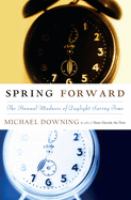
For further reading on Daylight Saving Time, these titles may be of interest:
 |
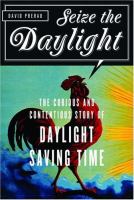 |
| Spring Forward: the annual madness of daylight saving by Michael Downing | Seize the daylight: the curious and contentious story of daylight saving time by David S. Prerau |
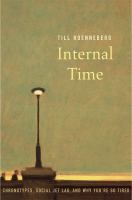
Or if you'd like to learn more about the effects of circadian rhythms on health, check these out:
 |
 |
 |
| Internal Time: chronotypes, social jet and why you're so tired by Till Roenneberg | Rhythms of Life: the biological clocks that control the daily lives of everything living thing by Russell G Foster | Biological Clocks: effects on behavior, health and outlook by Brigitta Meklau |
Comments