Building Your Health Literacy

Image courtesy of Wikipedia
Health literacy is "the ability to access, comprehend, evaluate and communicate information as a way to promote, maintain and improve health…" (Public Health Agency of Canada).
People with low health literacy levels are less able to manage their health conditions, more likely to rate their health as poor and they have higher rates of hospitalization. They are less able to make informed decisions.
Good communication skills (both the health care provider's and the patient's) are essential for a patient to understand what he/she is being told and to feel comfortable asking questions. I recently heard about the consequences of health illiteracy for a woman who, despite having high levels of education, did not understand the forms she was asked to sign at the doctor's office. She was too embarrassed to ask questions. It was only at her six-week follow-up appointment with her surgeon that she learned that she had had a hysterectomy.
To learn more about health literacy, click here and here.
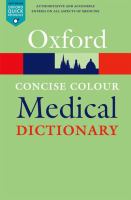
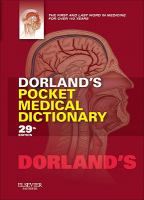
Getting information may be the easiest step; anyone who has access to the Internet can use "Dr. Google" to search for health information. Understanding and evaluating information is much trickier. One can evaluate information on the Internet (or from books) using the CRAAP Test (Currency, Relevance, Authority, Accuracy, Purpose). Having a medical dictionary is helpful when the only health information that can be found is written at a technical level, for health professionals.
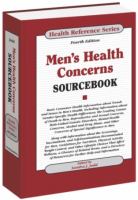
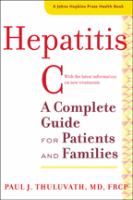
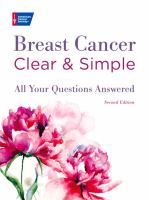
The library carries several good series of health books that are written in simple language for consumers or the lay public (Health Reference Series, Johns Hopkins Press Health Books, 100 Questions & Answers, Scientific American White Papers). Books published by associations such as the American Cancer Association or Canadian Diabetes Association are also easy to understand and written by authoritative sources. Here are a few examples but don't hesitate to ask staff for more information on your particular concerns.
 |
 |
 |
 |
 |
 |
 |
 |
 |
 |
 |
 |
Comments