How Long Will You Live? How Are You Most Likely to Die?
Ever wondered how long you will live or how you might die? I have and it appears that there is at least one other person who shares this morbid interest. Nathan Yau is a statistician who used data from the Centers for Disease Control and Prevention's Underlying Cause of Death database to create graphs which show the most common causes of death at various ages.
Nathan also created a simulator in which each dot "represents one of your simulated lives, and as each year passes, more of your simulated selves pass away. Colour corresponds to cause of death, and the bars on the right keep track of the cumulative percentages. By the end, you’re left with the chances that you will die of each cause". Click on the image below to go to Nathan's website. Scroll halfway down the page and enter in your sex, race and age to see the simulator in action.

flowingdata.com
There are many websites that estimate how many years of life you have left. Some are general, such as Nathan's website; others ask for various data to provide a personalized prediction of your life expectancy. Physical activity, diet, smoking and stress are some of the factors that influence how long you will live.
Because flexibility and balance are indicators of health, a sitting test can be used to predict longevity. Click here to try it yourself.
Some recent research
Researchers discovered that they can predict test subjects' "biological clock age" by looking at chemical changes to their DNA. Then they compared the individuals’ actual ages with their predicted biological clock age. If their biological age was older than their true age, they were more likely to die sooner than those whose biological and actual ages were the same– even after taking into consideration other factors such as disease and smoking.
There is an increase each year in death rates during adulthood. But, in later life, there is a mortality plateau–that is, a 100 year old is not more likely to die than a 90 year old. There is no consensus on why this happens. Researchers studying fruit flies found a large decrease in fertility two weeks before death. This occurs in males and females and in young and old fruit flies. Some researchers suspect that the mortality plateaus are connected to fertility rather than age.
On the good news front, researchers found that a person's own evaluation on how healthy he/or she felt was the most sensitive predictor to longevity, so think positive about your health!
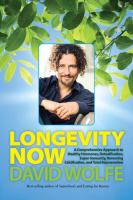
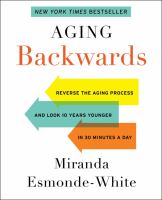
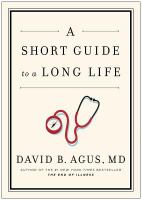
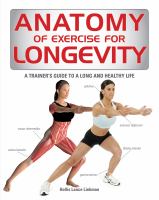
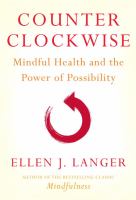
Here are some suggestions for books about longevity as well as titles that may help you improve your health and hopefully, increase your lifespan:
 |
 |
 |
 |
 |
 |
 |
 |
 |
 |
 |
 |
2 thoughts on “How Long Will You Live? How Are You Most Likely to Die?”
His age “toggle” isn’t working.
Hi Janet,
I just checked Nathan’s website and the age toggle is now working. Slide the toggle to the right or left to increase or decrease the age.