A Decade of eBooks
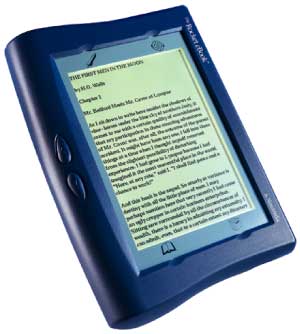
While it often seems like eBooks and eBook readers are a fairly new thing to public libraries, in fact Toronto Public Library has been providing access to this technology for over a decade. Back in the summer of 2000, we began a pilot project circulating two types of ebooks: Rocket ebook readers that contained a selection of pre-loaded titles and NetLibrary ebooks that were downloaded from the library’s website to either library or personal PCs. While the Rocket ebooks circulated from only six branches, the NetLibrary titles were available to all TPL customers through the TPL website. At the time, TPL was one of the first of five public libraries in North America to provide ebooks for their customers and the second library in Canada to do so.
I thought it would be interesting to look at the state of eBooks then and now, by comparing a Rocket to a Kobo:
|
|
Rocket eBook – 2000 |
Kobo Touch – 2012 |
|
Cost |
$299 |
$99 |
|
Screen size |
4.5” |
6” |
|
Memory size |
4 MB, non-expandable |
1 GB, expandable to 32 GB |
|
Book capacity |
10 |
1,000 – 32,000 |
|
Dimensions |
127mm x 190mm x 38mm |
114mm x 165mm x 10mm |
|
Weight |
625g |
185g |
|
Battery life |
17 – 33 hours |
10 days |
|
File types |
.RB |
ePub, PDF, MOBI, RTF, CBR, CBX, TXT, HTML, images |
12 years is a long time in computer technology, so it's not surprising to see great leaps in memory capacity and battery life. What is interesting are the improvements in making ebook readers more user friendly; a wider variety of supported file types, much lighter weight, and cheaper purchase prices (although it must be pointed out that the Amazon Kindle 2 retailed for $279 when introduced in 2009 and still has limits on supported file types). And some things haven't changed, namely a touch screen interface and retaining the general dimensions of a paperback book.
A survey of users of TPL's Rocket eBooks at the time revealed that 92% found it easy to use and 67% would borrow one again. The primary reasons for not wanting to borrow again were the weight, the fact that users could not choose their own titles, and the high cost of replacement if damaged.
Even a decade ago, the eBook industry was rapidly changing; between the time TPL purchased the devices in 2000 and finished the pilot project in the fall of 2001, the manufacturer went out of business and the recommendation was not to purchase additional ebook readers as the marketplace "appears to be shifting away from dedicated readers." That hasn't happened yet, but who wants to predict how we'll be reading our novels and textbooks in 2024?
Comments