Resume Tips For Success

For many people, working on your resume can be a painful experience. A lot of time and thought goes into creating an effective resume that will get you hired. You spend days agonizing over how much content to include, resume style and page length. Some people even pay professional resume services to help them with this task. After all your hard work, you send your resume off and wait. This process is repeated many times over only to discover that you haven't heard back from any of the companies. Consequently, you begin to wonder if your resume got lost in the process.
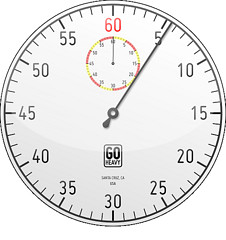
Workopolis and CareerBuilder have conducted surveys of hiring managers and found that they spend anywhere from 11 to 30 seconds looking at a resume during the initial screening process. Many skim a resume before moving on to the next one.
Live Career "estimates that 80% of employers run software checks to review resumes in bulk. If the resume does not match 90% of the employer's search terms, it is likely discarded, regardless of how impressive the other credentials are."
Online resumes are first put through a resume database where it selects resumes based upon the number of specific keywords it contains. The objective is to find certain professional skill sets based upon the job description and requirements. This process is intended to weed out resumes that do not meet the requirement.
Martin Yate, well known author of the "Knock Em' Dead" resume books points out that "the higher your resume’s ranking, the more likely it will get read by human eyes." Recruiters only have a certain amount of time to go through a stack of resumes so the resume database narrows the selection process for them. Candidates should strive to match the information outlined in their resume with what hiring managers and recruiters are looking for. As a potential candidate you need to grab their attention in those few seconds.
Below are some tips to help you polish up your resume and eliminate some pitfalls many people fall into.
Contact Information. Include correct information on how hiring managers can contact you. If you have a LinkedIn page, include it and any other professional websites or blogs that you have created. This will give the recruiter or employer a chance to look over your profile and professional work experience.
Target Job Title. Your job title should connect you with the job title you are applying for. This will allow the hiring manager to make a mental connection between you and the position.
Performance Summary. Summarize in a few lines what sets you apart from other applicants. Why do you believe you are the ideal candidate? This is the perfect opportunity to sell yourself in a positive light. Show the employer what you have to offer and what contributions you can make to their organization.
Professional Accomplishments. This is where you demonstrate what you can do, what you have accomplished and what projects you have worked on. Make a list and flesh out the top skills and list them starting with the most important skill sets. Quantify your accomplishments as well as, the benefits for each one as it relates to the position that you are applying for. Give the hiring manager reasons why you are the best candidate with concrete examples of your achievements. Demonstrate your skills and experience with examples using action verbs that describe the results produced. And remember to be concise, specific and clear.

Keywords. Match keywords to the position you are applying for. "Resume database search algorithms reward words near the top of a document, because they are seen to help determine a document's relevance." Your resume should contain certain frequent keywords right at the top so it is discoverable by the database. To increase your chances consider using word clouds such as TagCrowd. With this app, you can get a visual emphasis of common keywords in your resume. Autocoder is another tool that provides occupational classification. It can find text that is only relevant to the duties and qualifications required for the job being posted.
Design/Presentation. Use short sentences and paragraphs. Your resume should contain bullet points, have a consistent font size (ideal is 10), lots of white space, and bolded headings broken down into sections. Avoid dense paragraphs by breaking up your content into different sections. A resume that is too long and boring is a major pitfall you want to avoid. The information should be clear and succinct so recruiters or hiring managers can find the information quickly without having to look for it. Visually appealing and a well-organized layout adds interest and originality to your resume.
Proofread. Get a few people to look over your resume objectively to make sure there are no grammatical and typing errors. Common language mistakes can eliminate you completely from the hiring process. One trick that proofreaders use is to read each word in a document backwards to find mistakes.
Your resume is one of your most valuable selling point, so make it count!
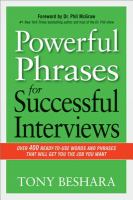
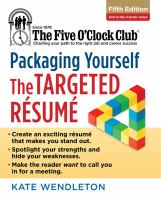
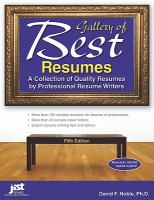
For more information about this topic check out these informative titles.
Comments