National Disability Employment Awareness Month
October is National Disability Employment Awareness Month (NDEAM). This is an annual campaign to promote disability inclusion in the workplace.
Although discussions about diversity issues are increasingly common in the employment sector, these discussions often do not address disability. As a result, people with disabilities continue to face significant barriers in their workplaces. In many cases, they are excluded from employment opportunities altogether.
The NDEAM campaign promotes the idea that all people, including those with disabilities, have skills and knowledge to offer. It is a reminder that there is still work to be done to make workplaces accessible and inclusive. The campaign is also a chance for employers to discover the resources that are available to help them support their disabled employees. We’ve put together a list of some of those resources to help get you started.
What is Ableism?
The Ontario Human Rights Commission (OHRC) defines ableism as the belief system that "sees persons with disabilities as being less worthy of respect and consideration, less able to contribute and participate, or of less inherent value than others." Simply put, it is discrimination and prejudice towards people with disabilities. In an article for Forbes magazine, Andrew Pulrang explains that ableism occurs at both the individual, person-level and at the larger systemic level.
The OHRC defines accommodation as "a duty to consider the needs of persons with disabilities up-front. This means designing for buildings, processes, programs or services inclusively. If existing physical structures, systems, or attitudes create barriers, they must be removed. Where it is impossible to remove barriers without undue hardship, special arrangements must be made so that persons with disabilities can fully participate."
Accessibility in the Workplace
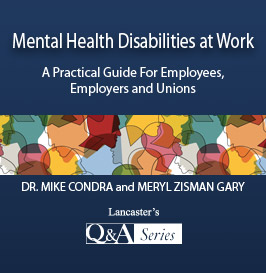
Mental health disabilities at work : a practical guide for employees, employers, and unions by Dr. Mike Condra and Meryl Zisman Gary
With its everyday language and question-and-answer format, this Canadian manual is an essential resource for addressing mental health accommodations in the workplace. Written by a clinical psychologist and a labour lawyer, the guide provides valuable information on a wide variety of topics, including legal obligations, privacy considerations and return to work plans.
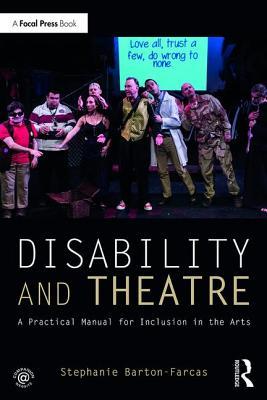
Disability and theatre: a practical manual for inclusion in the arts by Stephanie Barton-Farcas
Not all workplaces are office buildings, and not all employees sit at a desk all day. Non-traditional workplaces, the theatre, in this case, may present unique barriers for employees with disabilities. Stephanie Barton-Farcas, the artistic director of Nicu’s Spoon Theater Company in New York City, offers practical tips for making the theatre industry more accessible. Nicu’s Spoons, and several of the disabled actors in the company, are also featured in the documentary Two and Twenty Troubles.
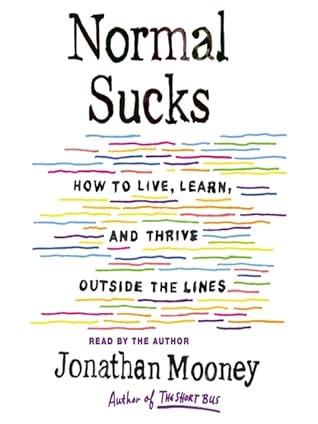
Normal sucks: how to live, learn and thrive outside the lines by Jonathan Mooney
Jonathan Mooney is a public speaker and advocate for the neurodivergent community. In this book, he uses his own experiences growing up with ADHD and dyslexia to describe the harm caused by forcing people to conform to a rigid definition of “normal.” While the book focuses more on Mooney’s experiences in school, the types of systemic barriers faced by neurodivergent people in the education system are quite similar to those in the workforce. The accommodations that would help someone be successful are also similar. Unfortunately, the types of accommodations that are increasingly available in the school system are rarely available at most places of employment. Mooney's book can provide employers with insight into supporting their neurodivergent staff.

Digital Accessibility for the Modern Workplace
With most workplaces becoming increasingly digital, it is important for employers to ensure that the technology meets the needs of their employees. In this online webinar, Hector Minto from Microsoft’s Accessibility Team shares best practices and accessibility solutions for a variety of access needs and disabilities. He demonstrates how to make the workplace more inclusive by adapting everything from emails to meetings and presentations.
Supportive leadership: the case of Clarity-Employment for Blind People
This online video is a brief documentary about CLARITY Employment for Blind People, a British organization that provides meaningful employment and training for people with disabilities, including but no longer limited to those who are blind or have low vision. They offer manufacturing and office-based opportunities adapted to the needs of the individual employees. Although not all workplaces will have CLARITY’s disability-specific mandate, the organization still serves as an example of the importance of supportive leadership alongside practical accessibility accommodations. Both the business and the individual employee thrive when that person is set up to succeed.
Please note that the introduction to this documentary, and some of the accompanying text material, use the phrase “differently-abled.” Many people with disabilities find euphemisms such as this one to be patronizing and offensive. “Disability” is not a bad word and you do not have to avoid saying it.
Microaggressions and Systemic Change
Creating an inclusive, welcoming workplace for people with disabilities is about more than just providing access to physical accommodations. It’s also about the culture of the workplace and the ways that coworkers and supervisors interact with the disabled employee. Denying someone access to screen reader technology or a ramp are fairly obvious examples of ableism, but the discrimination that people with disabilities experience can also be harder to spot.
These subtler forms of ableism are often referred to as microaggressions. They can include behaviours such as jokes, judgemental comments, undermining someone and asking intrusive questions. As the name suggests, microaggressions may be small actions but they can have a big impact. They can also be a more complicated problem to address.

Subtle acts of exclusion: how to understand, identify and stop microaggressions by Tiffany Jana and Michael Baran
This practical handbook is designed to help you identify and prevent microaggressions, whether they’re related to racism, ableism, sexism or another form of discrimination. Jana and Baran refer to microaggressions as subtle acts of exclusion. They provide insight into why these acts can be so harmful and offer sample scripts and action plans to help foster productive conversations and meaningful change.

Zoom in: microaggressions and disability
An essential part of combating ableism in the workplace involves listening to and believing people with disabilities when they say that a behaviour is hurtful to them. This short documentary is a great introduction to the kinds of microaggressions disabled people encounter on a daily basis.
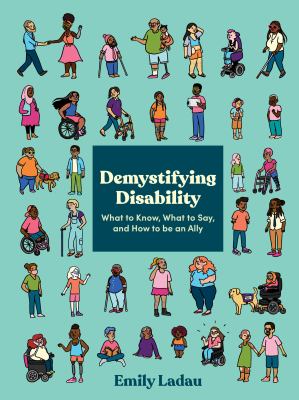
Demystifying disability: what to know, what to say, and how to be an ally by Emily Ladau
It’s OK to not be sure how to act around a person with a disability when you first meet them. But it’s not OK to use that discomfort as an excuse to ignore that person or treat them badly, even if it’s unintentional. Disability activist Emily Ladau’s book is a must-have resource for anyone who is looking to be a better ally but doesn’t know where to start. She teaches the reader about identifying ableism and disability stereotypes and gives examples of how to incorporate accessibility into your everyday routine. Ladau also provides valuable tips on how to respectfully interact with people with different disabilities.
Legal Obligations
Providing an accessible workplace is not only the right thing to do, it is also the law. Under the Accessibility for Ontarians with Disabilities Act (AODA), employers have certain legal obligations to accommodate employees with disabilities. The Government of Ontario provides several resources to help support employers throughout this process.
- About Ontario's accessibility laws
- Ontario Human Rights Code information for employers
- Ontario's Accessible Employment Standard
- How to make your business accessible for customers and employees
More Resources
- Government of Canada: Hire persons with disabilities campaign
- Ontario Disability Employment Network
- The Canadian Association for Supported Employment
- Canadian Council on Rehabilitation and Work: WORKink job board
- Discover Ability Network
- Hire for Talent
- Mental Health Commission of Canada: A Practical Toolkit to Help Employers Build an Inclusive Workforce
- Parkinson's Canada: A guide to improving accessibility in the workplace and on route for people with invisible disabilities
Accessibility at Toronto Public Library
For more curated resource lists, check out our blog posts on digital inclusion and accessibility, assistive technology and accessible reading options.
For information about Toronto Public Library's Accessibility Services, please visit our website or contact us at (416)393-7099. TTY users can also use the TTY Relay Service (711).
One thought on “National Disability Employment Awareness Month”
Thank you for your comment. We have forwarded your feedback to our management. We will be removing your comment to protect your privacy.