Exploring our difficult past: slavery
There are some elements of our history in North America that are difficult to tackle with our children. Our current multicultural reality is so far from the experience of slavery and the fight for freedom that children have difficulty understanding and making sense of the history. During Black History month, we attempt, through programs, songs, plays and discussion to make both the history and current situation understandable at many levels. Throughout the month many programs have been held in schools and the library, but nothing supports a child's understanding as powerfully as the discussions that you as a paren't or caregiver can have with them over time. There are many picture books and novels, as well as websites that you can explore with your child(ren) to help you enter into these difficult conversations.
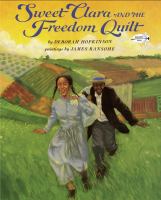 Sweet Clara and the Freedom Quilt by Deborah Hopkinson is a powerful introduction to slavery as it was leading up to the civil war in the United States. In it Clara is a slave in the Big House, and works as a seamstress, but dreams of freedom. Being in the Big House means that she overhears talk of the surrounding countryside and the escape routes to Canada, enough to create a quilt map of the landscape. Once the quilt is finished, she leaves it behind for others to follow as she makes her way to freedom. This book is based on real events and presents the reality in a way that children can accept and build their questions from. I would recommend this book for children from the ages of 8 to 12.
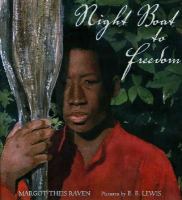 Another book based on true events is Night Boat to Freedom by Margot Raven. This story is drawn from accounts in the Slavery Narrative Collection compiled in the 1930s. In it, a young slave boy on a Kentucky plantation, Christmas John, helps runaway slaves cross the Ohio river under the guidance of Granny Judith, an older slave on the plantation. Christmas John continues to help until it becomes too dangerous for him to stay. Reluctant to leave behind Granny Judith, he needs to be convinced to flee for his own safety. The book is beautifully illustrated and captures the situation, emotions and strength needed for Christmas John to continue his journey without his mentor, Granny Judith, who is too old to flee. Recommended for children 7 years old and up.
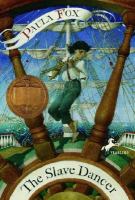 A book to read with older children would be the novel, The Slave Dancer, by Paula Fox. Set in the pre-war Southern United States and Africa, this book chronicles the experience of Jessie, who is pressed into service in New Orleans with the job of playing his fife for the captured slaves so that the slaves will "dance" for exercise, keeping their muscles strong and their profitability high. Jessie is sickened by the horrible practices of the slave catchers and questions the institution of slavery because of his experience. This is a powerful book that will lead to many questions for the reader. It would be advisable to read along side of your child so that you can discuss both the book and the history of slavery with them as the questions arise. Recommended for ages 9 – 12.
 Canada did play a large role in the Underground Railroad, being the end of the long journey for many of the slaves as they sought freedom. The government of Canada has an extensive site available with details, unfortunately written at a very high level. It can be, however, a valuable site to explore for answers and insights to the situation in Canada at the time that many slaves were escaping to our country.
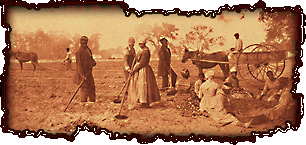 The National Geographic site hosts an interactive exploration of the Underground Railroad that was created with students from grades 3 to 6 in mind. On this site, students are asked to make decisions along the route to freedom. For each decision they make, there are consequences that show what would have actually happened to a runaway slave.
2 thoughts on “Exploring our difficult past: slavery”
Thank you for this list of notable books on slavery and black history month. Painful as it is, it is the history on North America and has to be preserved and retold.
I agree, and not only preserved, retold, but discussed. There are many more books available on this subject, more than one blog post could handle. The librarians at your local branch would be pleased to direct you to them. You can also use NoveList Plus to search for similar books to the ones in the post.