Who Needs Words, Anyway?
As a student, I did research in the field of reading development. One of my favourite studies involved an examination of narrative skills (the ability to describe events and tell stories) in young children. In order to measure differences in narrative ability, we asked children to tell us a story while flipping through the pages of the wordless picture book, Frog, Where Are You?. I would introduce the task by telling children the name of the story, how the book was different because it did not contain any words, and that they were free to make up whatever story they pleased.
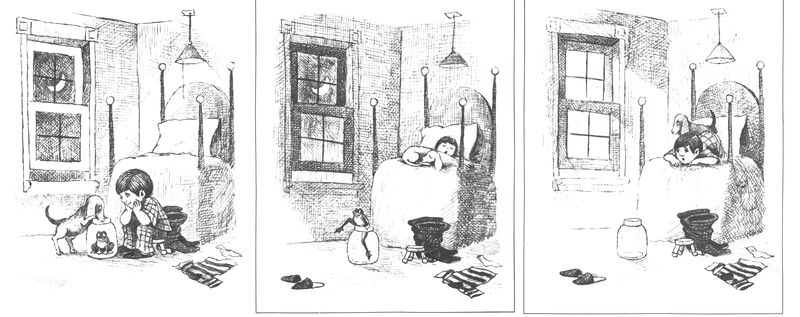
Here is a cute example from 4-year old Alexandra, who describes the first three pages as follows:
“The boy is looking at the frog. The boy is sleeping and the frog tried to get out of the bowl. When the boy waked up, the frog was gone.”
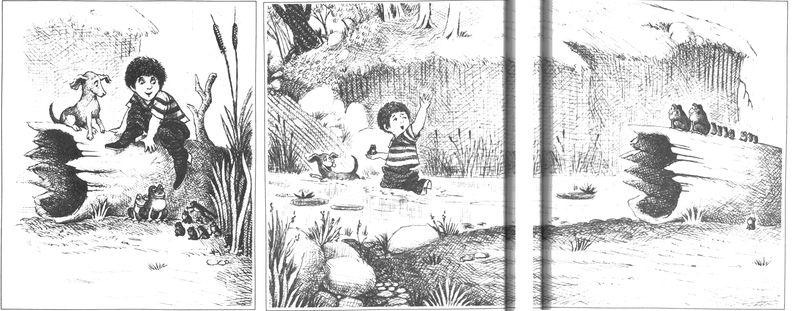
 I quite enjoyed how Alexandra concluded her story upon seeing the book's final three pages:
“The boy and the dog were looking over the log. And then the boy saw his frog with his family. And the frog said, ‘you can have one of our baby frogs and give it back when he grows up’.”
Miller (2006) explains that the story retell task requires the child to observe a wordless book's picture sequence, select the words, construct the sentences, and organize the sequence of propositions to retell the story as a coherent narrative.
During story-telling, as the adult listener, you can provide backchannel responses (e.g. “oh”, “Really”) and ask probing questions to help children along (e.g. “what’s happening now?”, or “what’s happening on this page?”).
In the research literature, narrative skills are widely recognized as central to the development of oral and written communication skills. So, it’s useful to add the occasional wordless picture book to shared-reading time with your child and allow them to tell the story to you. Not only will it benefit their reading development, but you’re also likely to hear some entertaining tales.
Here are a few of my favourite wordless picture books to get you started:
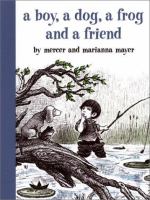
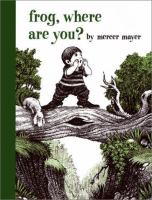
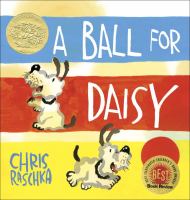
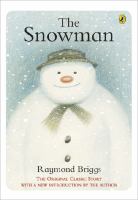
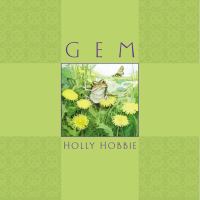
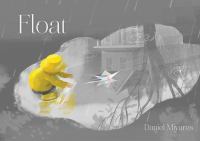
You can also check out a much wider selection of wordless picture books on our website: stories without words.
*Miller, J. F, Heilmann, J., Nockerts, A., Iglesias, A., Fabiano, L., Francis, D. J. (2006). Oral language and reading in bilingual children. Learning Disabilities Research & Practice, 21, 30-43.
2 thoughts on “Who Needs Words, Anyway?”
stories without words are some of my favourite stories. i clicked through to the catalogue from the link on your post and was delighted to find that the library has one of my most beloved childhood books: The Midnight Adventures of Kelly, Dot, and Esmerelda. i put a hold on it immediately, and am looking forward to re-reading/re-telling the story all over again. thanks.
These are some great examples, thanks for sharing! My absolute favorite wordless picture books are Flotsam and Tuesday, both by David Weisner. I believe both have won Caldecott Medals. They are such beautiful books, worth checking out!