Searching for Information in a Post-Truth World
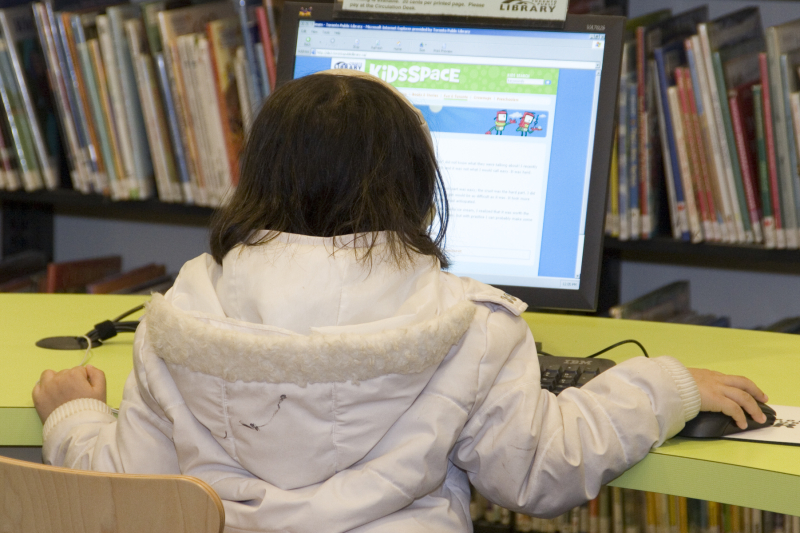
Your child has been asked to research a topic for class. Knowing that the Internet is rife with misinformation and half-truths, you are concerned that he will use information from unreliable websites. How do you teach your child to find accurate information?
Let’s Just Make… Information You Find on the Internet… the Backup
We’re fortunate to live in an age where information is available quickly. A simple query in a search engine can yield tens of thousands of results. How do you teach your child to dig through the clutter and potential computer viruses/scams to find information that is: (1) accurate (2) from a reputable source (3) free of bias. A Stanford University study found that 82% of middle-schoolers could not distinguish an ad labelled 'sponsored content' and a real news story. These so-called “virtually costless words” found on the Internet come at considerable cost. Whether the cost is to someone who has their personal information stolen from an infected website, or the cost to a students’ grade because their work is filled with inaccurate conclusions drawn from misinformation, or the business cost of making a decision based on incorrect information, it is all preventable.
I’ve Made a Huge Mistake… By Believing Everything on the Internet
A recent CNN article described the spread of misinformation on the Internet. The Internet is an unregulated environment where anyone can post anything. Wild unsubstantiated claims and nasty comments are just some of the things to be wary of. Websites such as Snopes.com aim to fact check rumours found on the Internet. How do you teach your child that what they see shared in their social media feeds may be of dubious quality and how to avoid echo chambers? Start by teaching your child to avoid information from those who claim they graduated from the "University of Google". Ask your child to do some research and they will discover there isn’t a “University of Google”.
And That’s Why… You Should Always Use an Online Database (and Verify!)
It’s never too early to teach your child how to find proper sources. Most online databases retrieve reliable information from trusted sources. Show your child how easy it is to find information using a library database and teach your child to critically evaluate the results. The University of California – Berkeley has a quick guide to help you evaluate a resource. Yale University (PDF) has also created a document that sums up the benefits of using a library database. Don’t forget that Research Ate My Brain is an excellent resource to guide your child through the research process. Here is a small selection of databases that your child can access for free with a Toronto Public Library Card:
What strategies do you use to avoid misinformation?
2 thoughts on “Searching for Information in a Post-Truth World”
Research Ate My Brain is now badly out of date. Is there an updated version of the same thing but for kids? (RAMB is for teens.)
Hi Jenny,
There’s a Fact Finder series that may be better suited for junior grades. The books are fairly recent, and I’ve listed some of the titles below. Research Ate My Brain is aimed at intermediate grades and teens, but the information can be adapted for a younger audience.
Smart Research Strategies by Kristine Carlson Asselin
http://www.torontopubliclibrary.ca/detail.jsp?Entt=RDM3002855&R=3002855
Collect Your Thoughts: Organizing Information by Jennifer Fandel
http://www.torontopubliclibrary.ca/detail.jsp?Entt=RDM3002805&R=3002805
Present What You Know: Sharing Information by Christopher Forest
http://www.torontopubliclibrary.ca/detail.jsp?Entt=RDM3002849&R=3002849
Think For Yourself: Avoiding Plagarism by Kristine Carlson Asselin
http://www.torontopubliclibrary.ca/detail.jsp?Entt=RDM3002858&R=3002858