The War of 1812 – like all wars – was not all glory and righteousness. Not even mostly glory and righteousness.
It’s May 2012. In most of Canada, the birds are chirping, spring flowers are in bloom, and people across the country are gearing up to crack out the grills in anticipation of a lovely summer. Oh yes, and it’s approaching 200 years to the day since the United States ‘declared war on Britain and all its dominions’ and thus engaged what is now Canada in the War of 1812. Most Canadians can be forgiven for not knowing much about it, for not being able to name the combatants, and/or for not caring. It has, after all, been 200 years; hence, the federal government’s campaign to make us remember it as a ‘defining chapter in our history’.
And it was a defining moment. It marked the first time that self-identified ‘Canadians’ resisted a patriotic war! War resistance – the conscious refusal – for moral, religious, ethical, or political reasons – to fight for one side or the other, is a neglected part of every armed conflict of post-contact North America, and indeed of the modern world. In 1812, Mennonites, Quakers, and other religious pacifists were significant minorities in communities throughout the Lake Erie region of southern Ontario. Historian Jonathan Seiling reports, “It is widely recognized that many Upper Canadians did not demonstrate utmost loyalty toward the British Crown on the eve of the war, or even during the war. Some settlers objected to the war in communities on both sides of the border, whether on pragmatic grounds, or due to “disaffection” and political dissent. Others refused to participate on principle…” The British authorities in Upper Canada by and large understood this and so levied a tax on them in lieu of combat service, and routinely dragooned them as teamsters for the baggage trains.
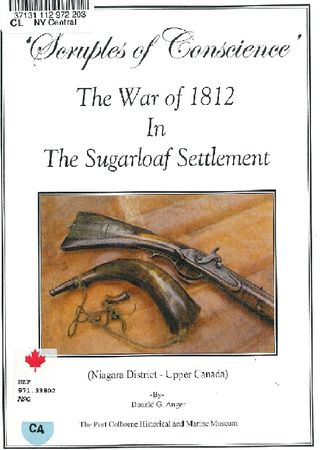
Donald G. Anger confirms as much, citing a local example from the Sugarloaf settlement in Niagara district. “These were people of strong faith, who did not believe in taking up arms against their fellow man [sic] and usually quietly accept the consequences.” Or not so quietly in some cases, as one report indicated a Quaker in what is today Kitchener-Waterloo area took his wagon apart down to its wood and nails so as to avoid having to use it to aid the militia. Others went to jail for refusing to pay the pacifist levy, and loudly declaimed against the war all the way! Anger notes of the Quakers in Sugarloaf “During the War of 1812, all of these men [ed. – the Quaker heads-of-households who would be eligible for militia service] would remain true to their Quaker principles, would decline to pick up arms, and most would opt not to pay the required fine and instead accept the consequences.” Me thinks Anger is being unnecessarily coy 🙂
 Resistance was not exclusive to religious communities either. Enthusiasm for militia service was mixed at best, with settlers on both sides of the conflict refusing call-ups as often as not. American general George McClure lamented at one such failed attempt to rouse the local militia against the British taking of Fort Niagara: “Most were more interested in taking care of their families and property by carrying them into the interior, than helping us to fight.” Today, amidst the variety of commemorative actions, Ontario historians have created http://tecumsehlieshere.org/, an interactive augmented reality game that educates the players on all aspects of the war, as well as training them in the tools of historical research (more details). I know what I am doing this summer!
Resistance to war has long been a feature of modern conflict. Canadian society was done a great service by the huge influx of American draft resisters during America’s war in Vietnam. Over 50 000 Americans came across during the 1960s and 1970s, taking advantage of laxer Canadian immigration policies and a Canadian political environment that was similarly in flux – Trudeau’s government ended the covert discrimination against US draft resisters only after it was nationally exposed by five York University students who posed as American draft-card burners and recorded their experiences at the border. Many of those Americans went on to lives in the arts, law, and other endeavours, and they continue to be eternally grateful for being here.
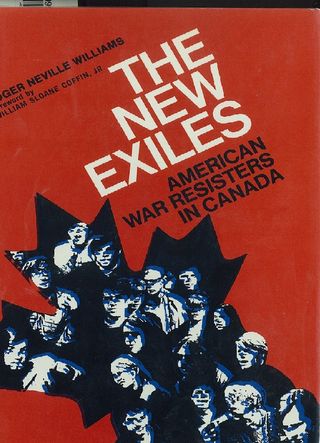

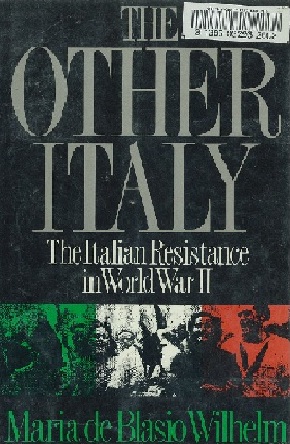
Before that, the resistance movements in France and Italy during the Second World War are part of our history. Resistance in these cases was by no means pacifist however. In Italy, the resistance was explicitly anti-Fascisti and anti-Nazi, and involved serious deployment of modern weaponry, and the sorts of difficult decisions and compromising on one’s ideals that often accompanies politics. Resistance too took place in even the darkest places, where prisoners in Auschwitz-Birkenau organized an uprising that involved smuggling gun powder in from a local factory in tablespoon-sized amounts for weeks.
Today, resistance continues, both to historic wars and current ones. In Stouffville Ontario, the local Mennonite congregation petitioned the town council to oppose the federal government’s plans for a war commemoration while ActiveHistory.ca raises the question “What’s wrong with celebrating the War of 1812?” The writers end with a quotation from the legendary Pierre Burton, writing in reference to 1812: “Political and military leaders constantly used the clichés of warfare to justify bloodshed and rampage. Words like honour…liberty…independence…freedom were dragged out to rally the troops, most of whom, struggling to save their skins, knew them to be empty.” Canadians legacy of resistance to wars continues into this century, with massive national protests in the run-up to the US-led invasion of Iraq – protests that prompted Prime Minister Jean Chretien to renounce Canadian military involvement in that invasion. Today, dozens or hundreds of American war veterans seek refuge here, hoping to find evidence of these same threads of peace.
Sources
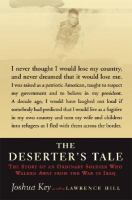
The Deserter's Tale : the story of an ordinary soldier who walked away from the war in Iraq (Key, Joshua with Lawrence Hill, 2007)
956.70443 KEY KEY – – Society and Recreation, 3rd fl, NYCL
Don't Give Up the Ship! Myths of the War of 1812 (Hickey, Donald R., 2006)
971.034 HIC – Canadiana, 6th fl, NYCL
Fighting Back, a memoir of Jewish Resistance in World War II (Werner, Harold, 1992)
940.531809 W – Society and Recreation, 3rd fl, NYCL
The New Exiles, American War Resisters in Canada (Williams, Roger N., 1971)
325.2730971 W – Canadiana, 6th fl, NYCL
Northern Passage: American Vietnam War Resisters in Canada (Hagan, John, 2001)
959.70438 HAG – Society and Recreation, 3rd fl, NYCL
The Other Italy, the Italian Resistance in World War II (Wilhelm, Maria, 1988)
940.5345 W – Society and Recreation, 3rd fl, NYCL
'Scruples of Conscience' the War of 1812 in the Sugarloaf Settlement (Anger, Donald G., 2008)
971.33802 ANG - Canadiana, 6th fl, NYCL
Soldiers in revolt : GI resistance during the Vietnam War (Cortright, David, 2005)
959.70433 COR – Society and Recreation, 3rd fl, NYCL
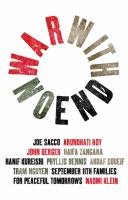
War with No End (Bennis, Phyllis et al., 2007)
958.1047 WAR – Society and Recreation, 3rd fl, NYCL
5 thoughts on “The War of 1812 – like all wars – was not all glory and righteousness. Not even mostly glory and righteousness.”
Great comments.
Little do most know that a sitting canadian member of parliament raised a volunteer battalion to fight alongside the US, that neither army could muster much enthusiasm and both consistently had to spend much resources dealing with both individual and large scale desertions. Far from a glorius moment in the founding of Canada, the war of 1812 was generally not met with a patriotic upsurge but more generally with a fear that one would either lose their land or have to pay more taxes.
A recent book by Alan Taylor called “the Civil War of 1812 – American Citizens, British subjects, Irish rebels and Indian Allies” is probably the best and most honest look at the War of 1812.
Its clear that many in Upper Canada harboured sympathy for the republican style government in the US.
It was the disaterous policy of looting and burning that inevitably turned the tide against the US.
In the end it would seem the that there were no winners and the only losers were the Native American nations that straddled both sides of the border. The war permanently shattered collective resistance by these nations against US and British expansionism westward.
It is interesting how the world could have been so much different had the British Empire been defeated. That would surely have hastened the demise of the British imperial system, space would surely have opened up for resistance in India, it would have spurred on the fight for Irish independence etc…..
The world could have been spared the mass slaughter and famine wrought by Britain.
On the other hand it could have given rise to a more voracious US imperial desire – a la Teddy Roosevelt.
What an excellent post!
I’d like to suggest a few more books about military resistance.
The Regeneration Trilogy by Pat Barker – The first book, Regeneration, is based on the memoirs of Siegfried Sassoon, the poet, who deserted from “The Great War” (WWI). The trilogy is also about government persecution of gay people and govt spying on civilians during WWI. These are excellent books for anyone interested in historical fiction and the effects of war on both soldiers and civilians.
LMF by Matthew Bin – LMF stands for “Lacking Moral Fibre”. It’s the label war resisters were given during WWII. An excellent, moving book by a local author.
The Taste of Metal by Jack Todd – Todd is a sportswriter for the Montreal Gazette. He was also a Vietnam War resister, and he struggled through some very difficult times when he first came to Canada. Quite a gripping story.
Along with Josh Key’s excellent “The Deserter’s Tale,” I recommend “About Face: Military Resisters Turn Against War,” a compilation of first-person stories of current war resisters.
If only some MPs and government ministers would read these books and learn from them! Canada should be proud to welcome US war resisters. Instead, the Harper Government does the US’s dirty work and deports them.
Some very intriguing logic in Mr. Whyman’s remarks. If the British had been defeated in the War of 1812 as he seems to wish, not only would the history of India and Ireland be different, but of course what we know as Canada would have been absorbed into the U.S. Which brand of “imperial desire” – British or American – has best served the northern portion of North America? Regardless of the ambivalence and resistance to the war discussed in this post, I think all Canadians have compelling reasons to commemorate those who did fight to resist American expansionism and preserve what is now Canada.
I am not sure that Ritch’s comments can be taken as his ‘seeming to wish’ the british had been defeated. I read them as a thought experiment = ‘what other history would have changed if Britain had suffered an imperial setback in the days when they were still building their empire’?
I wonder too, how much US expansionism played a role in the American war aims back then, which is not to say it wasn’t a factor at all. It’s only to point out that the 54/40 or fight manifest destiny rhetoric didn’t really heat up until the mid-1800s, and American beefs were primarily with England at the time. Now certain sectors of the US elite may have, at the time, looked with favor upon northern expansion, but it’s an open question as to whether Canadian settlers would have appreciated such a change in ruler. Some of them would, and some not, with most likely preferring simply to be left alone.
The ‘Canadian’ way of life we have today is as much a result of 20th century struggles – the 8 hr day, public health care, bilingualism, etc. – as it was the 19th. Perhaps the topic of another blog post!
And speaking of Alan Taylor and his book, he will be speaking at the Toronto Reference Library in June!
The details:
Wed Jun 13, 2012
7:00 p.m. – 8:30 p.m.
90 mins
Toronto Reference Library Bram & Bluma Appel Salon
As part of our War of 1812 programs, Pulitzer Prize-winning historian and author Alan Taylor discusses his book, The Civil War of 1812, with TVO’s Steve Paikin.
Taylor teaches American and Canadian history at the University of California. His books include The Divided Ground, Writing Early American History, American Colonies, and William Cooper’s Town, which won’the Bancroft and Pulitzer prizes for American history. He also serves as a contributing editor to The New Republic.
This event is part of the Luminato at the Library series.