Creased Receipts: Historical Receipts from Digital Archive Ontario
In the song "Best Regards", Quebec heavy metal band Voïvod's sings about unrequited love. They lament that not even "a creased receipt" was issued from an indifferent world. Unlike in that song, you can find lots of receipts on Digital Archive Ontario, our Ontario-facing database of digitized items held by Toronto Public Library. (Non-metaphorical receipts, that is.)
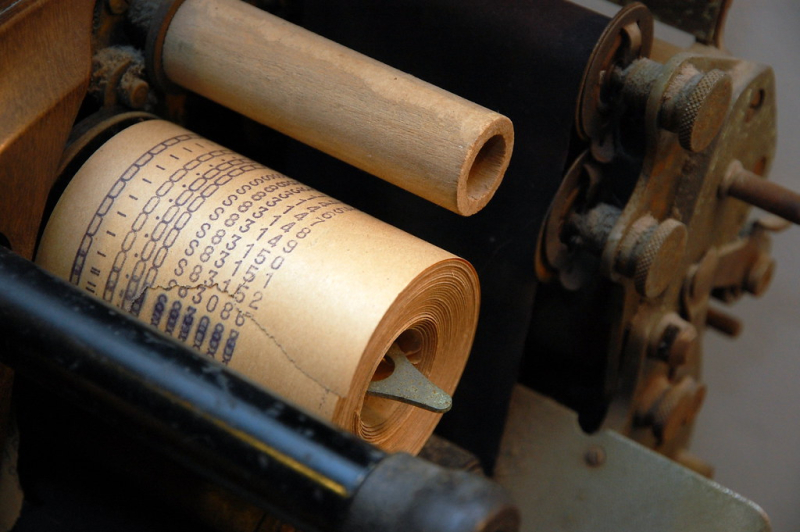
Whether spewing from an old calculating machine (pictured below) or hand-filled and signed on pre-printed copies, receipts offer glimpses of past items purchased, the prices of goods and what was deemed important to record.
Background
"[A reciept] a written acknowledgment that something of value has been transferred from one party to another. In addition to the receipts consumers typically receive from vendors and service providers, receipts are also issued in business-to-business dealings as well as stock market transactions." – Investopedia
Leaving a paper trail, receipts still remain ubiquitous in our world. Before computer technology and digital records, paper receipts were the only way to prove that transactions occurred between one party to another.
Some types of transactions recorded by receipts include deposits, donations, purchases, subscriptions, tuition. Below are examples of each of these from our archives.
Deposits
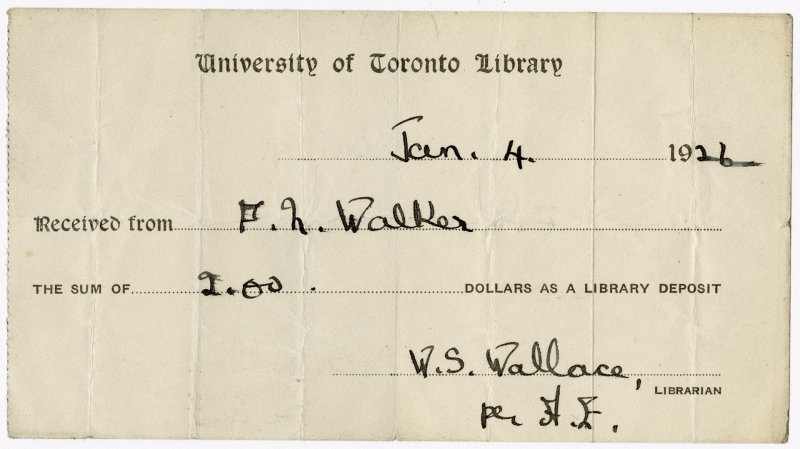
The two dollar ("2.00") deposit recorded below allowed someone named F. H. Walker to access and services at the University of Toronto Library. W. S. Wallace per G. E. was the librarian accepting the deposit and providing this receipt. Note the simple format of the receipt, which looks similar to a printed cheque. (Walker's name will also appear on the tuition receipts from the University of Toronto below.)
Donations
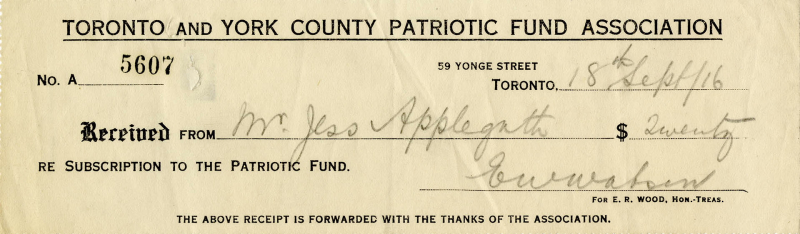
The donation recorded below of $20 was quite generous in 1916. This amount would be close to $500 today. The Canadian Patriotic fund, according to the Canadian War Museum, supported soldiers and their family before social security assistance developed into universal programs in Canada.
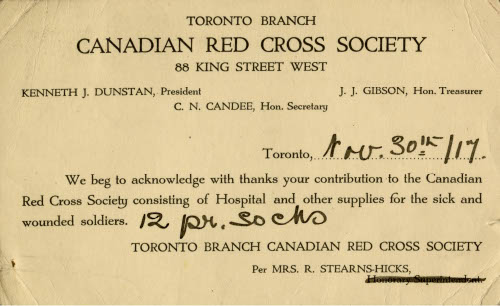
Donations arrive in different forms. On November 30, 1917, the receipt below acknowledged 12 pairs of socks given to the Toronto Branch of the Canadian Red Cross Society. These dozen pairs of socks may have gone to an active World War I hospital camp for sick and wounded soldiers. For more history on clothing donations, look at Digital Kingston's Knitting for Soldiers article. If you're a knitter, you can also read Peggy's post on knitting "field comforts" for soldiers and try making your own.
Purchases
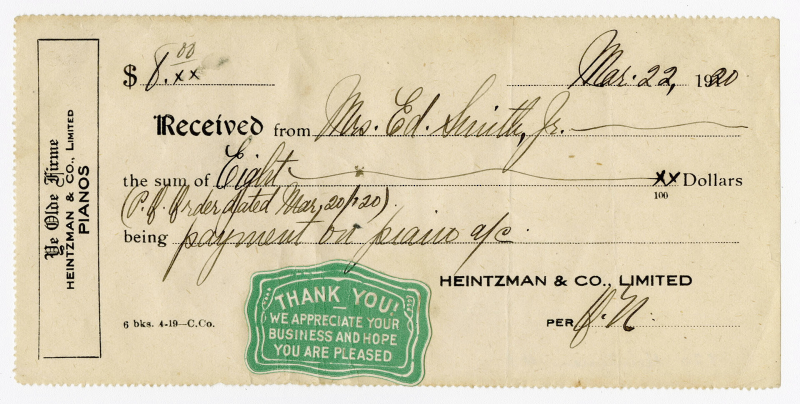
This type of receipt is familiar: when someone buys an item, a paper is issued by the seller to acknowledge it. (Tip: a useful search term for researching old receipts is "acknowledgements".) The receipt below has "20" scribbled to show that the 1910s had passed. A new decade of receipts would be printed once this batch ran out. A green seal stamp highlights the seller's appreciation for the transaction. The price may seem ridiculously low for a new piano — but eight dollars was worth a lot more 100 years ago.
Subscriptions
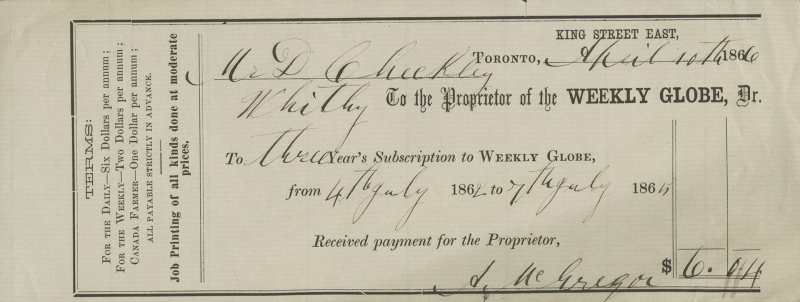
On the left side of the below receipt, there are three different types of subscriptions for the periodicals being sold: daily, weekly and "Canada Farmer" (monthly). Here, the subscriber purchased three years of the Weekly Globe from July 4, 1862 to July 7, 1865 for $6.04. (You can access old issues of the Canada Farmer on Canadiana— the periodical ran from 1864 to 1876.)
Taxes
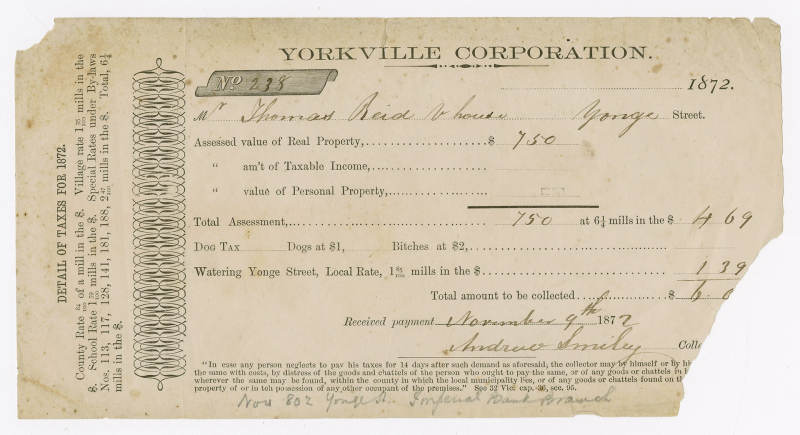
Yes, even as far back as 1872, personal property, real estate and income tax were assessed and collected. Surprisingly, this receipt lists dog taxes for each gender. Andrew Smiley, the tax collector, received the payment recorded below from Thomas Reid on November 9, 1872.
Tuition
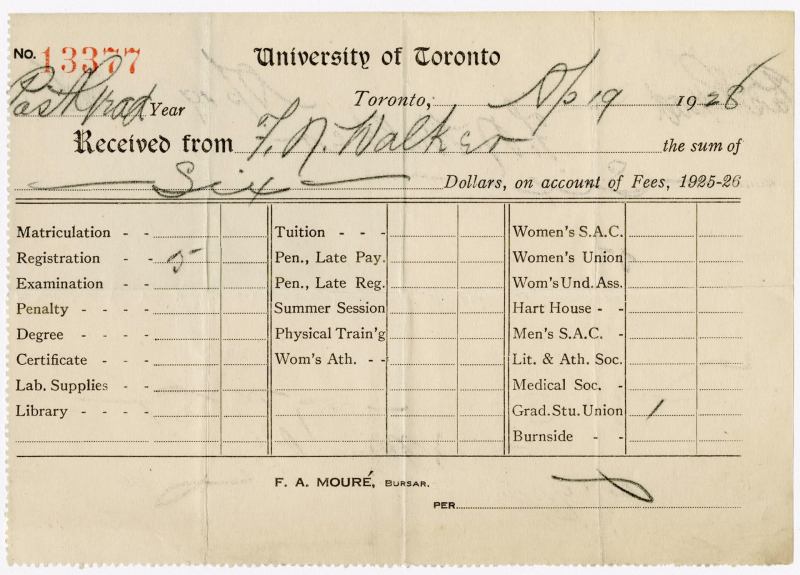
F. N. Walker, during post-graduate years on November 19, 1928, paid the sum of $6 to cover registration at the University of Toronto and graduate student union dues from 1925 to 1926. No particular college was listed on this receipt. All the fee-based items were listed out on one page of paper where the Bursar could conveniently tick them off.
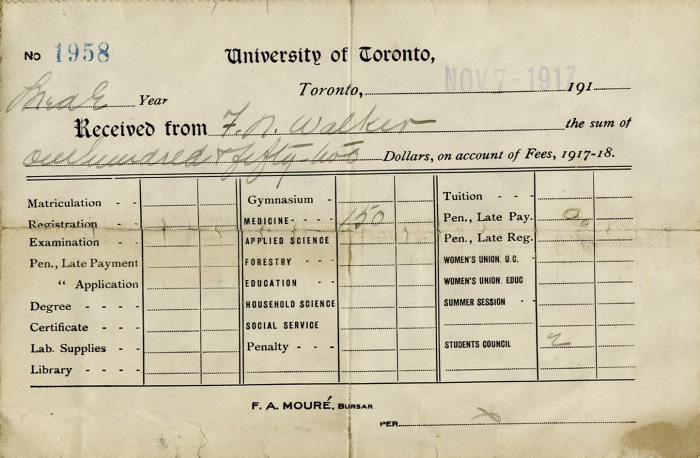
Here is a similar tuition receipt one decade earlier, though the Bursar's name is still the same. The fee of $150 seems to relate to tuition in a "Medicine" degree. Even in today's dollars — about $1,600— that seems pretty inexpensive.
Explore more
View more digitized receipts on Digital Archive Ontario.
4 thoughts on “Creased Receipts: Historical Receipts from Digital Archive Ontario”
Great blog, Ann! Receipts provide such fascinating historical insight, and beautiful examples of handwriting as well, especially on your Heintzman, and Weekly Globe examples.
Thank you so very much, Muriel! I am so glad you enjoyed reading it. I was surprised that one could purchase a piano for under $10.
Yes, I am proud to have kept my cursive handwriting from high school. I had an elderly supply teacher in the mid-1980s who taught me some more advanced cursive writing. I write when I send people cards on their birthdays or Christmas.
Your positive feedback inspires me to continue locating more interesting resources to post from our not-too-distant past.
Female dogs were taxed differently than male dogs because female dogs can have puppies and were (are) more valuable.
Dear Michelle:
Thank you for the information. Yes, it seems to be the same today and the tax forms are much longer now.