Happy 100th Birthday, North York!
From the Aga Khan Museum to the Humber River Trail to the Black Creek Pioneer Village, North York has many attractions for residents and visitors to enjoy. Did you know that 2022 marks the centennial of North York becoming an independent township, and that it didn’t actually become a city until 1979? If you are anything like me, North York might seem surprisingly young as far as cities go. And if you are also anything like me, you may find that you were taught very little about local history in school when you were growing up.
With the date of the centennial fast approaching on June 13th, there is no time like the present to start learning a bit about North York’s past.

The land North York sits on today is the traditional territory of the Mississaugas of the Credit First Nation, the Wendat and the Haudenosaunee Confederacy. It is also a part of the Dish with One Spoon territory, which is a treaty between the Haudenosaunee Confederacy, the Anishinabek and allied nations. In 1787, this Indigenous land was acquired by the British in a controversial agreement known as the Toronto Purchase. Poorly defined land boundaries and a lack of documentation were a few of the glaring issues that led to the renegotiation of terms over many years. A sobering Indigenous perspective on the Toronto Purchase Agreement can be found on the Mississaugas of the Credit First Nation webpage. While a land claim was made by the Mississaugas, it wasn’t until 2010 that it was settled by the Canadian Government.
In 1791, the province of Quebec was divided and Upper Canada was established. A few years later, settler farmers began cultivating Crown land grants in York Township, directly north of the new town of York. See the Archives of Ontario and this North York timeline for a closer look at southern Ontario and the birth of North York.
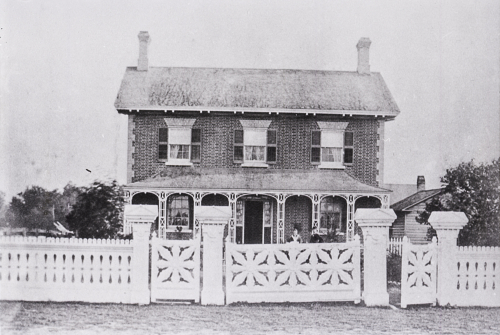
Hard as it is to imagine now, North York was very much a farming community for over a century, made up of a scattering of villages. But the same could not be said of the southern regions of York Township as the growing city of Toronto expanded north into the Township. Farmers in North York watched the urbanization of the Township with growing dissatisfaction. They were shouldering a hefty portion of Township taxes – over 20% – with little to show for it. Without strong political representation, many of their concerns slipped through the cracks. The conditions of North York’s dirt roads were so terrible, for example, that people tried to fill holes with ashes from their fireplaces.

Banding together, these farmers – including Robert Franklin Hicks, who would become the first reeve of North York – pushed for the separation of North York from York Township. On June 13th of 1922, North York gained its independence and was home to a humble population of 6000 people.
Surprisingly, while the population grew steadily and housing development expanded, North York kept true to its rural roots until after World War II. It achieved borough status in 1967, and twelve years later, finally became a city of its own. Then the amalgamation in 1998 saw North York merging with Etobicoke, Scarborough, York, and East York into the ‘megacity’ that is Toronto as we know it today.


Of course, this is only the briefest of retrospectives on a city with so much to offer. For a deeper dive into all things North York, check out the events and resources from our partners at the North York Historical Society. From preserving historical sites to bolstering the Library’s historical collections, the NYHS is devoted to keeping North York history alive one program, newsletter, and plaque at a time. How many plaques have you seen?

Here at North York Central Library, we have the North York History Room, a dedicated space for all things local history. It is also home to the Golden Lion Hotel’s titular lion. Although currently closed to the public, library staff are hard at work preparing the room for a grand opening later in 2022. Keep a lookout for it on the fifth floor, in the Society and Recreation department.
In the meantime, there are plenty of ways for you to whet your appetite for local history. Consider the following:
Books
- Pioneering in North York by Patricia Hart is a detailed study of North York’s development and was fundamental to writing this blog.
- Art and design enthusiasts will find something to appreciate in North York’s modernist architecture. (A PDF full text version is available.)
- The NYHS provides a list of their own recommended reads on their website.
Digital resources
- Digital Archive Ontario is a fascinating source of older photographs, historical maps, and ephemera.
- The Neighbourhood Map on our website will help you narrow down your search.
Museum passes
- Passes are available to sign out through our Museum + Arts Pass (MAP) program at select library branches. These grant free access to cultural sites such as the Science Centre and the Black Creek Pioneer Village.
- The City of Toronto now offers free admission to ten historic museums, including the Gibson House and Zion Schoolhouse in North York.
Here’s to 100 years of North York, “The City With Heart” – and to many more milestones to come!
Comments