100th Anniversary of the Chinese Exclusion Act
On July 1, 1923, the Canadian government passed a new Chinese Immigration Act — commonly known as the Chinese Exclusion Act — to restrict Chinese immigration. For its 100th anniversary, let's revisit this important part of Canadian history through precious records in our community-built Chinese Canadian Archive.
Brief history of the Chinese Exclusion Act
In the early 1880s, the construction of the Canadian Pacific Railway led to an influx of Chinese immigrants to work as labourers. By 1885, the construction was largely done, and Chinese labourers were no longer desired. At the time, Chinese labourers earned only an average of $300 per year. The Parliament of Canada passed a Chinese Immigration Act in 1885, imposing a head tax of $50 on incoming Chinese immigrants. This was raised to $100 in 1900 and to $500 in 1903. Despite the discriminatory tax, Chinese immigration continued.
In 1923, the Parliament passed what became known as the Chinese Exclusion Act, which prohibited most Chinese immigration except for people in narrowly-defined categories: diplomats, merchants, Canadian-born children who had left for educational purposes and students attending university or college. It also required any Chinese person in Canada to be registered — even those who were born in Canada. From 1923 until the Act was repealed in 1947, few Chinese immigrants gained entry into Canada.
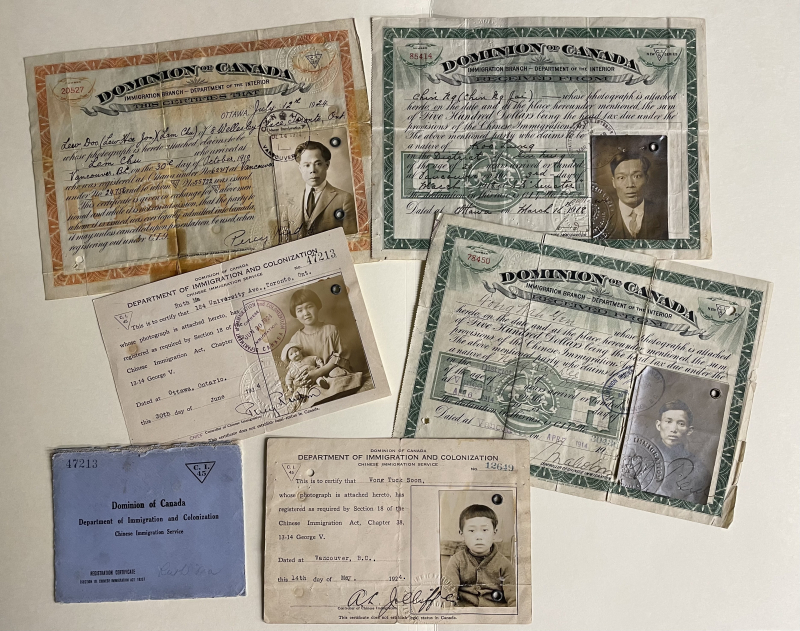
TPL’s Chinese Canadian Archive holds materials donated by Chinese Canadians in the Greater Toronto Area that document experiences before, during and after the Exclusion Era.
William Wai-Ching Wong and the Exclusion Era
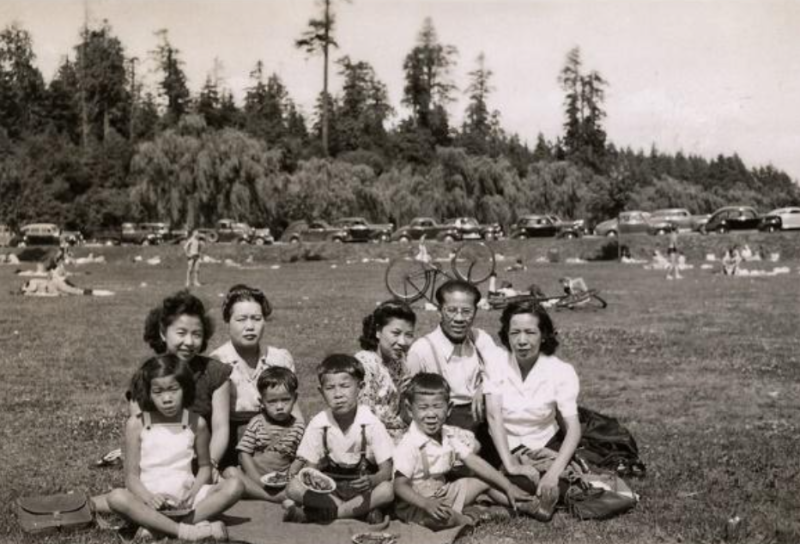
One of the few Chinese immigrants who gained entry during the Exclusion Era (1923 to 1947) was William Wai-Ching Wong.
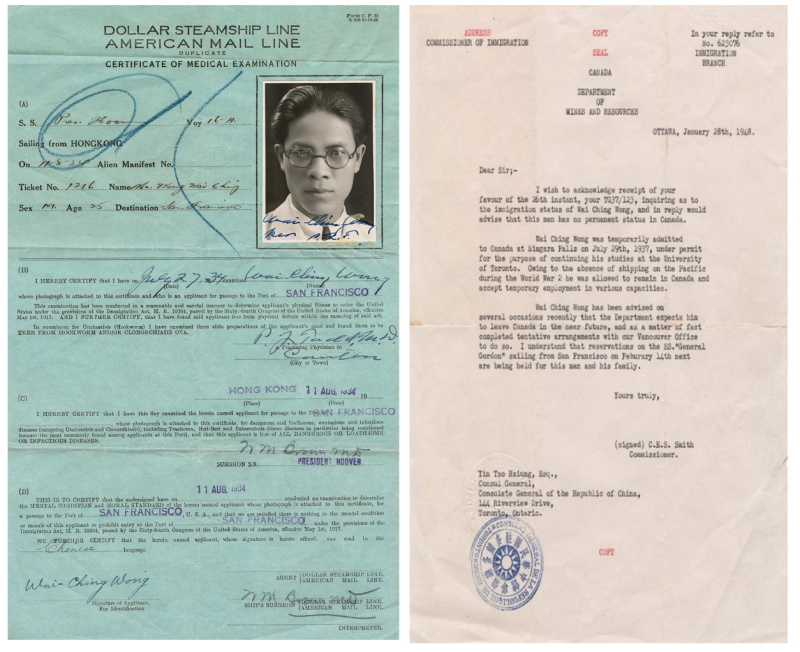
Wong left China in 1934 to become a student in political science at New York University. In 1937, he came to Toronto as a PhD student at the University of Toronto. Upon his arrival, he had several jobs and other positions in the community. He was a teacher, an insurance sales representative and, most prominently, the Chief Editor of the Shing Wah Daily News, a major Chinese daily newspaper in Toronto first published in 1922. He also served as the president of the Chinese Community Centre of Ontario for more than 20 years. Meanwhile, his family expanded — he got married and raised four children.

He was allowed to enter Canada in 1937 on a temporary basis. In 1948, having lived in Canada for 10 years, the Immigration Authority issued a letter to the consulate of the Republic of China. It stated that Wong was expected to leave the country. However, he managed to become a Canadian citizen in 1957. This deportation letter and other records related to Wong are preserved in our Chinese Canadian Archive.
Registration and risks for Canadian-born Chinese
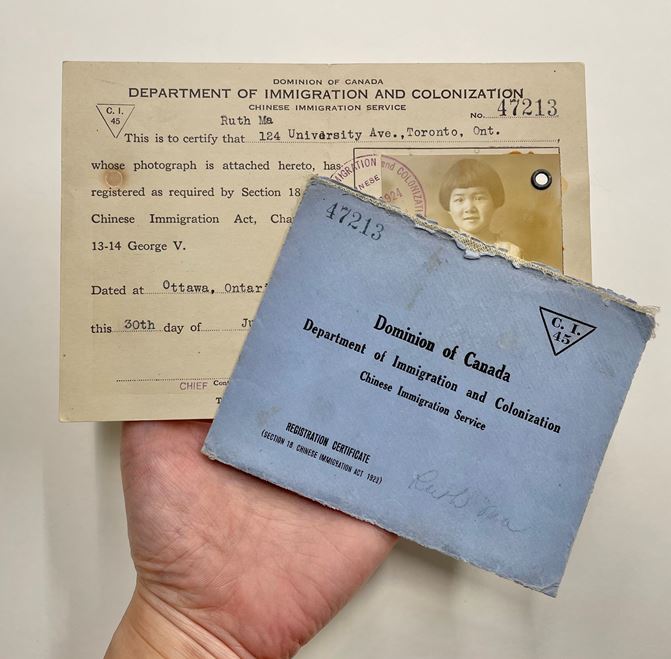
The Chinese Exclusion Act required all Chinese, including those who were born in Canada, to register and carry certificates with an identification photo. The Chinese Canadian Archive preserves five of these certificates, including the below C.I. (Chinese Immigration) 45 certificate issued to Canadian-born Ruth Ma. The certificate came in a pocket-size envelope.
Apart from what was stipulated in the Chinese Exclusion Act, during that time Canadian women could lose their nationality status if they married a Chinese man. Jean Lumb, who was born in Nanaimo, British Columbia, lost her status by marrying her husband, Doyle Jenning Lumb, who had come to Canada from China. She later obtained Canadian citizenship in 1950 (three years after the Act was repealed). Jean Lumb was an influential advocate for eliminating discriminatory immigration policies against Chinese immigrants. She was the first Chinese Canadian woman to receive the Order of Canada. In 1995, Lumb became a citizenship judge and swore in new Canadians.
Family separation after the Exclusion Era
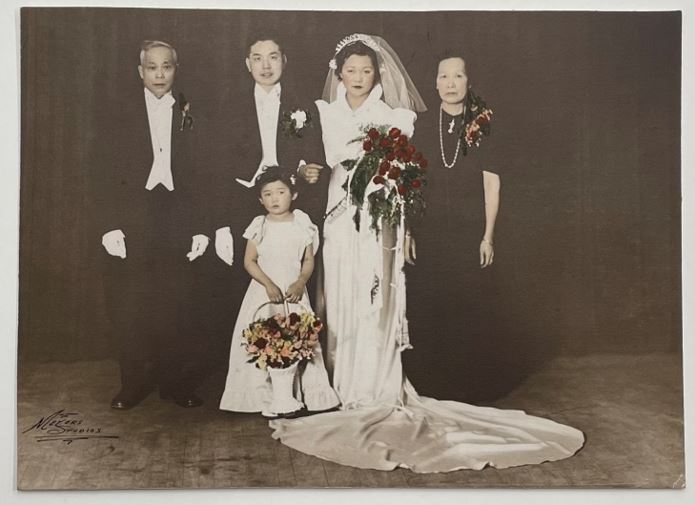
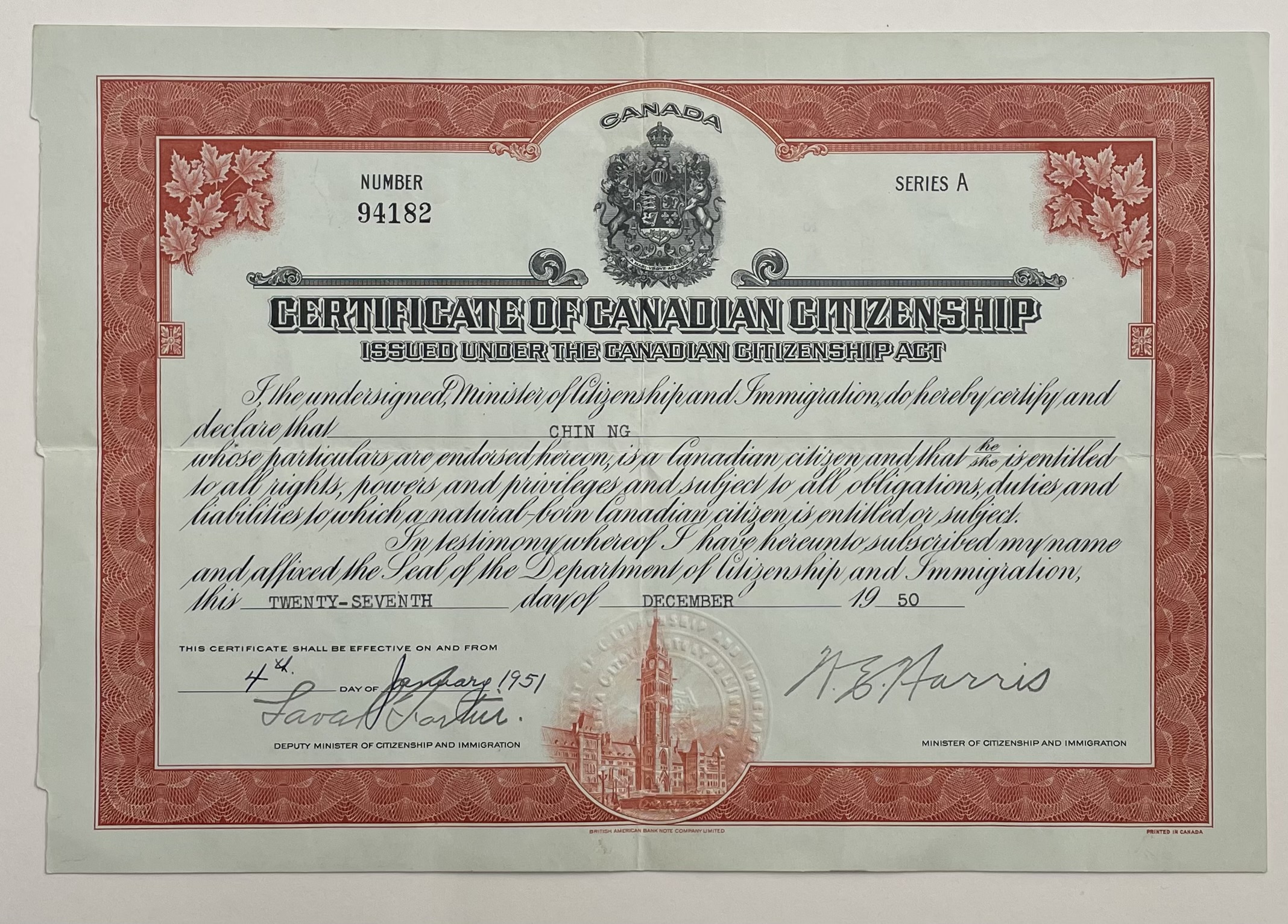
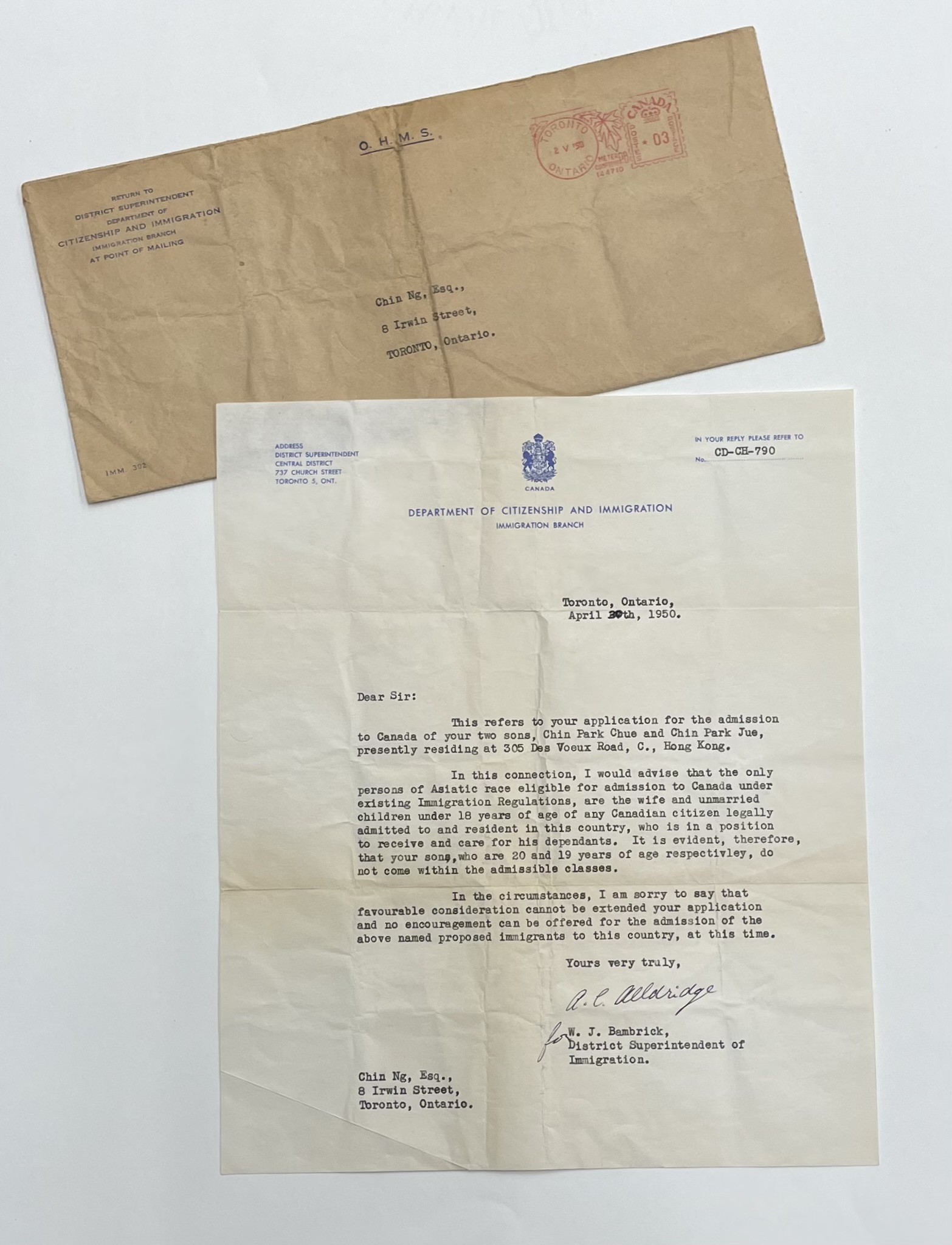
Due to the Act, many Chinese men in Canada were separated from their families. Although the Act was repealed in 1947, the entry of Chinese immigrants was limited to spouses and children (under the age of 18) of Canadian citizens. This still kept many families apart like Chin Ng's family. Ng paid a head tax of $500 when he came to Canada in 1918. He later became a Canadian citizen in 1950 and applied for his two sons to come over from China. His application was rejected because his sons were over 18.
Immigration restrictions on Chinese based on their race and national origin continued until 1967.
Apology and recognition
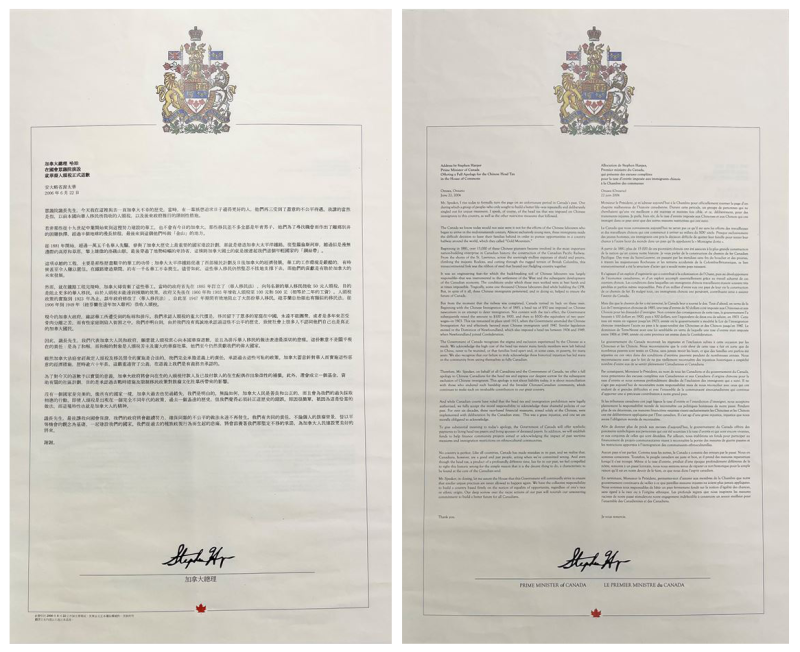
For a long time, the Chinese Canadian community has referred to Dominion Day (now Canada Day) as "Humiliation Day" because July 1 marked the passing of the Chinese Exclusion Act. Community members fought for redress and apology from the Canadian government. On June 22, 2006, Prime Minister Stephen Harper offered a formal apology to Chinese Canadians for the "grave injustice" of the Head Tax and expressed sorrow for the exclusion of Chinese immigrants. It was an important day for Chinese Canadian communities. The below copy of the address held in the Ying Hope fonds in our Chinese Canadian Archive.
During Asian Heritage Month in May of 2023, Prime Minister Justin Trudeau issued a statement to mark 100 years since the Chinese Immigration Act of 1923. Later on May 30, the Canadian government recognized the exclusion of Chinese Immigrants as of national historic significance.
Commemoration and further reading
Many organizations across Canada continue to shine a light on this history, especially for its 100th anniversary. Here are some of commemorative events and exhibits:
- Chinese Canadian Museum's grand opening at its new site Wing Sang Building, Vancouver, which features a major exhibit of a community archives project The Paper Trail to the 1923 Chinese Exclusion Act.
- Standing in the Doorway: Lived Histories & Experiences of the Chinese Community, an online exhibit by the York Region District School Board.
- Longing Belonging ✿ 100 Years 100 Stories, an exhibit at Varley Art Gallery of Markham.
- After Exclusion, Happy Fruit, an exhibit by Ed Kwan and Don Kwan at Gallery 101 in Ottawa.
- Swallowing Mountains, an exhibit by artist Karen Tam at McCord Stewart Museum, Montreal.
- In My Yesterday, an exhibit by artist JJ Lee at the Canadian Museum of Immigration at Pier 21 in Halifax.
- I was ashamed of being Chinese until I learned about my ancestors' first years in Canada, an article by Winston Ma of CBC.
Historical overviews of the Chinese Exclusion Act are available on The Canadian Encyclopedia, Canadian Museum of Immigration at Pier 21 or Canadian Museum for Human Rights.
About the Chinese Canadian Archive
Maintained by TPL, the Chinese Canadian Archive collects and preserves materials that reflect the history of Chinese Canadians in the Greater Toronto Area. It is located on the 5th floor of Toronto Reference Library and is available to everyone. Visit us to learn about the history of Chinese immigration.
Blog post by Ruby Yuen, Special Collections Archivist for Chinese Canadian Archive
11 thoughts on “100th Anniversary of the Chinese Exclusion Act”
Ruby, thank you so much for this excellently presented and very informative and interesting blog post. A dark and sad chapter in Canadian history indeed, but so important for Canadians to learn and know about.
Thanks for this very well written and researched blog, Ruby! I bet Jean Lumb was involved with the “Save Chinatown” meeting that was being promoted on one of the posters in the last gallery exhibit.
Thank you for this extremely informative post, Ruby. So much truth to unpack here.
Ruby, this was extremely moving. How cruel to separate families and impose such stigma on people simply for existing. Thank you for the important work you are doing to educate and, more importantly, preserve these documents and the stories they tell for future generations.
Thank you, Beau. You are right. I was so fascinated when I first saw the “Help save Chinatown” pamphlet in the Alan and Thomas Suddon Collection (https://digitalarchive.tpl.ca/objects/373888/help-save-chinatown?ctx=dd43a70becb0584a6acb7aaa5d02bae0eb97ea87&idx=0). The Toronto Star Photo Archive also have rich visual reference of the Chinese community in Toronto. Love the fact that CCA is under the same roof with these great collections!
Thank you, Joanna. It is indeed a very important part of Canadian History.
Thank you, Rachelle. There is a lot more to unpack indeed. It is our hope that CCA offer a space for more of these work to happen.
Thank you, Donna. I am so grateful that I can play a small part in preserving such important history for the future generations.
Reposting the link to the pamphlet: https://digitalarchive.tpl.ca/objects/373888/help-save-chinatown?ctx=dd43a70becb0584a6acb7aaa5d02bae0eb97ea87&idx=0
Thank you so much for your dedication and hard work Ruby! Much appreciated from the bottom of my Heart ❤️❤️❤️.
Stella Zhao
I have heard of the Chinese Exclusion Act. I was very moved and use to think how sad it might have been for those Chinese families. So much heart brake. So cruel. So unthinkable that this could happen in Canada. When my paren’ts and I arrived in Toronto form Lisbon in 1967 as Landed Immigrants I had no idea that such action (and others) had happen here, the place I learn to love as if I was born here. This sadness me and makes me admire even more the Cinese Community. Some of us in Toronto do remember some stigma just because we acted different, had a different name and spoke with an accent.
Thank you for the important work you are doing in educating and preserving these important stories to tell future Canadian generations. Canadians people need to know of the atrocities committed by the Canadian Government. Only by knowing can we stop something like this to ever happen again.
Idalina DaSilva