Mesmerized by Muskoka: The Postcards of William Alfred Anderson (1880–1962)
In 2022, Susan Anderson donated a set of postcards to TPL from her grandfather William Alfred Anderson, a photographer and postcard maker from Muskoka, Ontario. We've digitized many of these vintage views of cottage country, dating back to 1911.
Read on to learn about Anderson and to see highlights of his bucolic postcards — and other rarities. You can also browse the postcards online via Digital Archive Ontario or see them in person as part of our Baldwin Collection of Canadiana.

Early life and arrival in Muskoka
William Alfred Anderson was born in Yorkshire, England on December 21, 1880. He had an older sister and three younger brothers. As a young man he sailed a good part of the world, heading to South Africa to participate in the Boer War. However, it had ended by the time he arrived.
He took up photography after returning to England and in 1907 he emigrated to Canada with one of his brothers, Harry. They intended to make their new home in British Columbia. During the sea voyage, Anderson met a man who persuaded him to interrupt his journey to visit Muskoka, a burgeoning tourist destination in Central Ontario. Anderson fell in love with the natural beauty of Muskoka and never left. (Harry ended up in California.)

Muskoka in the early days
People of European background started visiting the Muskoka area in the mid-1880s, staying in tents and building small cabins. Couples and families from the Toronto and Hamilton area would usually come between May and October.
Land was very inexpensive until about 1910. Influential Canadians and Americans started to build impressive homes and resorts along the shorelines of Lake Muskoka, Lake Rosseau, Lake Joseph and the Lake of Bays. These lakes in Muskoka fast became a favourite summer paradise for well-to-do tourists who came up by train to Gravenhurst and then boarded steamboats to various resorts.

Setting up shop and putting down roots
When Anderson arrived in Muskoka, John Willmott and his brother-in-law Edward Prouse had already established a summer community in Beaumaris on Lake Muskoka. Anderson set up a photography business in the Beaumaris Hotel owned by Prouse.
In 1909, Anderson married Frances Wilmott. They built a house and photographic studio in Beaumaris. In their early years, the couple went to Daytona Beach, Florida in the winter where Anderson set up a second photographic studio. As their family grew to three children, the Andersons remained in Muskoka all year round, with William also working as a photographer on cruise ships. He also tried out a job as a staff photographer for the Toronto Telegram newspaper but he did not stay long — his heart was in Muskoka. He continued to travel in Canada and the United States and made one trip back to England.
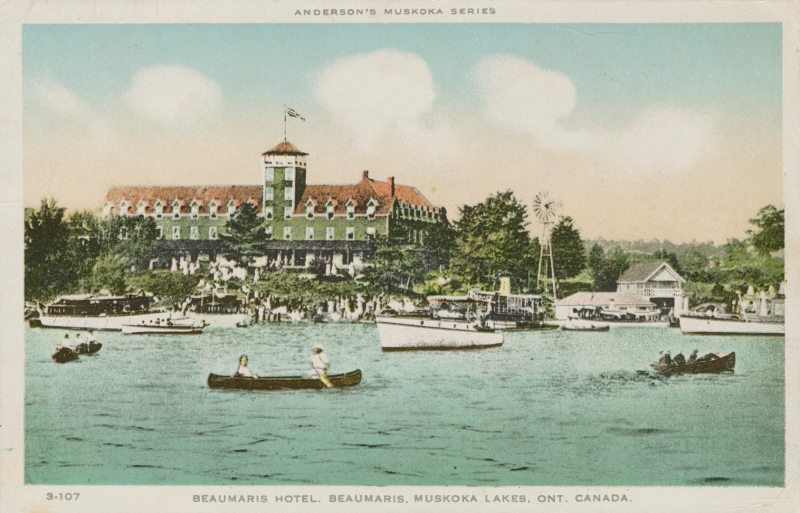
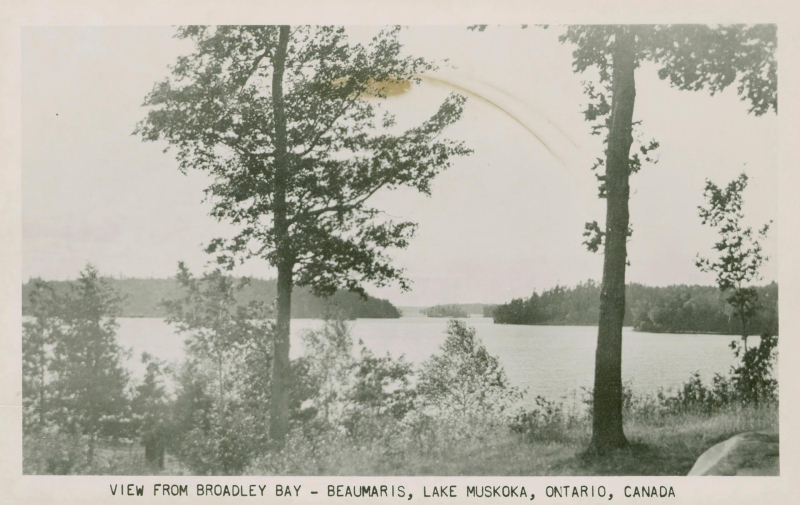
Card dealer
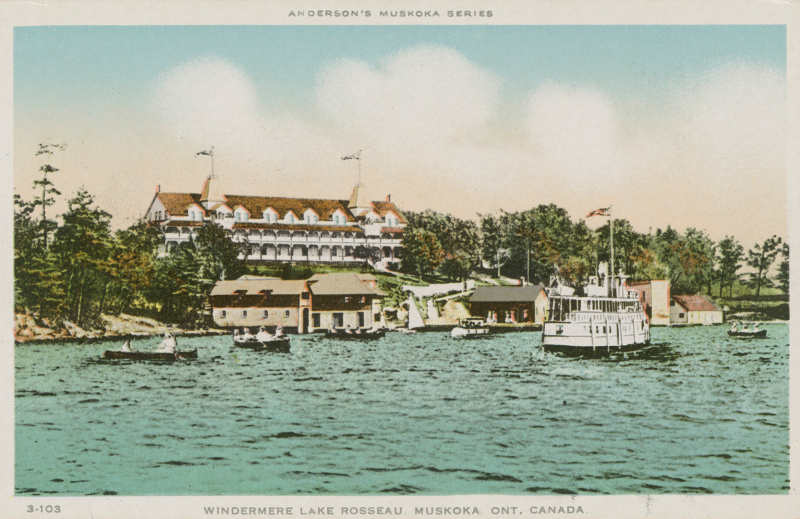
Prior to the First World War, Anderson took many photographs in and around Lake Muskoka, Lake Joseph and Lake Rosseau. He used them to make sepia-coloured and colourized picture postcards to sell to summer tourists.
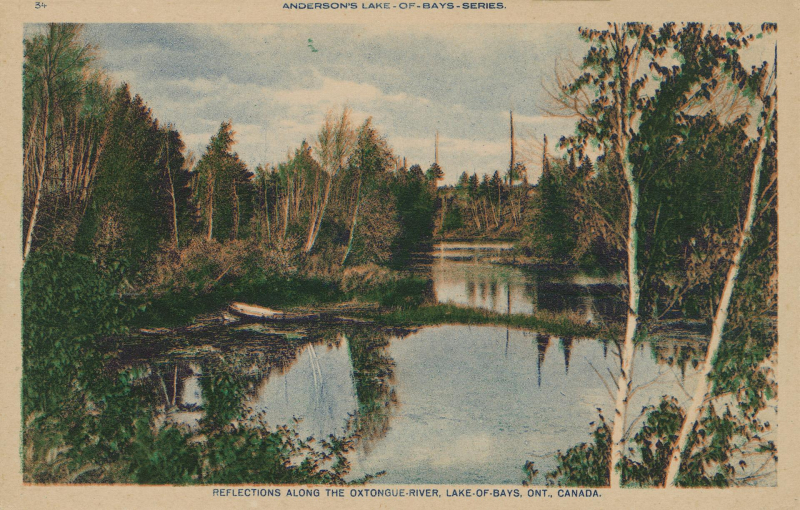
When the war was over, Anderson was able to employ a printer in Germany to reproduce his postcards using rich colours. Expensive copper engravings of his photographs were made in Toronto. They were mounted on wooden blocks and sent overseas to the German publisher where thousands of copies could be printed from one engraving. Postcards from the “Anderson’s Muskoka Series" and “Anderson’s Lake of Bay Series" became highly sought after souvenirs.
Each spring he would travel the lakes in his boat, taking orders from lodges, hotels and stores. After his sales trips, the younger members of his family would help him put together shipments of postcards. They were sent to his customers by steam boat and sold in sets of two for five cents. He produced no fewer than 250 unique Muskoka postcards.
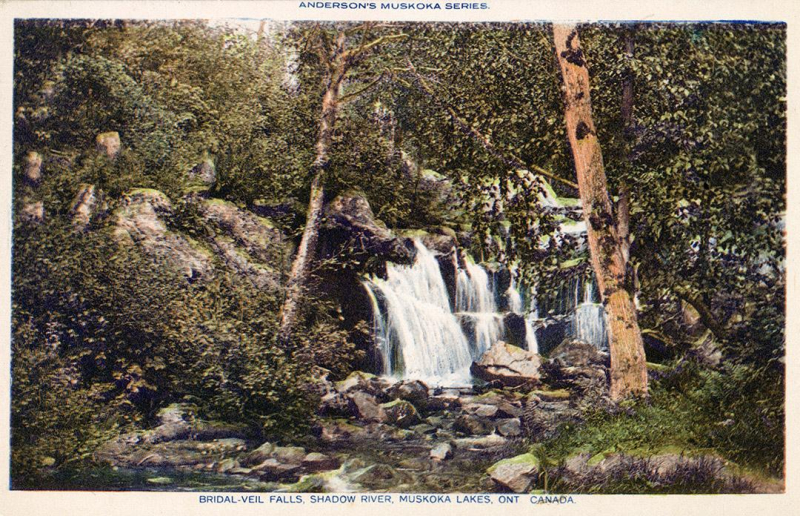


Card tricks
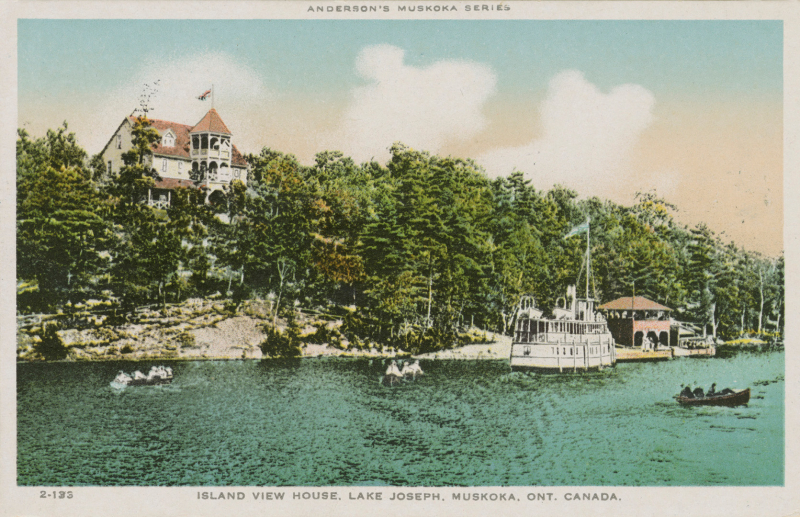
Anderson was an early Photoshopper. He often added boats and even biplanes to his images to make the postcards more appealing. You can sometimes spot these “improvements.”
For example, take a close look at the two postcards below. The large white boat in both pictures is the same boat. One of them was copied into the scene.
An encounter with a famous Canadian
After a season’s batch of postcards was mailed out, Anderson devoted the rest of the summer to regular photography. He was frequently asked to photograph people’s boats, summer homes and club functions. One time, a man who owned a seaplane approached him to capture some aerial views. The man was Billy Bishop, the great Canadian flying ace.

Disruption to his postcard business
Anderson enjoyed a good business with his postcards until 1936. At that time, he could not get a response from his publisher in Germany. The publishers were Jewish and they had been put out of business in Hitler’s Germany. The copper engravings — the keys to his business — were lost. He tried to carry on using a gelatin process but the colour reproductions were poor and their cost double. He then tried selling black and white glossy cards. They were also expensive to produce. Anderson stopped making postcards before the start of the Second World War but he continued to capture images of Muskoka.
A royal gift
In 1939, King George VI and Queen Elizabeth toured Canada in an effort to shore up support for Britain as war seemed more likely in Europe. Although a stop in Muskoka was planned for June 6, it was sacrificed in order for a stop in Windsor, Ontario. Perhaps sympathetic to the missed opportunity, Monck Township commissioned Anderson to produce an album of 20 lake view photographs. A Photographic Glimpse of the Famous Muskoka Lakes, The Highlands of Ontario was presented to the King and Queen on May 22 in Toronto by Lieutenant Governor Albert Matthews. This sole copy is held in the Royal Photograph Collection at Windsor Castle in England.
Anderson never lost his love of Muskoka and continued to live in Beaumaris until he died at the age of 82. He loved to be in his boat and enjoyed nature to the full.

Related blog posts
- Muskoka's Early Tourists
- Ontario's Cottage Country: A Bit of History
- Ontario's Tuberculosis Sanatoriums, 1897-1960
- Carnegie Libraries in Ontario: Vintage Postcards
- Lucy Maud Montgomery's Inspiring Trip to Bala, Ontario in 1922
Acknowledgements
A big thank you to Susan Anderson, granddaughter of William Anderson, for the donation, extra photos for this blog post and a biography written by her father, William Everritt Willmott Anderson.
9 thoughts on “Mesmerized by Muskoka: The Postcards of William Alfred Anderson (1880–1962)”
What a great selection of postcards! It’s always interesting to see what cottage country looked like back then!
Thank you so much for your comment.
A great story well told.
Thank you so much for the compliment.
This is such a fabulous post and so timely too!
Interesting that a post of this depth would erase Indigenous presence from the opening paragraph. ‘Cottage country’ eh.
fascintating story and piece of history
thank you for sharing
Rachel Schneiderman
thank you for sharing this beautiful story 🙂
You are most welcome and thank you for your comment.