Conversations in Canadian English for English Learners
Learning to speak English in Canada is no easy task to do. The process can be hard and challenging when there are many factors to consider when conversing. After learning and understanding proper English, there is a whole other world of English slang words, cliches, and idioms that you will need to be aware of when speaking and listening to Canadian English.
What do these expressions mean? With the help of the Merriam-Webster Dictionary:
Slang: "Slang words are an informal nonstandard vocabulary of words." Meaning that they are words or informal phrases that are casually spoken and often adopted into a group or culture. For example, calling something "cool", "hip", or "hot" means it is very popular.
Clichés: "A cliché is a phrase or expression that has become overly familiar or commonplace." Meaning that these phrases have been used much too often, to the point where it has lost it's impact. For example, "there are plenty of fish in the sea," is an expression that is often used to describe that there are many opportunities available everywhere.
Idioms: "An idiom is part of the language that is peculiar to a people, district, community or class." Meaning that phrases and expressions could be something other than what the words literally mean. For example, someone who "gets cold feet" does not mean that the temperature of their feet has dropped, but rather it means that they are nervous instead.
These varying expressions may seem foreign, unfamiliar, and even ambiguous to those who are learning English, but with time and lots of conversational practice, you can 'get the hang' of all these expressions. Another great way to do this is by joining an English Conversation Circle at your local public library!
 [image credit: Gabriel J. Suarez's Blog]
To help familiarize your vocabulary, I have posted 12 common expressions used by Canadians, offered by Canadian Immigrant, have a look at their website to see the complete A-Z list:
1. Actions speak louder than words
In other words, what a person actually does is more important than what they say they will do.
2. American dream
The “American dream” is the reason why so many immigrants come to North America. The United States especially prides itself as a democratic place where people have the right to good education, freedom, peace and a rich life — if they work for it.
3. Eh
Canadians are known worldwide for tacking on the word “eh” to sentences, turning them into a bit of a question — for example, “That was a good hockey game last night, eh?”
4. Fingers crossed
Keeping your “fingers crossed” means that you are hoping for good luck or a happy outcome in a situation.
5. Jack of all trades
A “Jack of all trades” is a person who can do many different kinds of work well.
6. Loonie/Toonie
Unlike many other countries, Canada has its own nicknames for its money. The “Loonie” is a $1 coin (which usually features the image of a loon), while a “Toonie” is the term used for the $2 coin (because it rhymes with “Loonie”).
7. Needle in a haystack
To find a thin “needle in a haystack” is almost an impossible task. Thus, anything that seems impossible to find is lost like a needle in a haystack.
8. On cloud nine
When she got her citizenship, she was “on cloud nine.” That is, she was really happy and excited about it.
9. Raining cats and dogs
This phrase is used when you want to express that it is raining very heavily outside. For instance, “This summer was not good because it was ‘raining cats and dogs’ on many of the weekends.”
10. Start from scratch
Many newcomers to Canada have to “start from scratch.” This phrase denotes that something needs to be started from the beginning, regardless of the previous work that has been done.
11. Under the weather
If you’re feeling under the weather, it simply means you’re feeling a little sick, whether the weather is rain or shine.
12. Wear one’s heart on one’s sleeve
To wear your heart on your sleeve is to show your emotions openly.
Slang words, clichés, and idioms are all expressions that can be hard for an English learner to understand. Aside from all the great resources available out there, such as the Using English website with their lists of English Idioms, Toronto Public Library also has lots of books and resources that can help you!
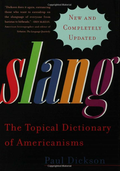

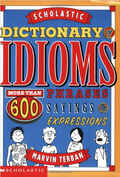
For more books on Slang For more books on clichés For more books on idioms
What is your favourite expression?
Mine is, "what doesn't kill you makes you stronger," meaning all of the tougher experiences you go through, will help you grow and make you smarter & stronger for the next time.
18 thoughts on “Conversations in Canadian English for English Learners”
My favorite one is “Proudly Canadian” Because it’s true, even when I am not a Canadian Citizen yet, Canada is in my heart.
Lovely blog!
“A wolf in sheep’s clothing”, meaning someone who seems okay, but is really not a good person and who may mean to harm you 🙁
“Proudly Canadian” is a wonderful one! And definitely speaks volumes to those who are living in Canada. Thank you for sharing your favourite expression!
Debby
Janice, this is a good expression to remember. Most of the phrases and words I posted are very positive, but it’s important to see that these expressions can also be used to describe a not-so-friendly situation.
Thank you for sharing!
Debby
To let the cat out of the box! That means to reveal a secret.
Hi Ula,
That’s a good one! Thanks for sharing!
Debby
I am not Canadian yet but live in Canada, but I like that slang “Proudly Canadian”. It is really true, Canada is the best, Guess what I lived in so many other countries, but none are like Canada. Canadian must be proud of themselves.
These slang words are great to help improve ones casual English talking and listening.
Informative idioms and slang, love to know about them
Canada begin in kindergarten (age five) or grade one (age six) and go to grade twelve (age 17 or 18), except in Quebec-city, where students finish a year earlier. After completion of a secondary school diploma, students may go on to post-secondary studies? Canada there are above more than 15,500 schools in Canada:10,100 elementary.3,400secondary.province in Canada, except for Manitoba, Ontario and New Brunswick, where the compulsory age is 18, or as soon as a high school diploma has been achieved. In some provinces early leaving exemptions can be granted under certain circumstances at 14. Canada generally has 190 (180 in Quebec) school days in the year, official starting from September (after Labor Day) to the end of June (usually the last Friday of the month, except in Quebec when it is just before June 24 – the provincial holiday). In British Columbia secondary schools, there are 172 school days during a school year.
Monday to Friday during the school year (except during holidays)
give high school diplomas to students who successfully complete secondary school (high school)can be found in (Canadian English)(CANADA)and(FRENCH)-{FRANCE}across this country (even in areas where one language is more commonly spoken than nicer others their children, such as:free public schools/paid private schools
/at-home education?
Canada is a stupid country has nothing for professinals except depression and may be it is a good for loosers
For me is the biggest loser who can not find anything positive ,because each country has something good and bad .But in each country you can find something new to learn.
Canada&United Kingdom can well pretty good at hobbies favorite interests in during high schools” Study at a state high school in England, whiles living in the local community with a friendly host family. Eastern states are people Because it is beautiful, natural, reasonable in cost, with fine hotel lobby , friendly people most of whom speak English? “Gorgeous scenery, live cities, and friendly people are just a few of the reasons high schools students should spend time in one of the world is happiest countries?”
Compared to other countries in the past, Canada has had the highest tertiary school enrollment as a percentage of their graduating population.Nearly all post-secondary institutions in Canada have the authority to grant academic credentials (i.e., diplomas or degrees). Generally speaking, universities grant degrees (e.g., bachelor’s, master’s or doctorate degrees) while colleges, which typically offer vocationally oriented programs, grant diplomas and certificates.(A Statistics Canada study from 2015 found that these students tend to have higher test scores and future educational attainment than their public school counterparts. Rather than enjoying superior resources and educational practices, the most likely explanation for this discrepancy is the higher expectation of success that students experience from their paren’ts, teachers, and fellow students?) How long does takes live Canada after studying education “middle around confusing teach themselves Canadian English official language at “CANADA”? We taught rather than Canadian English during High Middle Schools we are they coming from CANADA?
Canada was a great country until some bad immigrants screwed it up. I enjoyed being there when there weren’t too many of them. Choose only good people to enter Canada otherwise soon Canada will be like India.
I came to Canada when I was 18 from India,I like it so far ; whatever we do pays us back in this nation. I would state it is the best nation to begin your profession from the specific first stage. In Canada , you can begin from the specific base and develop to the degree you need to. Nation keeps running by standards which is great. I came here as a Student ;regardless I recall the battle; yet sincerely, everything paid me back.I have no second thoughts coming to Canada .
“Canadian British standards how they have improving easiest to remember teach many of themselves like as Canadian British English,second thoughts Canadian & British English basic allowed culture their dialects spoken than or foreigners who want to understand Canada a bit better we have published our free guide to Canadian culture, customs, language, society, manners, etiquette, values and business practices.The official languages spoken in Canada are English and French, although there are many more English speakers than French borrowed their 2nd from republic of France!”