Summer Reading – moving beyond fiction
Who doesn't look forward to having more time to read in the summer, whether it's in a hammock, on the dock or at home on the patio or balcony?
Lighter reading seems appropriate as we enjoy the slower pace of summer living, and summer reading lists usually focus on fiction: here are a couple of recent examples from The Globe and Mail and The Guardian.
But what about those of us who love to read non-fiction? Working in the Science & Technology Department, I am most familiar with popular science books; here are a few places to find science suggestions for your summer reading list:
The Royal Society is one of the world's oldest and most prestigious scientific academies. It awards the Winton Prize for Science Books, which recognises the best in popular science writing. The 2010 winning title is Life Ascending by Nick Lane. See the list of previous winners:
http://royalsociety.org/awards/science-books/
Popular Science (no relation to the magazine)is a British website which celebrates the best in science writing. Here's its list of the best popular science books around:
http://www.popularscience.co.uk/best.htm
In 2006, Discover magazine compiled its list of the 25 greatest science books of all time. See if you agree:
http://discovermagazine.com/2006/dec/25-greatest-science-books/article_view?b_start:int=0&-C=
And finally, The Guardian has a Science Book Club. Every month readers are invited to join an online discussion about the selected popular science book:
http://www.guardian.co.uk/science/series/science-book-club
Here are some of our staff picks for popular science summer reads. We'd love to hear other suggestions.
|
|
|
 |
|
Empires of Light: Edison, Tesla, Westinghouse and the race to electrify the world |
||
|
Beautifully written and engaging essays about the evolution of plants and their relationships to human society. Is it possible that the many ways in which plants appeal to us are meant to ensure our role in their propagation? A fascinating argument, rich with anecdotes.
|
Jonnes tells the story of the "war of the currents" between Edison (DC) and Westinghouse and Tesla (AC). High drama from the early days of urban electrification.
|
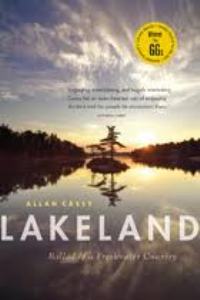
Winner of the 2010 Governor General's Award for non-fiction. Explores the historical, cultural and scientific importance of Canada's lakes. Natural history writing at its best. |
 |
 |
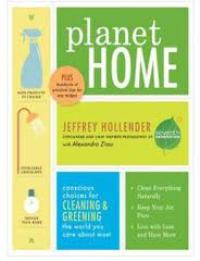 |
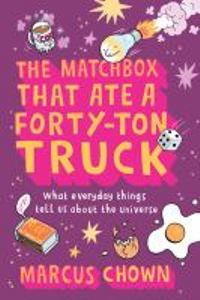
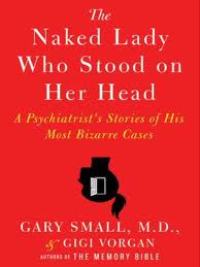
| The Matchbox that Ate a Forty-Ton Truck: what everyday things tell us about the universe | The Naked Lady Who Stood on Her Head: a psychiatrist's stories of his most bizarre cases | Planet Home: conscious choices for cleaning and greening the world you care about most |
|
Marcus Chown, the cosmology consultant for New Scientist, is one of the leading writers on physics and cosmology working today. Challenging concepts presented in a clear and entertaining manner.
|
The author, a neuroscience researcher and practising psychiatrist, recounts with humour and empathy some of his most unusual cases to illustrate the mysteries of the human mind. | A reader-friendly guide that goes beyind the home environment and encourages readers to consider the broader consequences of their actions and choices. |
 |
||
| This is Your Brain on Music: the science of a human obsession | The Selfish Gene | Molecules of Murder: criminal molecules and classic cases |
|
Before he became a professor of psychology and behavioral neuroscience at McGill, the author was a musician, sound engineer and record producer. He explores the relationship between music and the brain and explains the origin of our emotional attachment to music.
|
This classic title, which popularized the theory of evolutionary biology, inspired both wide-spread praise and some harsh criticism when first published in 1976. It reframes evolutionary theory from a genetic perspective. A brilliant book which continues to inspire both research and debate. | In-depth explorations of ten poisoning cases, five involving the use of natural toxins such as ricin and atropine, and five in which man-made chemicals such as cyanide and polonium-210, were used. The chemistry of forensic science from an award-winning author. |
9 thoughts on “Summer Reading – moving beyond fiction”
Some excellent science books I’ve enjoyed recently:
Parasite Rex by Carl Zimmer
The Immortal Life of Henrietta Lacks by Rebecca Skloot
The Poisoner’s Handbook by Deborah Blum
The Ghost Map by Steven Johnson
Dog Sense by John Bradshaw
Krakatoa by Simon Winchester
A Crack in the Edge of the World, also by Simon Winchester
Alex and Me by Irene Pepperberg
I’m also looking forward to reading The Abacus and the Cross by Nancy Marie Brown, but I have to get through my backlist first.
Very good! Not everyone reads romance novels. Thank you!
Great suggestions – thanks for posting this.
I am a science fan as well and I especially love Biology. I enjoy reading fiction books but sometimes non-fiction books are good for a change. Some great non-fiction books are included in the DEMYSTIFIED series if anyone would like to check them out. Great posting, by the way.
Hi Robin,
Thanks for the suggestions. I enjoyed The Ghost Map, and I’m looking forward to reading The Immortal Life of Henrietta Lacks.
I hadn’t heard of The Abacus and the Cross, but now it’s on my list!
I had finished reading Selfish Genes by Richard Dawkins and Mating Mind by G.Miller, right now I am reading Collective Animal Behavior by David Sumpter,I do read fiction too past few months I read DH.Lawrence. It was amazing experience.
Hi Khan,
It’s great to hear from another reader who enjoys both fiction and non-fiction. Thanks for your recommendations.
Botany has nothing in common with desire.. And that makes all the intrigue
You are exactly right, Pollan’s premise is intriguing. His assertions may or may not stand up to scientific scrutiny, but on the whole I found his arguments convincing – and whether you buy into his premise or not, the book is beautifully written, thoughtful and entertaining.