And the Winner Is…The Best Science Book of 2011
It's a year-end ritual…every December newspapers, magazines and websites feature lists of the year's top news stories, best movies, biggest songs, etc. So in the spirit of the season, I've been looking at lists of the best science books of 2011.
The Royal Society, the British academy of distinguished scientists, awards an annual prize for the best science book published during the previous year. See this year's shortlist:
http://royalsociety.org/awards/science-books/shortlist-2011/
The winner of the 2011 Royal Society Winton Prize for Science Books is:
 The Wave Watcher's Companion by Gavin Pretor-Pinney
Pretor-Pinney is co-founder of The Idler, an annual publication "that campaigns against the work ethic" and, not surprisingly, he is the founder of The Cloud Appreciation Society. His previous book, also well received, is The Cloudspotter's Guide. The Wave Watcher's Companion is a guide to waves of all kinds – from sound waves and brain waves to stadium waves – and blends technical explanations with personal anecdotes to highlight the importance of these natural phenomena in our lives.
Here is what the judges had to say in awarding the prize to this book:
" A brilliant, almost poetic book that really opened our eyes. We were amazed that we now see waves everywhere we look, making the world around us a more absorbing and enchanting place, thanks to modern science. "
Here are some other science books which were featured on lists of the best non-fiction books of 2011:
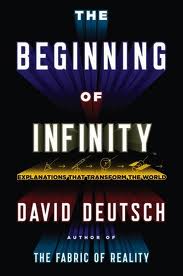
The Beginning of Infinity: explanations that transform the world by David Deutsch
Oxford physicist Deutsch suggests that all human progress results from applying reason to the search for answers and the development of universal approaches to problem solving.
The Guardian says: " (Deutsch) pursues the logic of scientific explanation and the sometimes unthinking power that goes with it: a power that extends biological adaptation, perhaps without limit…he has written a dazzling book full of huge ideas, presented with matchless clarity".

Moby-duck: an accidental odyssey: the true story of 28,000 bath toys lost at sea and of the beachcombers, oceanographers, environmentalists, and fools, including the author, who went in search of them by Donovan Hohn
A book about the fate of a cargo of plastic bath toys washed off a container ship in the Pacific Ocean during a storm in 1992.
From The New York Times: “Moby-Duck” succeeds as harebrained adventure, as a cautionary environmental tale, as a deconstruction of consumer demand, and as a meditation on wilderness and imagination. Hohn moves easily between the micro and the macro, weaving personal histories into science and industry as he roams".
The Information: a history, a theory, a flood by James Gleick
From The Globe and Mail: "Gleick has the ability to imagine and express the significance of important aspects of contemporary cultural knowledge. His sixth book recounts the history of the concept of information itself, ratifying his role as one of our most readable explicators of Big Ideas".
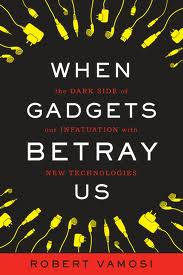
When Gadgets Betray Us: the dark side of our infatuation with new technologies by Robert Vamosi
A sobering look at how new technologies continue to compromise our personal and financial security, and at the lack of interest from manufacturers of the devices we have come to rely on in making them less vulnerable to cybercriminals.
From Kirkus Reviews: "A compelling scrutiny of the ways in which technological enhancements can be exploited for nefarious purposes…PCWorld contributing editor Vamosi… examines how technology compromises our personal privacy when “electronic breadcrumbs” stored in places like automobile “black boxes,” mass-transit payment cards, laptop hard drives, tollbooths and drivers’ licenses can be used in litigation and marketing strategies. An erudite wake-up call".
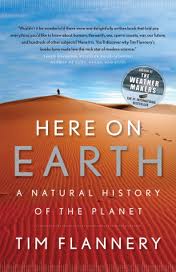 Here on Earth: a natural history of the planet by Tim Flannery
Australian zoologist Tim Flannery suggests an alternative to the prevailing Darwinian model which sees life as a battle for genetic supremacy. His proposal, based on James Lovelock's Gaia theory, is that our future depends on species evolving in co-operation with each other and as part of a single, interconnected organism.
From The Los Angeles Times: "The spirited argument on behalf of man and planet contained in "Here on Earth" constitutes what should be called the Tim Flannery meme: informed optimism about our ability to save ourselves. All it needs for survival is the "Darwinian" resolve to replicate itself in our progeny".
Comments