Guilty pleasures: apocalyptic fiction
There are those of us who take delight in books which we would hesitate to discuss in some circles, for fear it might call into question our taste, our intelligence, even our mental stability. We might nod and smile while the latest Pulitzer or Giller prize winner is being discussed, while shoving our own book deeper into our bag. I once knew someone who neatly wrapped his book covers in brown parcel paper, so no one would know what he was reading on the subway. (Pointing out that this made him look far shadier than if he’d just let his geeky book covers show, fell upon deaf ears.) Well, today, I’m coming out of my reading closet. Maybe you can'too. Rip the paper of shame from your book covers, Toronto!
It seems the perfect time for me to confess, considering the end of the Mayan long count calendar, December 21, 2012, will be here before we know it, which, according to some, is Doomsday, aka, the end of the world. Some react to this by stockpiling canned chili, heirloom seeds, and titanium crowbars (highly recommended by The Zombie Survival Guide because they are lightweight, simple and versatile– great for prying open crates and doors, and for self defense). Not me. Instead, I indulge in apocalyptic fiction. This genre has it all: marauding bands of evil doers revelling in the breakdown of the rule of law, pandemics, asteroids, mutants, aliens, heroes, scavenging, ragged survivors who cup their grimy hands around the fragile flame of civilization…
And now for the quiz portion of this blog post: in my informal, non-systematic survey of apocalyptic fiction, I gathered data on the various modes of demise (or near demise) of humanity. Which do you think was the most popular choice by authors? Your choices are: 1)Aliens 2)Disease 3)War 4)Impact event 5)Ecological disaster 6)The Sun 7)Technology 8)Supernatural 9)Unspecified
The answer will be found at the end of this post. While you mull it over, here are a few of the books in the genre I have enjoyed, with my brief comments. Click on the images to reserve one of these books.
 |
The Stand Stephen King (pandemic) I think of King's epic of doom as apocalypse old school; it's a classic good against evil tale in which man is the author of his own destruction; this one is a consistent favourite on best apocalyptic fiction lists. |
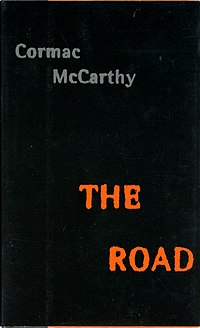
The road Cormac McCarthy (unspecified) As far as I know, the only book in the genre to win a Pulitzer prize; if any book could scare you into building a bunker and hoarding canned goods, this would be it. |
 |
|
 |
Lucifer's Hammer Larry Niven and Jerry Pournelle (comet impact) All hell breaks loose when a comet slams into earth. Won the Hugo award for best science fiction novel in 1978 |
The Nine Billion Names of God Arthur C. Clarke (don't want to be a spoiler) In this short story, Clarke imagines one of the most unique causes of the end of the world in apocalyptic fiction |
|
|
| Hothouse Brian Aldiss (ecological)
A strange tale of a post-apocalyptic world in the distant future where plant life dominates, and animals and devolved humans are nearly extinct; this book is like a detailed fever dream (but in a good way) |
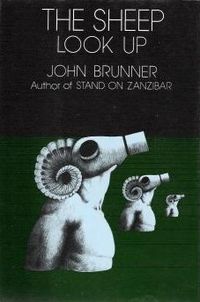
The sheep look up John Brunner (ecological)
Strictly speaking, pre-apocalyptic, but the apocalypse is just around the corner in this cautionary tale of environmental degradation |
|
||
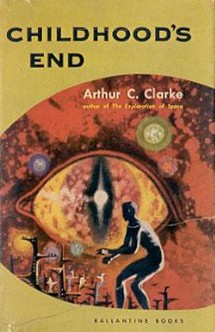 |
Childhood's End Arthur C. Clarke (aliens) This book proves all apocalyptic fiction isn’t about defending your hovel with a machete (another must have item for your end of days kit, according to The Zombie Survival Guide). Alien overlords alter the course of human affairs. Radically. |
|
|
If you'd like to read in this genre, Wikipedia has a list of apocalyptic fiction that might keep you busy until the end of the world. The list includes novels, short stories, and comics, as well as film, television and games.
Quiz answers:
War won by a large margin, second place goes to ecological disaster, disease came in third, technology was fourth and aliens placed fifth.
I'd like to leave you with a clip from one of my favourite Twilight Zone episodes, "Time enough at last", in which Henry Bemis finds the silver lining in the apocalyptic storm cloud.
31 thoughts on “Guilty pleasures: apocalyptic fiction”
Thanks for the recommendations, Maureen!
You’re welcome, Lisa. There are so many more recommendations I could have made! The City of Ember (Jeanne DuPrau), The Hunger Games trilogy (Suzanne Collins), Nightfall (Isaac Asimov and Robert Silverberg)…
Next on my ‘apocalyptic fiction to read’ list is Riddley Walker by Russell Hoban; apparen’tly it’s written in pidgin English!
I am so glad you included Childhoods End..that’s closest to our destiny. No I am not crazy.
As far as the question I have not idea, unless the alien overload breaths carbon dioxide, but a science type will have a better answer.
Good job an the blog.
Interesting blog, Maureen! You left me with a desire to read all of these books and then search for more! My eyes would probably fail me long before I could read everything. What is it about annihilation that makes some hearts go pit a pat ( in a good way ). As for the ending, the reason we end up eradicated is because we aren’t that smart!
Thanks for the comments. Yes, there is a stupidity factor. In a lot of apocalyptic fiction, man is the author of his own demise. Even when it’s disease that wipes us out, it’s often a disease created by man, as in Stephen King’s “The stand”. And of course, the most common cause of our destruction in this genre (in my informal survey, at least) was war. A lot of post World War 2 apocalyptic fiction works have us dying by nuclear weapons, as in Nevil Shute’s “On the Beach” and Pat Frank’s “Alas Babylon”
Regarding your question: at the first paragraph of chapter 2 we are informed: “for it was a standing joke that the Secretary-General liked living in an icebox.”
The scientist is taking a jibe at the Secretary, since carbon dioxide freezes at incredibly low temperatures compared with water.
It was a little disconcerting to realize that I had read almost all of the books/stories. Guess I am a post-apocalyptic fan! thanks for the list
I’m so glad you answered that for me Gal! I had dog eared the page, and read it to a couple of people, hoping they could explain it to me. I did remember that Stormgren was more comfortable in cool rooms, but I still didn’t get the ‘joke’ (that would require a deeper understanding of carbon dioxide than I possess). It’s good that Duval is a scientist and not a stand-up comic…
Join the club, Laura! Now that you are aware of it, you may have to ask yourself, as I have asked myself, why…? By the way, if you’ve read almost everything on my brief list, check out the link I’ve given to the Wikipedia list.
Just reserved Nevil Shute’s autobiography “Slide Rule” He was an important aeronautical engineer.
I’m with you on this genre, I’ve read all but one of the books you listed.
I particularly like how Stormgren finally gets a look at the alien, and also what happens at the bullfight.
In “Lucifer’s Hammer”, surfing the giant tsunami is wild. Another character saves all his books in plastic bags (double sealed) and puts them in the septic tank, to be recovered later after the anti-science book burnings.
“Earth Abides” by George R. Stewart is another favorite.
“Last and First Men” by Olaf Stapledon has many apocalypses over millions of years starting with our using up all the earth’s resources. It’s pretty bizarre too.
I love what happens at the bullfight in “Childhood’s end”! I’m going to add “Last and first men” to my reading list–it sounds really interesting–thanks. I wonder if you’ve read “Farnham’s Freehold” by Robert Heinlein? Frankly, it’s not one of Heinlein’s better books–there’s a lot I don’t like about it–but, as a librarian, I love that Farnham offers food in exchange for books when survivors pass by his post-apocalyptic refuge.
Glad to have helped 🙂
Yes, the joke is pretty weak but befitting the character, I think.
Thank you for the Wikipedia link! I liked “The Nine Billion Names of God” and “The Last Question” (Asimov), and I was wondering if you’re familiar with some more short stories in the genre? Short stories are a great way to take a little break, and I enjoy the snappy ending of the medium (often quite similar to the ironic humour of that Twilight episode above).
Have I got a book for you! It’s called “Wastelands: Stories of the Apocalypse”. Here’s the link, if you want to reserve it: http://www.torontopubliclibrary.ca/detail.jsp?Entt=RDM2541684&R=2541684
It’s an anthology, containing 22 short stories with an apocalyptic theme. You might also want to consider “After the Apocalypse” by Maureen F. McHugh. Here’s the link to the record in the library catalogue:
http://www.torontopubliclibrary.ca/detail.jsp?Entt=RDM2829043&R=2829043
I really liked the short story, “There will come soft rains”, but it isn’t one of those short stories with a snappy ending. You can find it in the Ray Bradbury classic, “The Martian chronicles”.
I have one of the copies of Riddley Walker, sorry; the pidgin is rough going at first, but I’m going to power through.
I wish you had put Atwood’s two latest in the list. I think Year of the Flood and Oryx + Crake are some of her better books.
I suspected Riddley Walker might be tough going when I read the description of it; I figure it will be a good brain exercise.
I did consider putting the two Atwood books on the list, but I still haven’t read them yet (they are on my ever growing reading list)and my spin in the blog post was to mention books in the genre that I enjoyed, or found thought provoking. Maybe I need to do a part 2, one of these days.
I like some of Margaret Atwood’s books very much.
Thank you Maureen!
I’m currently reading Childhood’s End and I found this page as I was also seeking an answer to this question. Thanks Gal for the answer and to Maureen for the page.
It’s comforting to me that I’m not the only one who didn’t get the (to me, at least) obscure joke, Matt. I’m glad Gal took the trouble to explain it. I wonder what you’ll think when you get to the end of Childhood’s End? I hope this comment isn’t a spoiler — I experienced an odd mix of melancholy and hope at the same time. Thanks for your comments
Much later answer to your post, but I have the answer to your joke question. In the first pages of the book, the comment is made that Stormgren gets a lot of grief from his co-workers about keeping his office so cold. So when he says the temperature is, “normal” Duval is teasing him that his normal is somewhere between 0 degrees C and wherever CO2 freezes.
Your answer confirms for me that an understanding of science enhances enjoyment of science fiction. (It can also, of course, be enjoyed by the scientifically challenged, as I can attest to…) Thanks for your answer, globalpuffer. By the way, interesting moniker!
Great list, Maureen — thank you very much for posting this. This has definitely been an interesting genre for me for the last few years. I second Alana’s recommendations of Margret Atwood’s first two of her MaddAdam series; though I found Oryx & Crake a little weak. You could start with The Year of the Flood as the timeline between them overlaps. I’ve read and seen quite a few of the books on the Wikipedia list and The Year of the Flood is head and shoulders above the others; you might want to consider moving this up in your pile of books to-read. Also, her much earlier book, The Handmaid’s Tale, is also excellent (and on the Wikipedia list).
Don’t overlook Earth Abides by George R. Stewart, even though it was written in 1949, it only has a few dated references and is an excellent exploration of rebuilding a new and different civilization. Also Survivors, a UK TV series that is on the Wikipedia list is another excellent exploration of what groups of people would do after the big event, including reverting to slavery, available on NetFlixs.)
And while war was the most popular cause in the earlier apocalyptic fiction, I’ve noticed that disease and zombies are the more common causes in more recent apocalyptic fiction. I’ve been preoccupied by exponential rise of zombies in fiction and graphic novels (Robert Kirkman’s The Walking Dead graphic novels (I got them all out of the library) are excellent reading, as long as you have the stomach for it, like the TV series, the focus is really more on the characters and the redevelopment of society.
What is it about zombies that have made them so ubiquitous lately, do you think? Are they a metaphor for the unknown? A symbol for secret government projects? Nostalgia? I’d be very interested on anyone’s thoughts about the rise of zombie literature (pun intended :).
Thanks again for “outing” yourself here, Maureen. I thought I was the only one with this reading and viewing predilection and now I don’t feel like the last woman on earth searching for more apocalyptic stories any more.
I’d definitely be interested in a 2nd list and other’s ideas about the prevalence of zombies.
Thanks,
April
Oh, and I forgot one newer instance of apocalyptic fiction that also focuses on social redevelopment:
Wool
by Hugh Howey
(originally self-published novellas, now gathered in Random House’s Wool #1-5 Omnibus. Film rights purchased by Ridley Scott.)
that isn’t on the Wikipedia list yet. And it is excellent.
thanks again,
April
Thanks for your thoughtful comments, April. I will definitely move the two Margaret Atwood books up on my ever lengthening reading list. Earth Abides is on my list as well (love that title, by the way…). I agree, the UK series “Survivors” is excellent. I’m also enjoying the Walking Dead TV series, but haven’t read the graphic novels. I hear there are some major divergences between the two. Thanks for the nudge — I think I will place a hold on the first graphic novel in Kirkman’s series.
You certainly aren’t the only one with a taste for apocalyptic/post apocalyptic stories, in all their various formats — movies, television shows, graphic novels, short stories, novels. Why are they popular? And why are zombies, in particular, so compelling to so many? (I’ve asked myself the same question about the popularity of vampires in fiction and film.)
It’s a very interesting question, and I think the answers(I’m sure there are many interpretations of this trend)could fill a book. (Probably already have…)The simplest is that some people like a good scare, and zombies are scary. (I’m sure you’ll agree, they can also be funny — consider “Shaun of the Dead”, one of the all time great zombie films.)Personally, I think there is more to the rise of zombie literature (nice pun you made there…)than simple chills and thrills. Perhaps zombie fiction expresses the fear of infection, which, in this time of antibiotic resistance and country-hopping jet travel, has the potential to turn into a pandemic. Someone saw a link between zombies and consumerism (sorry — can’t remember where I read this) but this makes sense to me, when I think about the mindless, never satiated consumption of human flesh by zombies, and the emphasis on consumption in Western culture –shop ’til you drop! Or are the heroes of zombie movies and books expressing our horror and anger about the biggest monster of all, for some, death itself? Is dispatching zombies a way of raging against the dying of the light, to paraphrase the poet Dylan Thomas? I’m sure you are right about zombies as a metaphor, April. I like the idea of zombies as a metaphor for apathy. I think the final scene in “Shaun of the Dead” is not only hilarious, but a serious commentary on apathy and disengagement in modern life. I don’t want to spoil it for those who haven’t seen the movie, but a subtle (?) reminder for those who have: Ed/shed/video game/
Thanks for this recommendation, April! I’m happy to say, we have it in the library — I’ve just placed a hold on it. In my answer to your first comment, I forgot to give you this link. It’s to an article called “Zombies: Why Are We So Obsessed?” on the Huffington Post blog. It’s well written and very interesting. Here’s the link:
http://www.huffingtonpost.com/eric-g-wilson/zombies_b_1633994.html
Thanks so much for your thoughtful replies, Maureen. I am with you in thinking that exponential rise of zombies (I just can’t help myself sometimes 😉 is often a metaphor for mindless consumer consumption. I loved Shaun of the Dead – so smart AND so funny. You’ve probably already seen Dawn of the Dead with Sarah Polley – most of it takes place with survivors holing-up in a mall. You can’t get more direct with the zombies/consumer consumption metaphor before it isn’t a metaphor anymore, eh?, lol. For those who haven’t seen those two movies, they’re in for a treat. They’d make a great double-bill.
Thank you for referring me to the article from The Huffington Post. There was some interesting stuff there.
“Or perhaps we are afraid of a global financial collapse that would result in cannibalistic hordes haunting burned-out cities.”
I think this is a realistic take on what we fear during a social collapse. I think the movie Contagion illustrates this idea very well too.
Oh, dear, goes to show I’m not reading as much as I’m watching lately. So back to books. You won’t believe what I found over on the goodreads.com book site. There is a reading group called “Apocalypse Whenever” – isn’t that a perfect name for this kind of discussion group; I loved it. I feel like I found “my tribe”. It was your posts here that got me looking further afield – they have over 5,500 members. So clearly I’m not “alone” in my interest in this genre. And as you pointed out earlier, I’ll have more Apocalyptic literature to read than I can ever finish by “the end of days” – lol. You and the others here might want to check it out:
http://www.goodreads.com/group/show/967-apocalypse-whenever
Regarding WOOL by Hugh Howey, the Apocalyspe Whenever group have just finished reading his WOOL series, and the Q&As are very interesting. AND, there is another session with him online now (Jan 15-31/13) with a public group that anyone can join called “The Next Best Book Club”. So if people are interested in this series they might want to check these two groups out over at http://www.goodreads.com
Glad to hear you’ve checked out the first of The Walking Dead graphic novels from our wonderful TPL. For anyone else who’s interested in these, I placed holds all at once on the first ten or so, so that when they came available, I was able to read them pretty much in order. And yes, the show does diverge in some very interesting ways from the graphic novels. I think a good adaptation does that: combines characters from the novel into single characters in the show; and/or comes up with new instances that are in keeping with the story’s universe.
Thanks again for all the resources, Maureen. Maybe I’ll see you over at Goodreads at “Apocalypse Whenever”? I’m still chuckling over this….
April
I’m so glad you told me about “Apocalypse Whenever” at Goodreads, April. I’ve visited the Goodreads website quite a bit, but somehow never stumbled across that section of the site. I just visited it and bookmarked it — I will be returning! For anyone who is interested, here is the description of this online reading group, taken from the webpage April (see comment above) gave the link to: “The most active Goodreads group for apocalyptic, post-apocalyptic and dystopic fiction! Join the monthly book reading, get recommendations, or just tell us if you like canned peaches. We’re a big, friendly group, but there’s always room for more!”
I’m pleased that they include dystopian fiction — I’m guessing a lot of people who read apocalypic/post apocalyptic fiction are also interested in dystopian fiction.
I can’t wait to see how “The Walking Dead” graphic novels differ from the television show! For anyone who is interested in reading the graphic novels the television series is based on, the Toronto Public Library has the graphic novel series. Click the following link to reserve the first in the series:
http://www.torontopubliclibrary.ca/detail.jsp?Entt=RDM2494918&R=2494918
Thanks for the excellent information, April! It might help some people to find their tribe. See you at “Apocalypse Whenever”…
Hello again Maureen,
I’ve been finding my way around Apocalyse Whenever over on goodreads.com and just want to let you and the others here know that there are a couple of discussions going on with the author of WOOL, Hugh Howey. One of them is still going on until January 31, 2013, on The Next Best Book Club. So if anyone has any specific questions for Hugh Howey, they can join that group and ask their questions over there.
I hope I see you over there too, Maureen.
Thanks, again,
April
Thanks for the information, April. See you (read you?) at Apocalypse Whenever.
These are great recommendations. Thanks. But the library only has ‘reference’ copies of Lucifer’s Hammer. Could you add another copy to the collection that can be checked-out by library users?
I will recommend that the library buy a copy, J. Thanks for bringing this to my attention.