A Canadian summer tradition: pretending to rough it in the bush
|
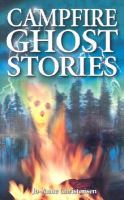
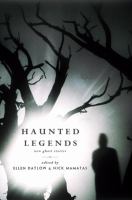
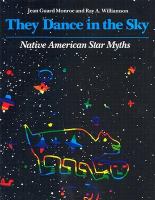
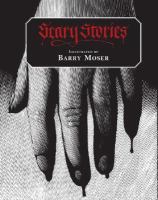
Recently I left the city smog behind and headed north, to camp out for a few days. Accustomed to rubbing shoulders with hordes of others in packed subway cars and buses, it was both exhilarating (in the day) and terrifying (at night) to have the forest to ourselves. The campground was strangely underpopulated–the closest campfire was a distant glimmer through the trees. As the sun set, the surrounding trees transformed from an emerald fairy forest to twisty, ensnaring monsters of the vegetative realm. This was not urban ‘dark’, illuminated by neon signs and street lights. This was can’t see your hand in front of your face dark, call of the wild dark, primal dark. As we made our nightly trek up a dirt road to the ‘vault toilet’, one gripping a flash light, the other with a two-handed strangle hold on a hatchet, we couldn’t stop thinking about the bear that had been sighted, and we trembled to see our campfire grow smaller and smaller, finally being smothered by tree trunks and darkness. Never have I understood so clearly why 19th century Canadian poet Isabella Valancy Crawford called the campfire the ‘camp-soul’. (Her poem “The canoe” follows this post.) 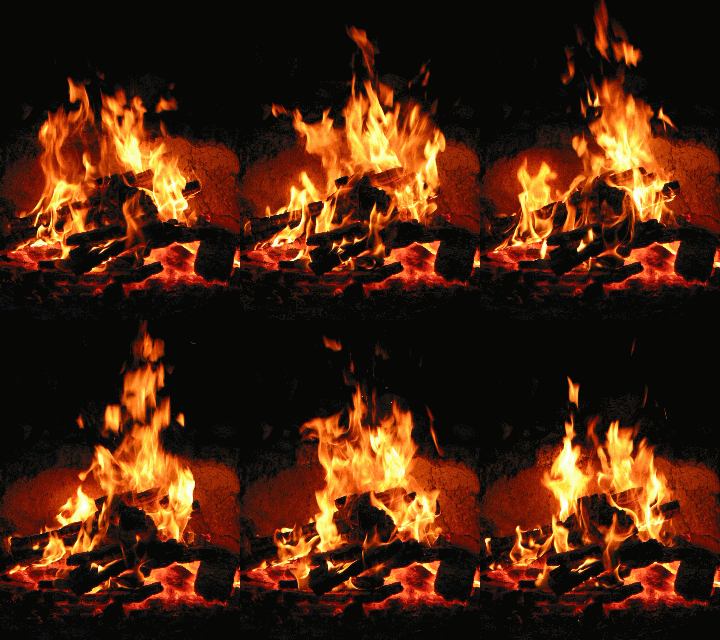 Back at the campfire, I thought about the early settlers working hard to make a life for themselves in the back woods of Canada, like Susanna Moodie, author of the early Canadian classic, Roughing it in the bush and her sister, Catherine Parr Traill. True, we were sleeping on the ground in a tent, but were we really roughing it? I bought the wood for our campfires pre-chopped, for seven bucks, at the camp store, and there was a water faucet steps from our campsite. If we encountered a bear we could jump in the car and zoom away. I guess we were just pretending to rough it, to get a small taste of what the early settlers faced, and try to imagine what life was like for Canada’s indigenous peoples long ago. It seemed we city dwellers had nothing in common with them. But as we read tales by the light of the softly glowing embers I realized we did have something in common. It is something we have in common with all people, everywhere, throughout the ages: the love of story. There is no better setting for reading stories aloud than by a campfire. Here are a few suggestions for campfire reading for all ages, just a tiny sample of the wealth of folklore, tales and legends in the Toronto Public Library’s collection, which is, dear reader, your collection. I prefer my campfire tales to be spooky or chillingly mysterious. During my foray into the woods, I took intense delight in Neil Gaiman’s delicious short story collection Fragile things: short fictions and wonders. In one story, “A study in emerald”, the world of the hyper-rational Sherlock Holmes meets the demented world of H. P. Lovecraft with supremely creepy results. Here are some other books to read by the campfire:
The Canoe
Isabella Valancey Crawford (b. c.1857–87)
My masters twain made me a bed
Of pine-boughs resinous, and cedar;
Of moss, a soft and gentle breeder
Of dreams of rest; and me they spread
With furry skins, and, laughing, said,—
“Now she shall lay her polished sides
As queens do rest, or dainty brides,
Our slender lady of the tides!”
My masters twain their camp-soul lit,
Streamed incense from the hissing cones;
Large crimson flashes grew and whirled,
Thin golden nerves of sly light curled,
Round the dun camp, and rose faint zones
Half-way about each grim bole knit,
Like a shy child that would bedeck
With its soft clasp a Brave’s red neck,
Yet sees the rough shield on his breast,
The awful plumes shake on his crest,
And fearful drops his timid face,
Nor dares complete the sweet embrace.
Into the hollow hearts of brakes
Yet warm from sides of does and stags,
Passed to the crisp dark river flags,
Sinuous, red as copper, snakes,—
Sharp-headed serpents, made of light,
Glided and hid themselves in night.
My masters twain the slaughtered deer
Hung on forked boughs, with thongs of leather.
Bound were his stiff, slim feet together,
His eyes like dead stars cold and drear;
The wandering firelight drew near
And laid its wide palm, red and anxious,
On the sharp splendor of his branches;
On the white foam grown hard and sere
On flank and shoulder.
Death, hard as breast of granite boulder,
And under his lashes,
Peered through his eyes at his life’s gray ashes.
My masters twain sang songs that wove
(As they burnished hunting blade and rifle)
A golden thread with a cobweb trifle,
Loud of the chase, and low of love.
“O Love! art thou a silver fish,
Shy of the line and shy of gaffing,
Which we do follow, fierce, yet laughing,
Casting at thee the light-winged wish?
And at the last shall we bring thee up
From the crystal darkness under the cup
Of lily folden,
On broad leaves golden?
“O Love! art thou a silver deer?
Swift thy starred feet as wing of swallow,
While we with rushing arrows follow:
And at the last shall we draw near,
And over thy velvet neck cast thongs,
Woven of roses, of stars, of songs,
New chains all moulden
Of rare gems olden?”
They hung the slaughtered fish like swords
On saplings slender; like scimitars
Bright, and ruddied from new-dead wars,
Blazed in the light the scaly hordes.
They piled up boughs beneath the trees,
Of cedar-web and green fir tassel;
Low did the pointed pine tops rustle,
The camp fire blushed to the tender breeze.
The hounds laid dew-laps on the ground,
With needles of pine sweet, soft and rusty,
Dreamed of the dead stag stout and lusty;
A bat by the red flames wove its round.
The darkness built its wigwam walls
Close round the camp, and at its curtain
Pressed shapes, thin woven and uncertain,
As white locks of tall waterfalls.
|


5 thoughts on “A Canadian summer tradition: pretending to rough it in the bush”
Wow… what a cool post!
Hi Maureen,
Thanks for a terrific post. As someone who camped many years ago with their family (if sleeping in a camper trailer counts as camping, and I’m sure for many people it does not) and as someone who unabashedly enjoys their creature comforts now, your post made me smile. Your post also did something I hadn’t anticipated it would: it made me experience in the best vicarious way the ups and downs of camping — and made me hear once again the unnerving sound of twigs snapping somewhere off in the woods when you’re out there in the dark, hurrying back to the light of the campfire.
Loved your book choices too — there’s lots here for the armchair camper.
Bookishly yours,
Not Quite Miss Rumphius
Thanks, Maureen, for such an atmospheric post, great spooky reading suggestions, and a wonderful poem from an important Canadian poet!
Thanks for your comments, everyone. I do think us tent campers get ‘roughing it’ bragging rights over trailer campers, although I’ve been assured by an experienced trailer camper that a bear can rip the door from a trailer without too much trouble. As for that unnerving twig snapping sound, that’s why I bring my hatchet! I meant to include some books on bear attacks in my post. Here’s a link to one, though it might just make people more afraid!:
http://www.torontopubliclibrary.ca/detail.jsp?Entt=RDM209767&R=209767
Wow! I feel like reading one of the suggested books in front of the computer campfire! I don’t need the heat, not this summer, but the ambiance, that’s great! I’d be cheating though – no bears in my house, just one black cat! Good job Maureen! Mary