The History of the World: one food at a time
There are lots of ways to look at history. Some like to read about military campaigns or the lives of political leaders. One way I enjoy learning about the past is by reading about the foods we eat and how they have changed over time. Luckily for me, there is a growing number of books that look at the economic, political and cultural impact of a single food. You can read about anything from apples to chocolate to potatoes. Here are a few of my favourites.
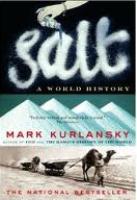 It all started with Salt: a world history by Mark Kurlansky. I was fascinated by this account of the importance of salt, a substance so commonplace and inexpensive that we take it for granted. And yet it is essential for life; it has served as a currency (the word salary has the same root) and inspired both exploration and revolution (think Gandhi and the Salt March). This book is on The Guardian's recent list of The Best Food Books of the Decade.
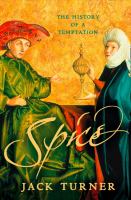 A book about Magellan (Over the Edge of the World: Magellan's terrifying circumnavigation of the globe) got me interested in the history of the spice trade, and led me to Spice: the history of a temptation by Jack Turner. Focusing on pepper, ginger, cinnamon, cloves and nutmeg, he explores the uses and importance of spices - medicinal, ceremonial and industrial – as well as their role in the age of exploration. Read the New York Times Book Review's take on Spice.
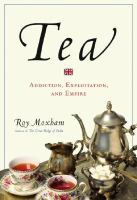 Tea: addiction, exploitation and empire by Roy Moxham examines the British obsession with tea and its impact on colonization, trade and commerce. Moxham discusses the dark side of the tea trade, which included the exploitation of workers on colonial plantations. I learned that England went to war to secure its supply of tea, how growing demand fueled the colonization of India, Ceylon and Africa and was reminded about how the taxation of staples such as tea played a role in the American revolution.
 While it's not about a single food, I have to include A History of the World in 6 Glasses by Tom Standage. It's a chronological journey from ancient Mesopotamia to the modern world as seen through six beverages: beer, wine, spirits, coffee, tea and Coca-Cola. Standage explains that our modern social rituals around drinks have origins that go back thousands of years. Beer and wine were initially shared with straws from a single vessel, and later cups were filled from a single container. Sharing drinks became a sign of hospitality because it demonstrated that the host could be trusted not to serve something that was dangerous – or even poisoned – to his guests.
And finally, two books, one a classic and one brand new, that take a broader view of food history:
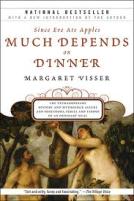 The classic is Much Depends on Dinner by Margaret Visser. First published in 1986, it was both a New York Times Book Review and a Publishers Weekly best book of the year.
Visser describes a simple meal and devotes a chapter to each ingredient: corn, butter, salt, chicken, rice, lettuce, olive oil, lemon and ice cream. Each chapter is an engaging essay about both the history of the food and the social conventions surrounding it. A revised edition of this award-winning book was published in 2008.
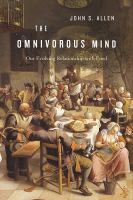 The Omnivorous Mind: our evolving relationship with food by John S. Allen is a 2012 book that takes a science-based look at eating habits such as our food obsessions and aversions. Allen is a neuroanthropologist who uses evolutionary psychology and cognitive science to examine the historical and cultural aspects of our relationship with food. I'm looking forward to reading this scientific take on food history, which has received mostly positive reviews from publications such as The Wall Street Journal.
4 thoughts on “The History of the World: one food at a time”
Makes me hungry…
Thanks Liv. Someone suggested to me yesterday that I should have included the excellent Food in History by Reay Tannahill. Other suggestions are welcome!
author is right. history of world can be traced through food but ultimately history is written or driven by money or wealth. the hunt for spices by magellan was due to high demand & price. thus america was discovered instead of india…
so the history has been & will always be written via money or wealth..take your pick
You’re right of course, the lust for wealth has driven exploration, discovery, conquest and colonization throughout history. It says a lot about the value of tea and spices that countries went to war to control them.