Our relationship with animals: it’s complicated
People tell me all the time that our dog is very cute. Friends volunteer to care for her when we're away, and even people who don't like dogs are won over by her charms. But how much does her appeal have to do with the way she looks?
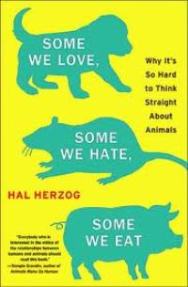 I started thinking about this when I picked up a book called Some We Love, Some We Hate, Some We Eat: why it's so hard to think straight about animals. In a chapter called The Importance of Being Cute, author Hal Herzog says that the way we think about animals is often influenced by how they look. In general, people prefer animals that are small and furry (as opposed to slimy), with large, round heads and big eyes. In other words, we are attracted to animals that look like us…and like children in particular. This has many consequences, from determining which threatened species receive public support to the fact that, despite the health consequences, we now have dogs bred so that the adults look like puppies. I learned that there's a word for that – neoteny. In his famous essay A Biological Homage to Mickey Mouse, published in The Panda's Thumb, Stephen Jay Gould traces the changes in Mickey's appearance over 50 years as an example of neoteny.
Another chapter is devoted to the place of pets in human societies. Researchers have been trying to determine why we become so attached to animals when no obvious evolutionary purpose is served by our relationship with them. The author presents several theories, ranging from pet "ownership" as an expression of the human impulse to dominate nature to it being a mutually benefical relationship in which both parties derive enjoyment and comfort from their interactions.
In other chapters Herzog discusses topics such as the role of gender in our relationship with animals, the morality of using animals for research and, as he calls it, "the human-meat relationship". I enjoyed the balanced discussion of vegetarianism, which touched on both the benefits and the risks associated with not eating meat. While it is one of the most nutritionally dense foods, meat can also be among the most dangerous, because it spoils easily and can'transmit pathogens. It was fascinating to learn about the origins of cultural taboos that explain why people in different societies will eat some animals but not others.
If you are interested in learning more about our complex, irrational relationship with animals, you might want to look at these books as well:
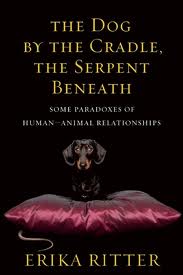
|
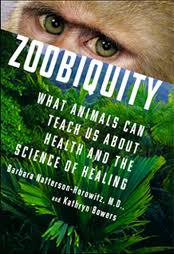
|
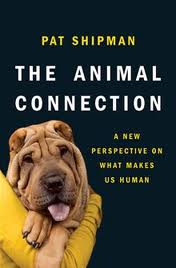
|
2 thoughts on “Our relationship with animals: it’s complicated”
Great post, Carolyn. Hal Herzog’s book has been on my “to read” list for awhile. Along with your recommendations, I recommend Jonathan Safran Foer’s “Eating Animals”. He’s an excellent writer who makes some very interesting observations about cultural norms relating to which animals are considered ‘fair game’ and which shouldn’t be consumed — kind of makes you see how arbitrary these belief systems are.
Thanks for your suggestion Maureen. My daughter also recommended “Eating Animals” , but I knew I would find it difficult to read about the conditions in factory farms and meat processing plants. I know it’s meant to be uncomfortable reading – and for that reason alone I should push myself to do it.